Moroccan Marquetry and the Thuja Tree: The Wood Behind Essaouira’s Most Iconic Craft
A Craft Many See, Few Understand
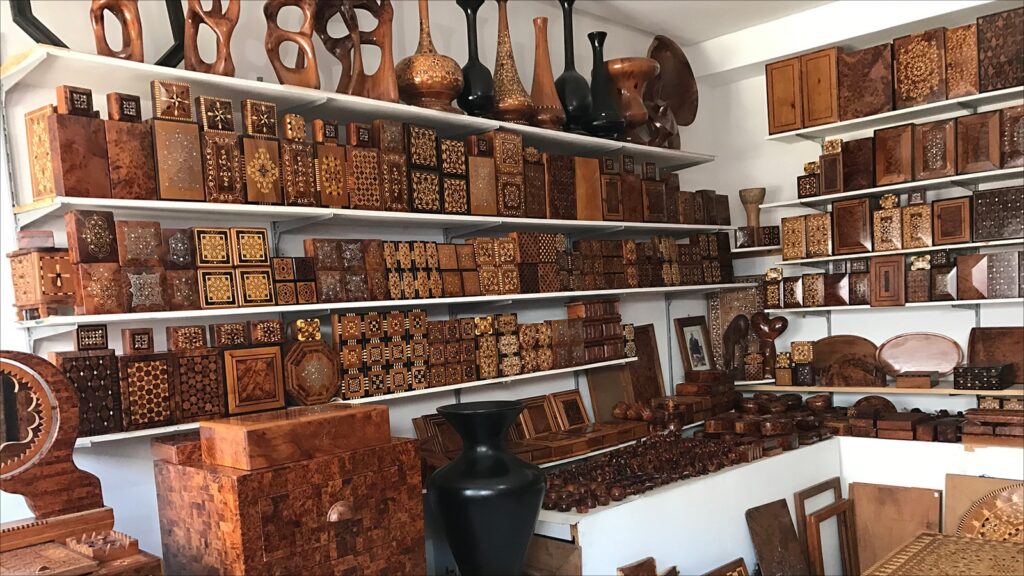
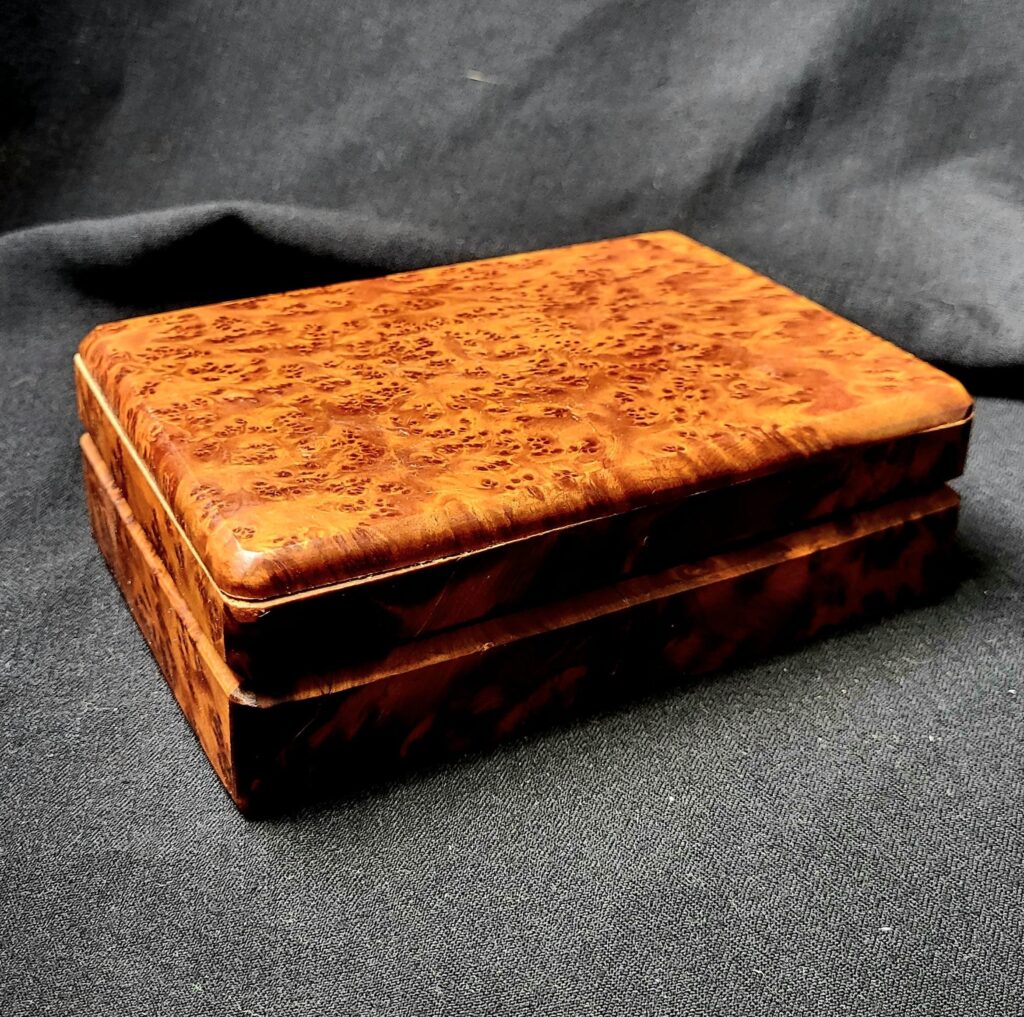
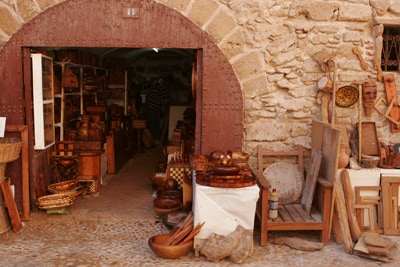
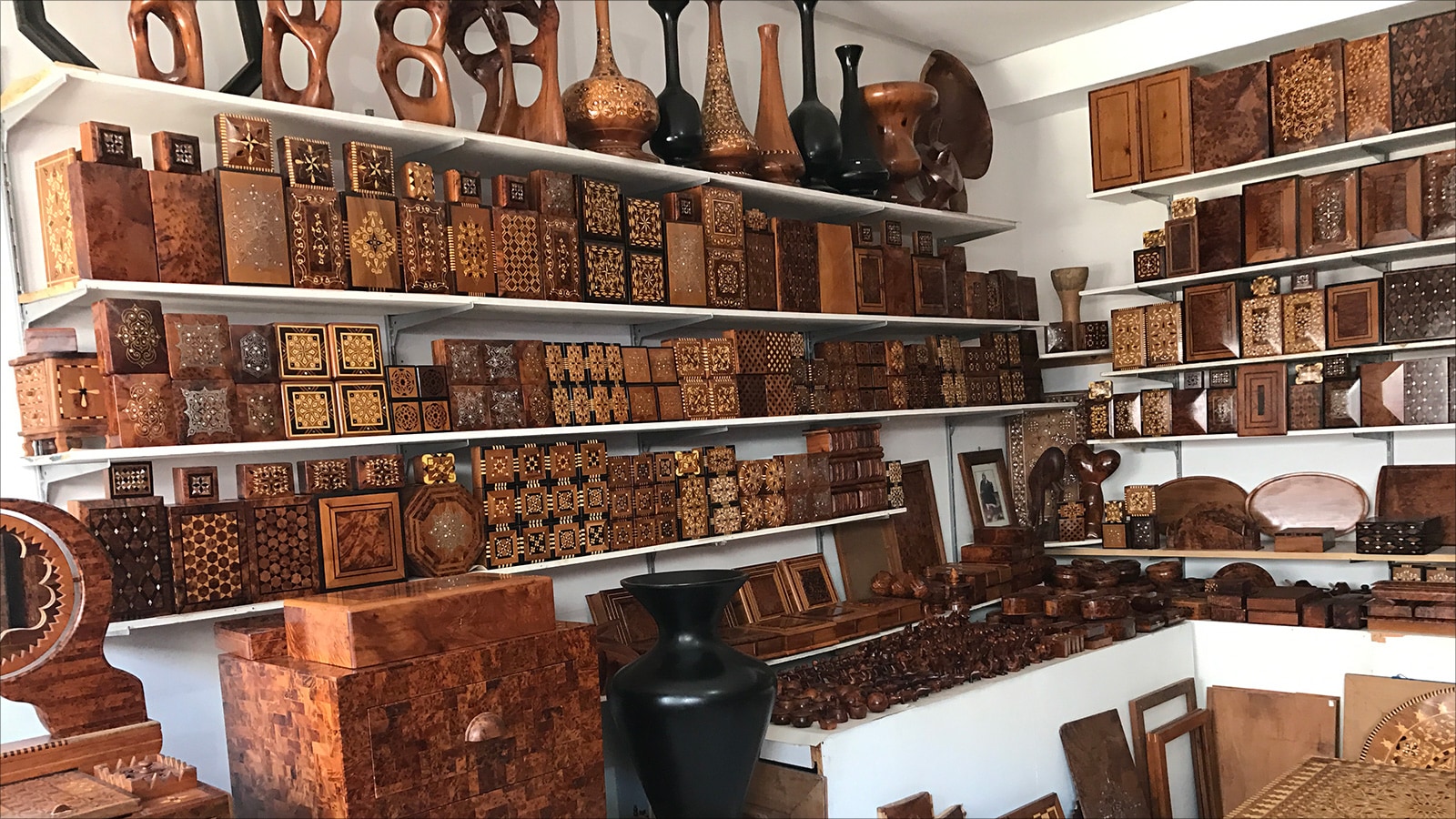
If you’ve spent time browsing Moroccan decor—online or in person—you’ve likely come across small wooden boxes, tables, or decorative objects labeled “Moroccan marquetry.”
They’re often beautiful. They’re sometimes expensive. And yet, it’s not always clear what makes them special.
Many buyers sense there’s a story behind these objects—but can’t quite tell where craftsmanship ends and decoration begins.
That uncertainty is understandable. Moroccan marquetry is rarely explained well. It’s deeply tied to a specific place, a specific tree, and a way of working that doesn’t translate easily into product descriptions.
This article exists to slow things down.
This article aims to clarify the nature of thuya wood, elucidate its unique scent and appearance, and highlight the inseparable connection between authentic Moroccan marquetry and Essaouira.
What Is Thuya (Thuja) Wood?
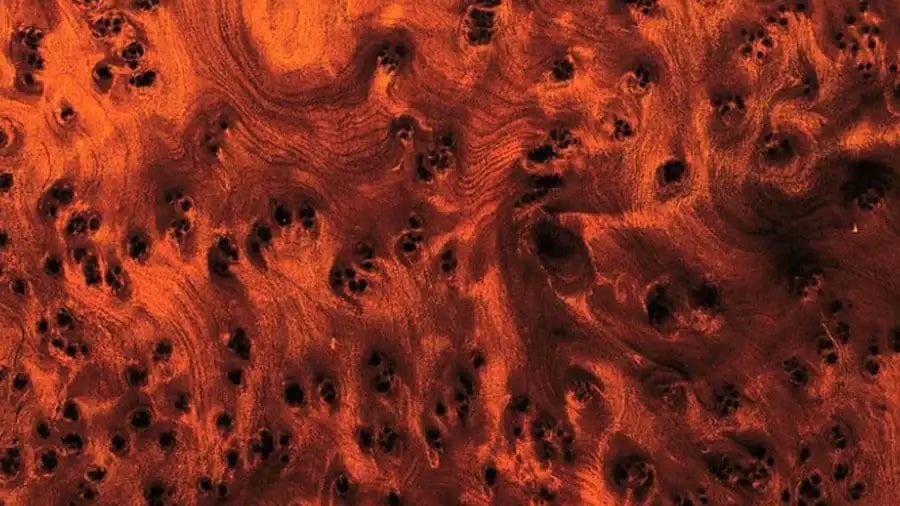
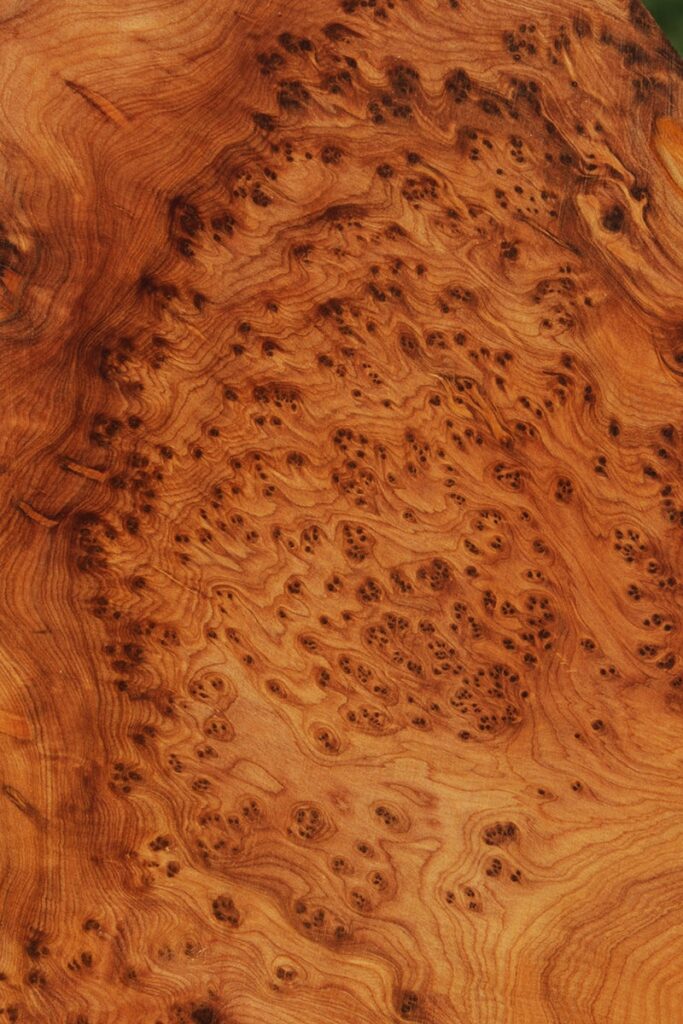
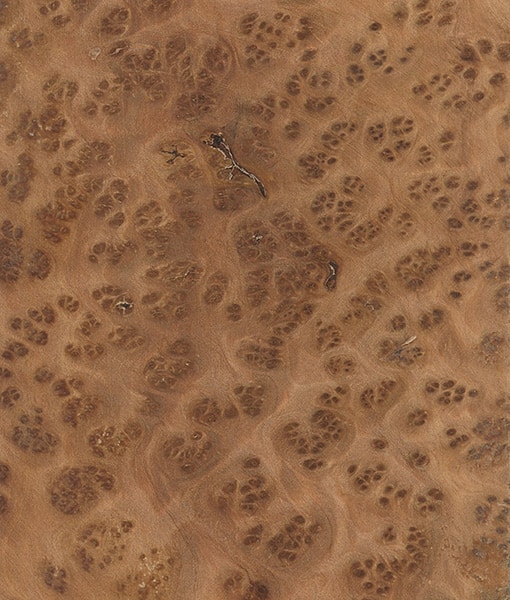
Thuya—often spelled Thuja—is a tree native to parts of North Africa, particularly along Morocco’s Atlantic coast.
What makes Thuya unusual isn’t just the tree itself, but which parts of it are used.
Artisans value Thuya for:
- Its dense, oily wood
- Its distinctive, spicy-resin scent
- Its dramatic grain patterns, especially from the root
Unlike many decorative woods, Thuya doesn’t need staining or artificial treatment. Its natural oils provide it both color and aroma. When freshly worked, the scent is strong and unmistakable—something many people notice before they even look closely.
This sensory quality is not a flaw. It’s part of the material’s identity.
Why Essaouira Became the Heart of Thuya Marquetry
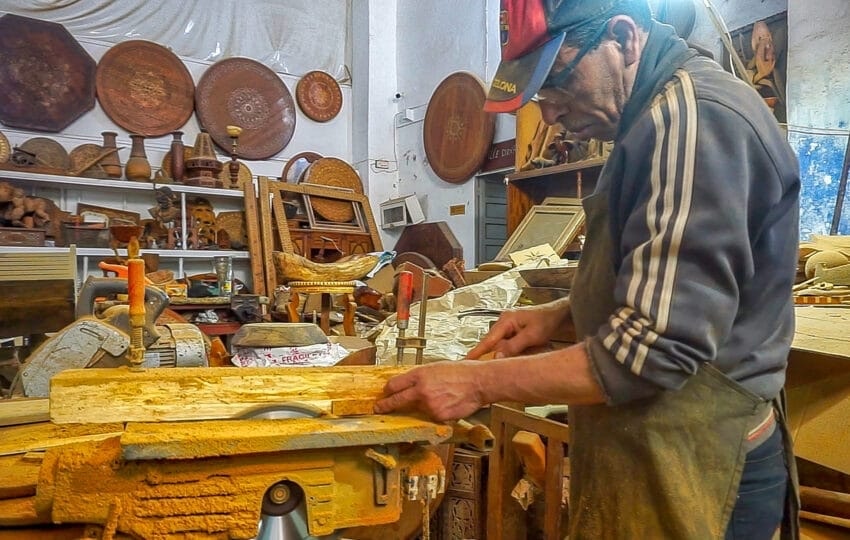
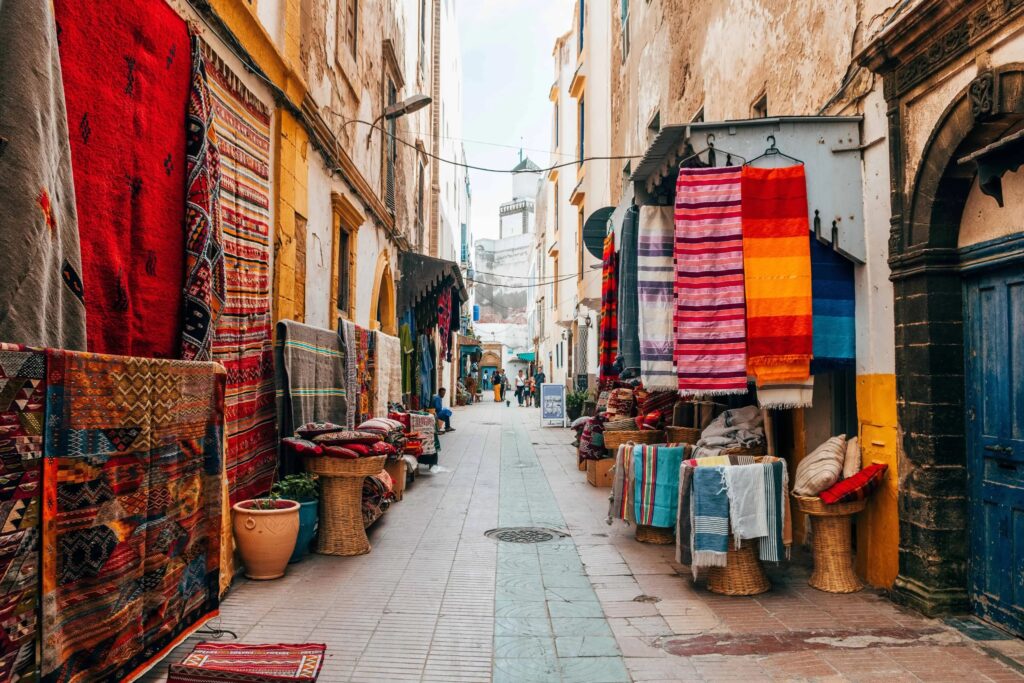
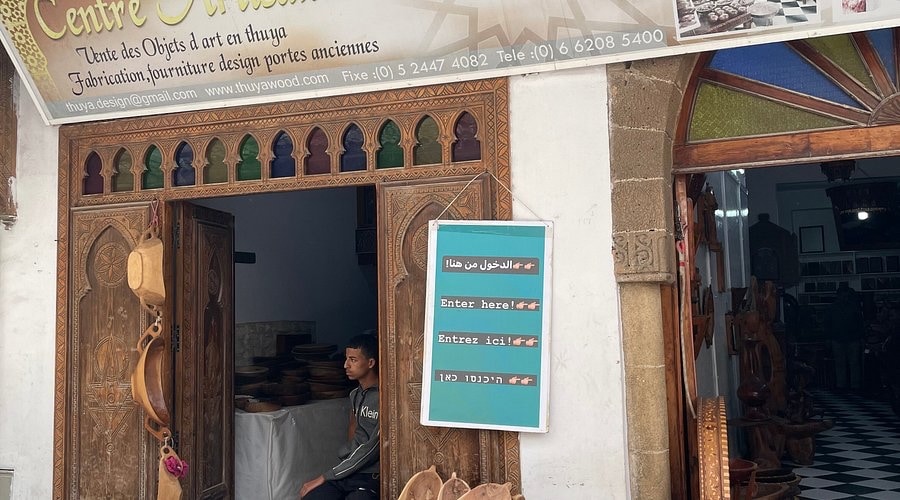
Thuya marquetry is strongly associated with Essaouira for practical reasons, not marketing ones.
Historically:
- Thuya trees grew in regions accessible from the Essaouira area
- The port city connected local crafts to trade routes
- Woodworking knowledge passed through generations of local artisans
Walking through Essaouira’s medina, you’ll still find small workshops where marquetry is made quietly, piece by piece. Not factories. There are no production lines involved. Just benches, tools, and time.
That continuity matters. Moroccan marquetry isn’t a revived trend—it’s a living craft that never fully disappeared here.
How Moroccan Thuya Marquetry Is Made
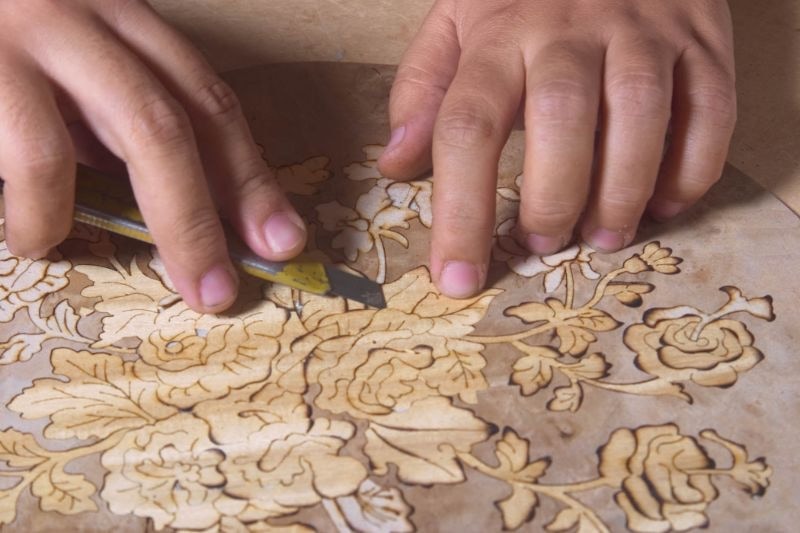
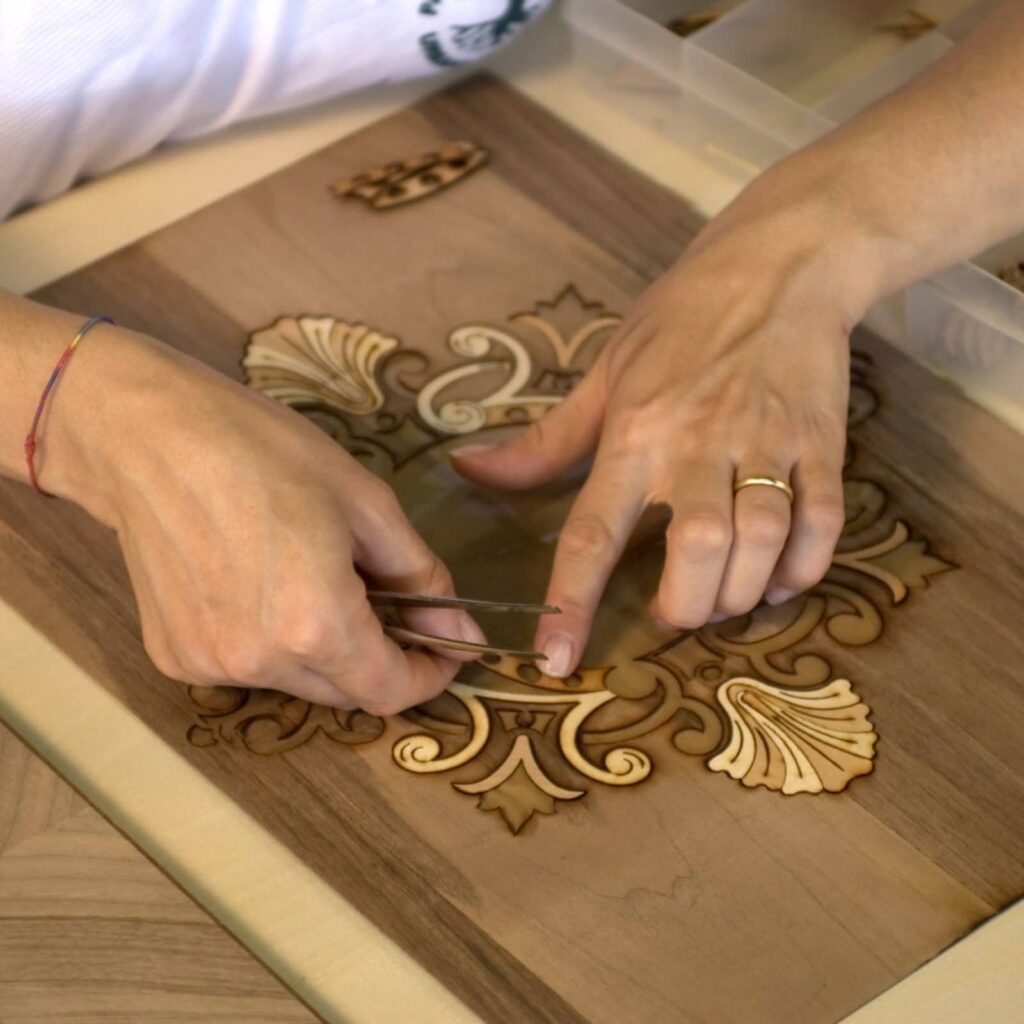
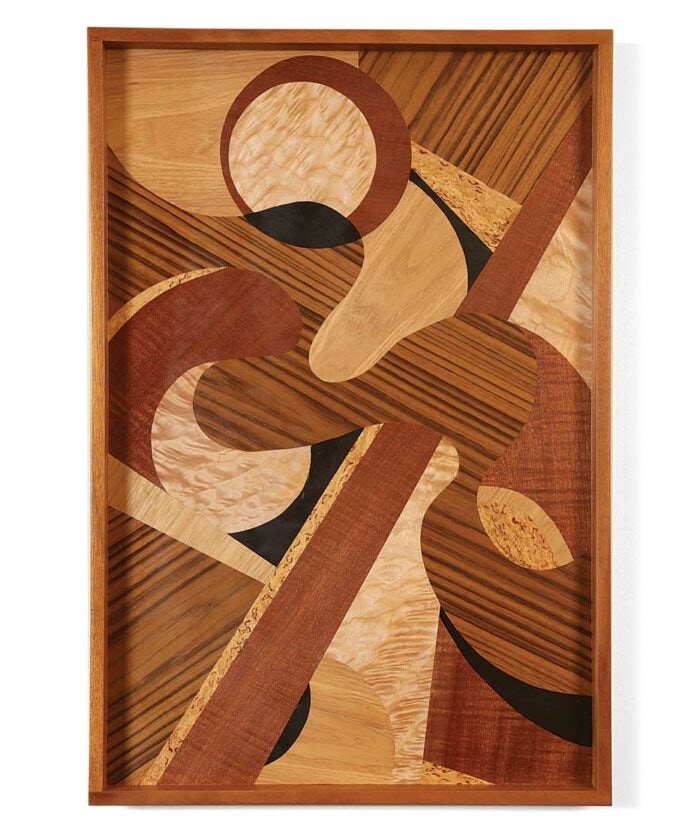
Marquetry is not carving. It’s assembly.
In traditional Moroccan marquetry:
- Thin veneers of Thuya and other woods are prepared
- Patterns are cut by hand, piece by piece
- Elements are assembled like a puzzle
- The surface is pressed, sanded, and finished slowly
There’s no shortcut here. Alignment, symmetry, and depth all depend on human precision.
When you handle authentic marquetry, you can feel it:
- Slight variations in pattern
- Subtle depth between pieces
- A surface that reflects labor, not automation
This is why true marquetry doesn’t scale easily—and why many modern imitations avoid the process altogether.
Root Wood vs Trunk Wood: A Detail Most Buyers Miss
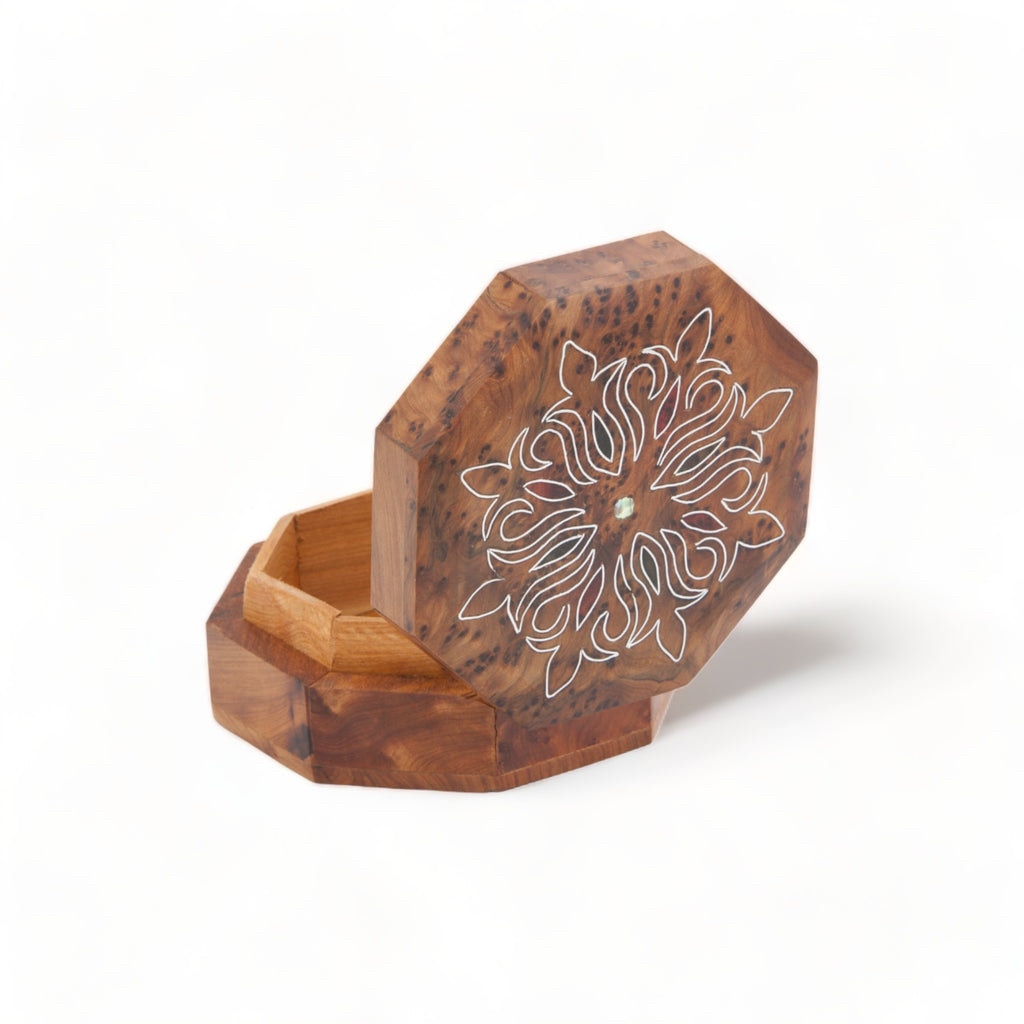
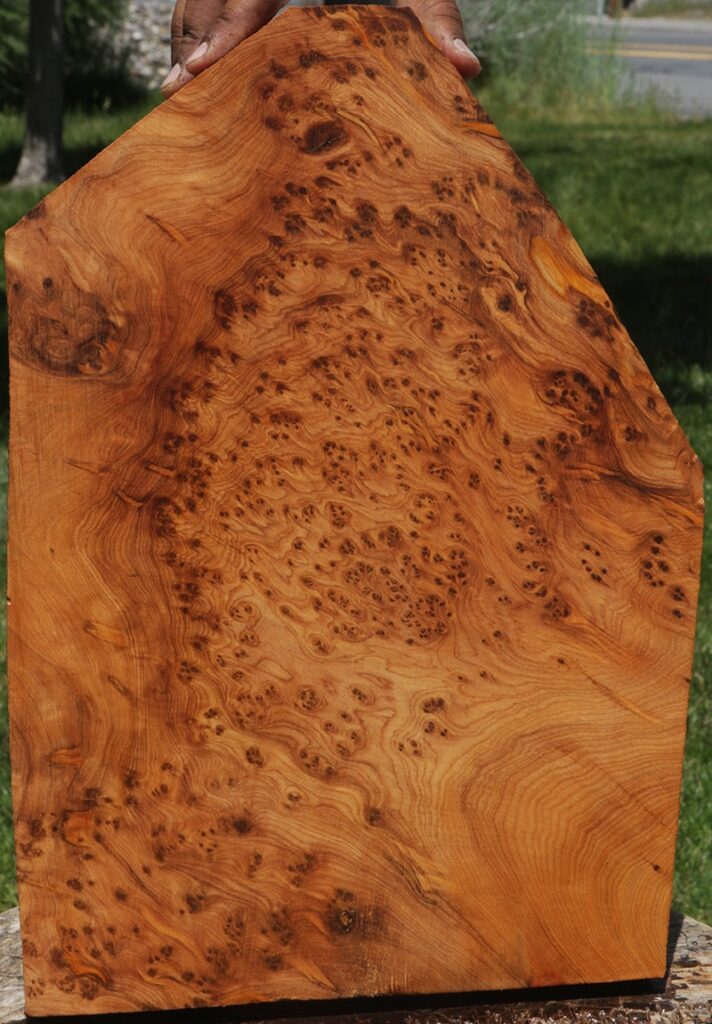
The quality of Thuya wood varies.
Artisans distinguish clearly between:
- Trunk wood: straighter grain, calmer appearance
- Root (burl) wood: swirling patterns, higher density, stronger scent
Root wood is rarer and more difficult to work. It’s also more valued—both for aesthetics and durability.
Many buyers don’t realize this distinction and assume all Thuya objects should look dramatic. In reality, variation is normal—and often intentional.
Understanding this difference alone helps explain why two similar-looking objects can feel worlds apart in quality.
Why Thuya Wood Smells Strong (and Why That’s a Good Sign)
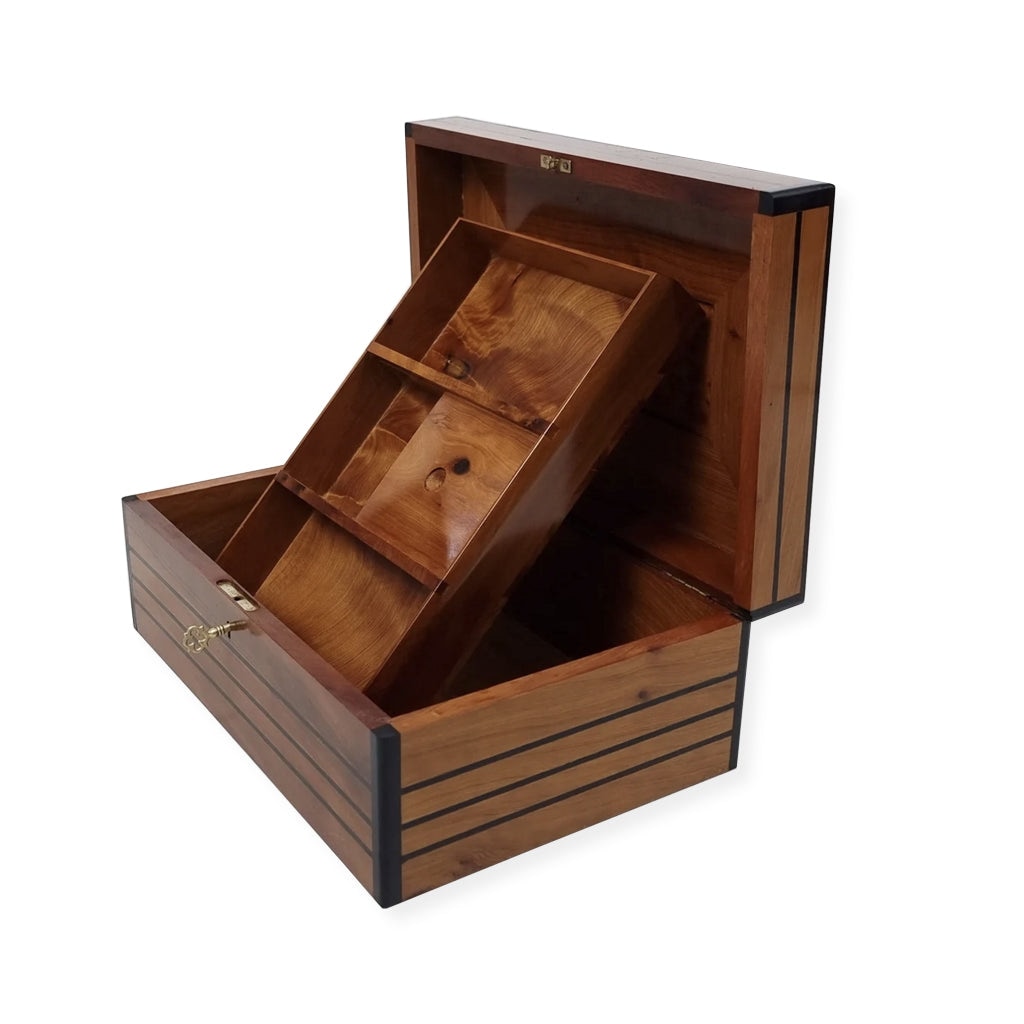

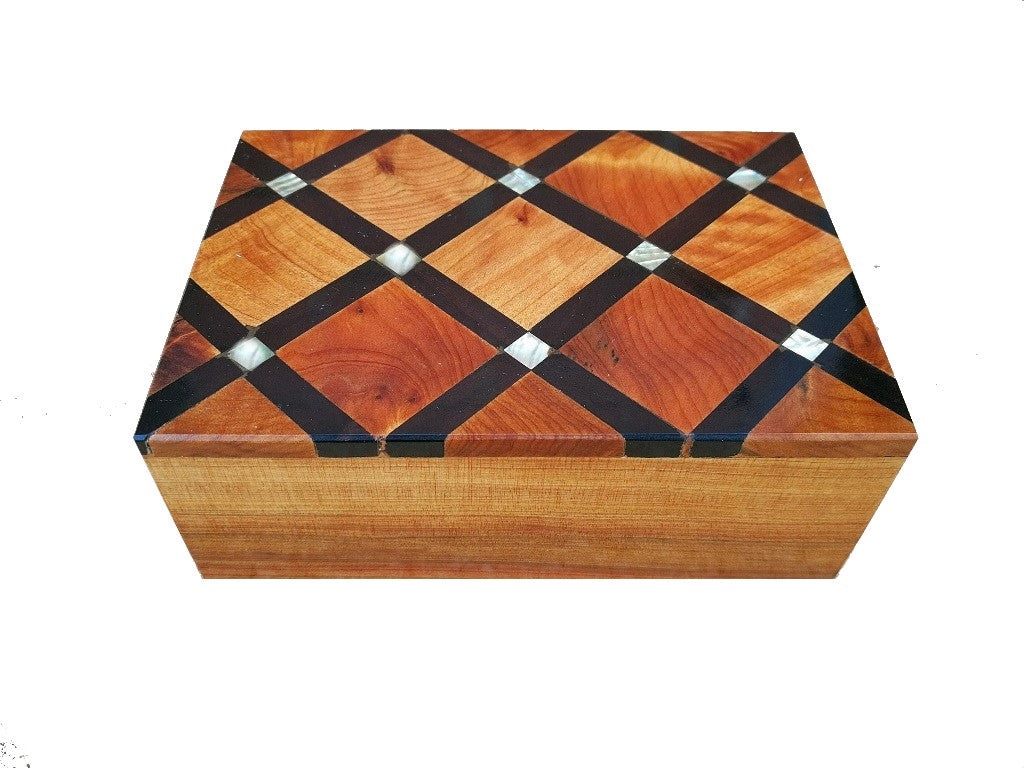
Surprise is the first reaction people have to the Thuya wood smell.
The wood’s natural oils and resins give it that aroma. When the item is brand-new or has just been opened, it is at its strongest. It gradually becomes softer but never completely goes away.
Some misconceptions:
- Strong smell ≠ chemical treatment
- Fading scent ≠ loss of quality
In fact, the aroma is often one of the easiest ways to distinguish real Thuya from substitutes or composite woods.
Real Moroccan Marquetry vs Decorative Imitations
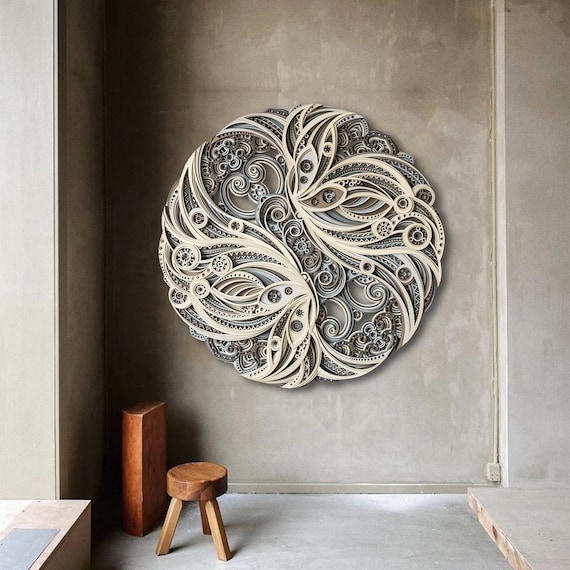
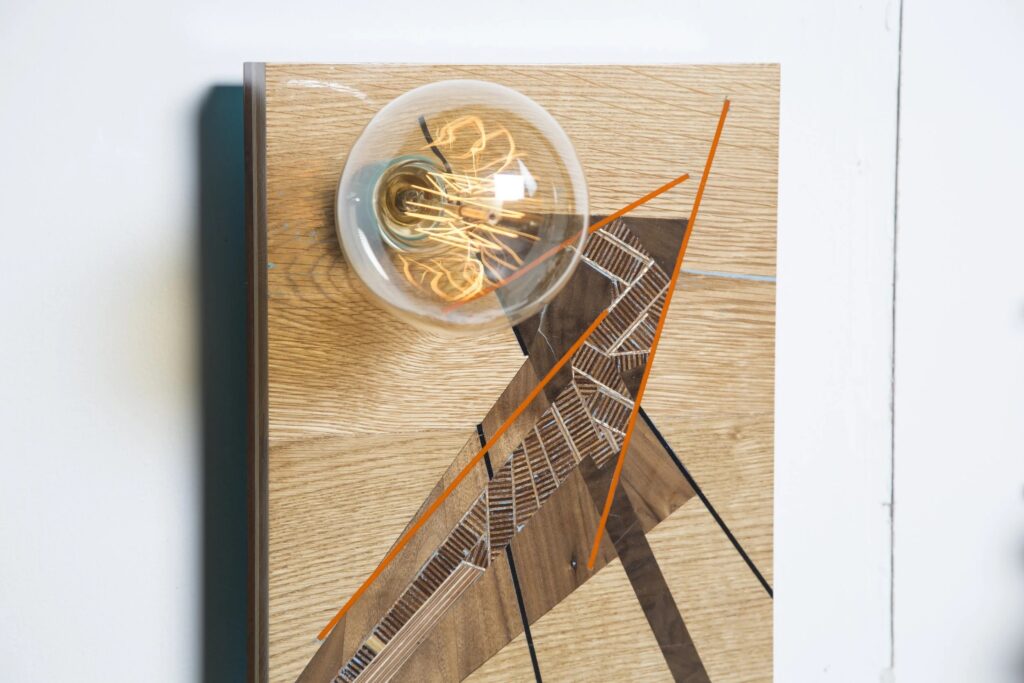
Not every inlaid wooden object is marquetry—and not every patterned surface is handmade.
Common signs of imitation:
- Perfectly repeated patterns
- Flat, printed, or laser-cut designs
- No variation between identical objects
Traditional marquetry shows:
- Slight asymmetry
- Depth you can feel with your fingertips
- Minor irregularities that reveal human work
A frequent mistake is assuming “intricate” means “authentic.” In reality, machines are very proficient at intricate repetition. Hands are not—and that’s the point.
Who Thuya Marquetry Is (and Isn’t) For
Thuya marquetry appeals most to people who:
- Value material honesty
- Enjoy objects that age subtly
- Appreciate regional, place-based craft
It may disappoint those who expect:
- Perfect uniformity
- Odorless wood
- Trend-driven decor
I’ve seen both reactions. Some people form an immediate connection. Others realize it isn’t what they were looking for. Neither response is wrong—but knowing in advance makes all the difference.
Final Thought—A Craft Rooted in Place, Not Trends
Moroccan Thuya marquetry isn’t just about decoration.
It’s about a tree that grows in one region, artisans who learned by watching, and objects that quietly carry scent, grain, and time.
the process—it Once you understand that connection—to Essaouira, to Thuya, to the process—it becomes much harder to mistake imitation for craft.
And it’s much easier to appreciate the real thing, even without buying it.