Top 5 Questions You Should Ask Before Buying Moroccan Decor Online
Introduction—Why Buying Moroccan Decor Online Feels Risky
Buying Moroccan decor online is very different from buying it in person.
In a market or workshop, you can:
- Touch the material
- Smell the leather or wool
- See how something is finished
- Ask questions and read the response immediately
Online, all of that disappears. What’s left is a photo, a description, and a few carefully chosen words—often repeated across dozens of listings.
That’s where hesitation comes from.
Not because Moroccan decor is unreliable—but because most buyers don’t know which questions actually matter.
This guide isn’t about spotting scams.
It’s about asking five simple questions that quietly reveal whether a listing is worth your trust.
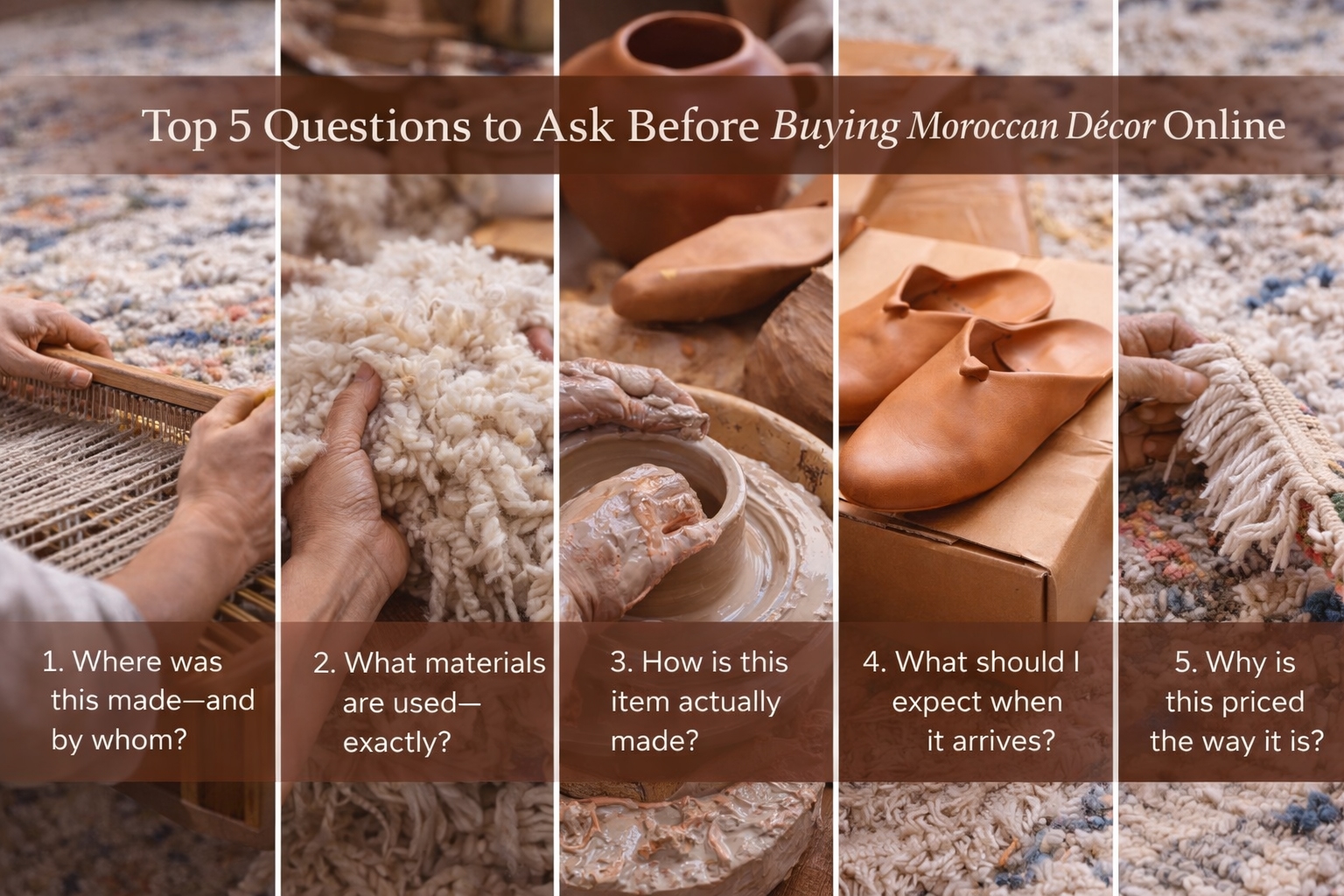
1. “Where Was This Made—and By Whom?”
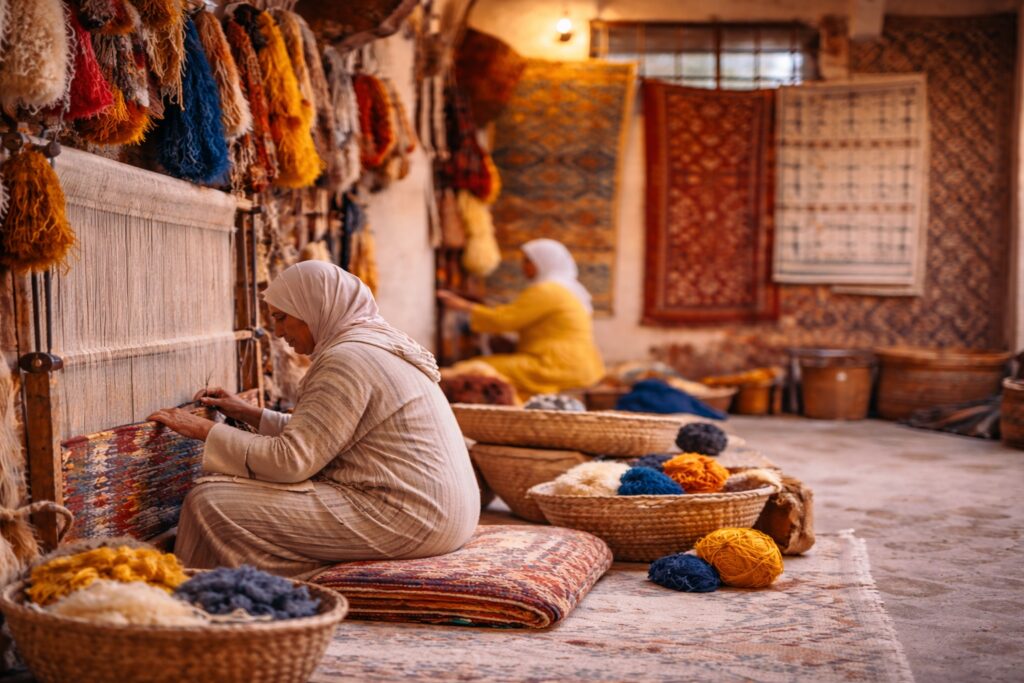
This is the most basic question, and the one most listings avoid answering clearly.
Be cautious of answers like:
- “Made in Morocco” (no further detail)
- “Sourced from artisans”
- “Inspired by traditional craftsmanship”
A credible seller can usually tell you:
- The city or region
- Whether it was made in a workshop, cooperative, or home setting
- If they work directly with artisans or through intermediaries
You don’t need names or personal details.
You’re listening for specificity, not storytelling.
Vague answers often signal resale or bulk sourcing.
2. “What Materials Are Used—Exactly?”
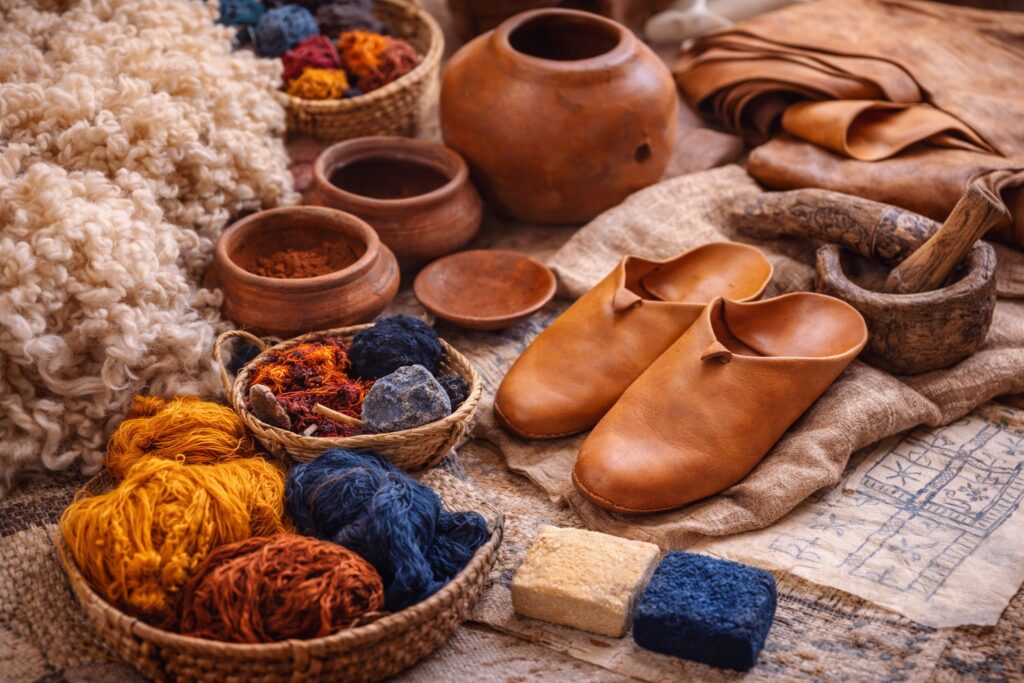
“Natural,” “genuine,” and “authentic” are marketing words.
Materials are concrete.
Good listings clearly state:
- Wool, leather, clay, wood (and which type)
- Whether dyes are natural or synthetic
- If leather is vegetable-tanned or chemically treated
If you ask and receive an unclear answer—or a shift back to aesthetics—that’s a red flag.
Artisans know their materials.
Resellers often don’t.
3. “How Is This Item Actually Made?”
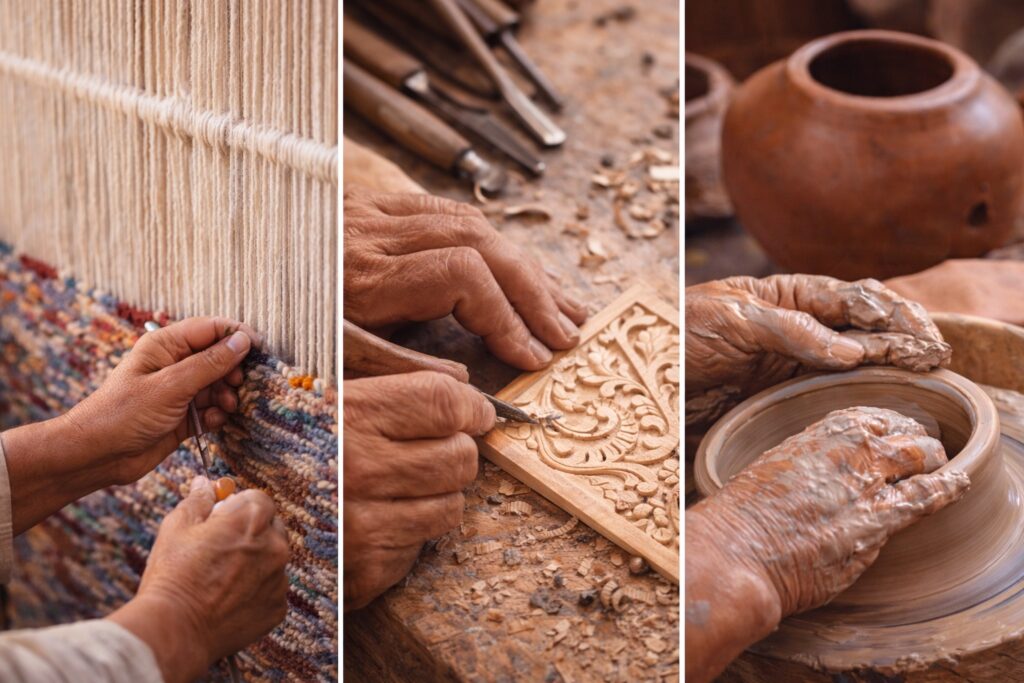
This question separates handmade from hand-assembled.
You’re not looking for a long explanation.
Even a short answer can tell you a lot.
For example:
- Handwoven vs machine-woven
- Hand-carved vs laser-cut
- Wheel-thrown vs molded pottery
If the process sounds generic—or avoids the “how”—assume shortcuts.
Real craftsmanship usually comes with simple, confident explanations.
4. “What Should I Expect When It Arrives?”
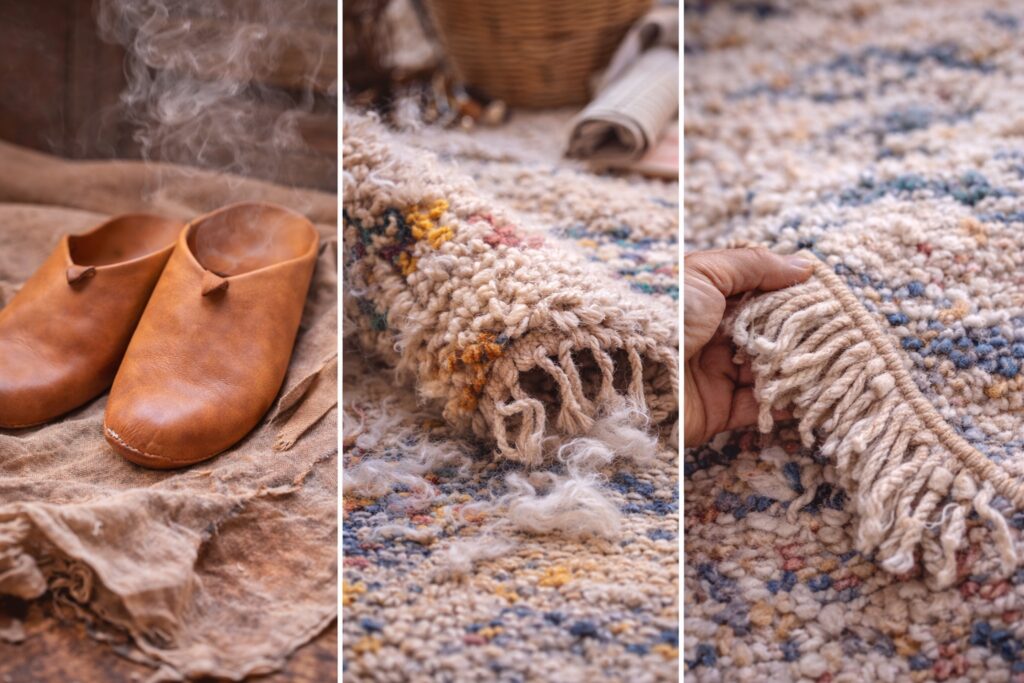
This is where experience matters most.
Honest sellers will tell you things like
- Leather may smell strong at first
- Wool rugs may shed initially
- Handmade items may show small irregularities
These aren’t flaws. They’re normal.
If a listing promises perfection—no smell, no variation, no change—it’s often describing a factory product.
Transparency here is a sign of confidence, not weakness.
5. “Why Is This Priced the Way It Is?”
You don’t need a cost breakdown.
But you should be able to understand what you’re paying for.
Good answers often mention:
- Time to make
- Material quality
- Size or density
- Finishing work
If price is justified only by:
- Trends
- Style labels
- Comparisons to higher prices
…then value is unclear.
A fair price usually comes with a clear reason.
How These Questions Work Together
Individually, each question helps.
Together, they create a pattern.
When answers are:
- Specific
- Consistent
- Calm and factual
You’re likely dealing with a knowledgeable, transparent seller.
When answers are:
- Vague
- Overly decorative
- Repetitive across listings
You’re probably looking at mass sourcing with a handmade narrative layered on top.
What to Remember Before You Buy
You don’t need to interrogate sellers.
And you don’t need to become an expert.
You just need to ask better questions than the average buyer.
Most unreliable listings fail quietly—not loudly.
They rely on buyers not knowing what to ask.
Now you do.
Final Thought—Confidence Comes From Clarity
Buying Moroccan decor online will always involve a leap of trust.
But it shouldn’t feel like a gamble.
When sellers can answer these five questions clearly, trust follows naturally.
And when they can’t—that’s already your answer.