Moroccan Tazenakht Rugs: The Complete Guide to the Bold Berber Carpets of the Atlas
Moroccan Tazenakht rugs are not subtle. They are expressive, richly colored, and deeply rooted in tradition. If you’re drawn to Moroccan rugs but want something more vibrant and graphic than the minimalist Beni Ourain style, Tazenakht rugs offer a powerful alternative.
Woven in the High Atlas region of Morocco, these rugs are prized for their dense weave, natural dyes, and striking geometric language. This guide will help you understand what makes a Tazenakht rug special, how to style one confidently, and how to recognize a truly authentic piece.
What Is a Moroccan Tazenakht Rug?


A Tazenakht rug is a traditional Berber rug originating from the town of Tazenakht and the surrounding Siroua region. Unlike plush, high-pile rugs, Tazenakht rugs are typically flat-woven or very tightly knotted, giving them a dense, structured feel.
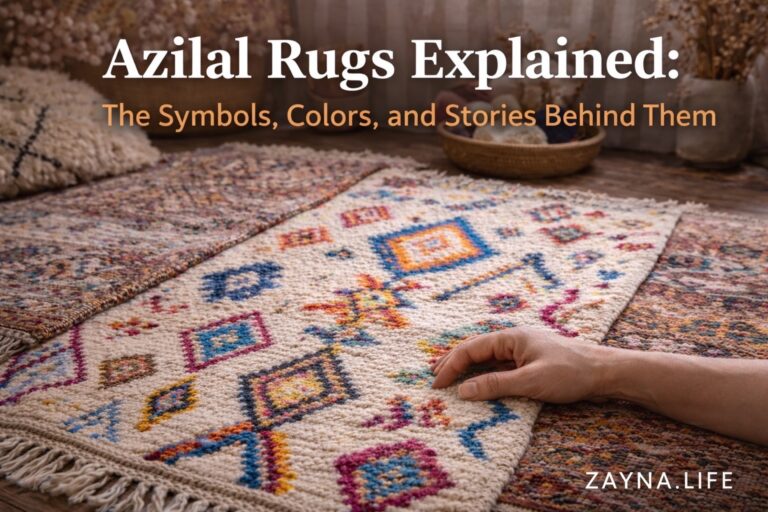
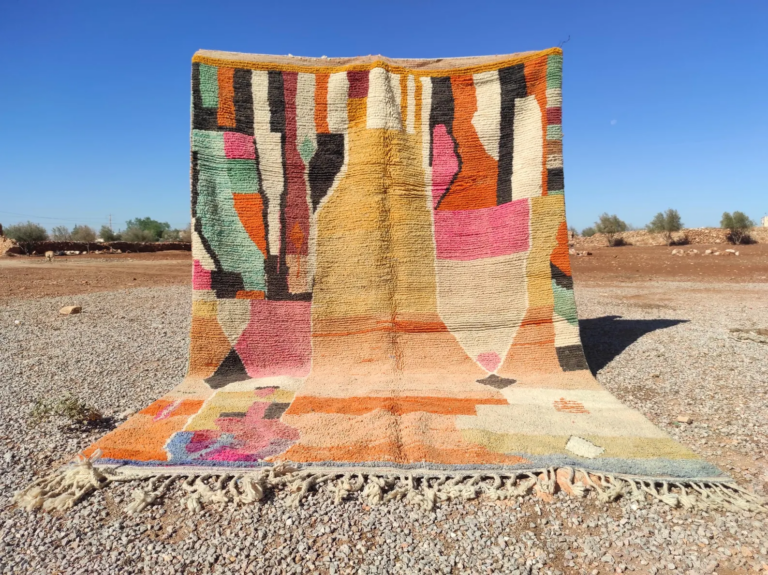
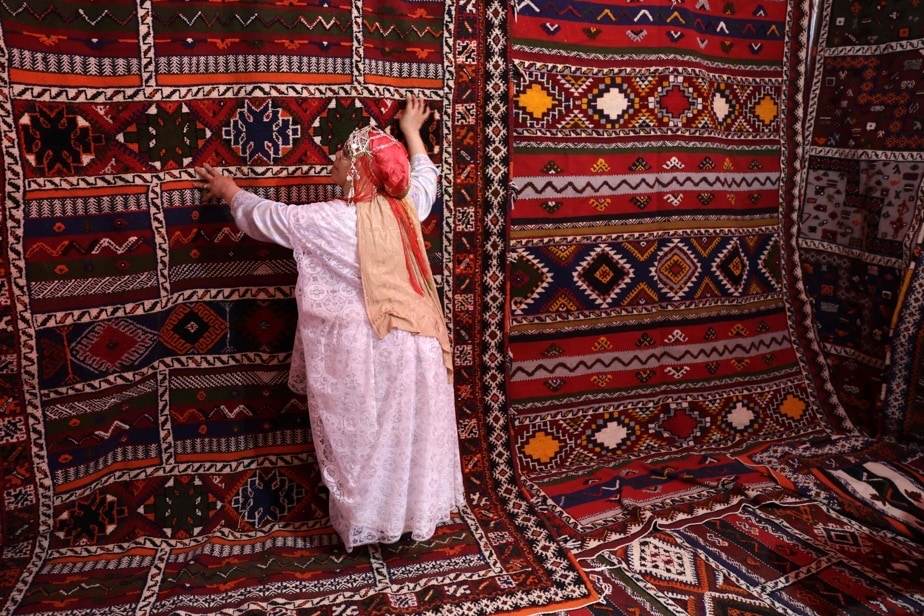
What immediately sets them apart is their bold use of color. Deep reds, saffron yellows, burnt oranges, emerald greens, and inky blacks are arranged in strong geometric compositions. These patterns are not decorative trends—they are a visual language passed down through generations.
Tazenakht rugs were historically woven for personal use: to mark life events, protect the household, or express identity. That intention is still visible today. Each rug carries a sense of purpose and confidence, making it feel more like a functional artwork than a simple floor covering.
The Story Behind Tazenakht Rugs: A Rug Woven for Life


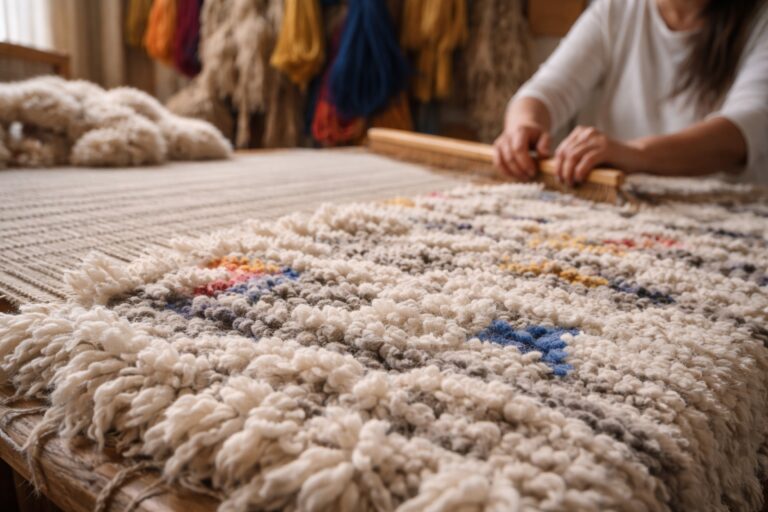
Tazenakht rugs are traditionally woven by Berber women using techniques learned from mothers and grandmothers. These rugs were not originally made for sale. They were woven slowly, often over months, for family use—sleeping, gathering, and celebrating daily life.
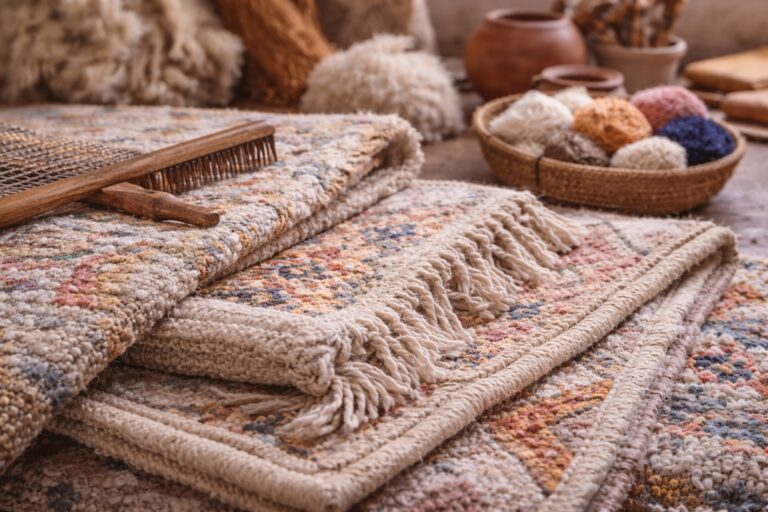
The wool is typically sourced locally and dyed with natural materials such as henna, pomegranate peel, saffron, indigo, and madder root. This process creates colors that feel alive, with subtle variations that synthetic dyes can’t replicate.
Patterns often include protective symbols, fertility motifs, and abstract representations of the natural world. Rather than following a fixed template, the weaver composes freely, guided by memory, intuition, and personal experience. This is why no two authentic Tazenakht rugs are ever identical—and why they feel so expressive.
Tazenakht vs Other Moroccan Rugs: Why They Feel Different


If you’re familiar with Moroccan rugs, you may be wondering how Tazenakht rugs compare to more well-known styles.
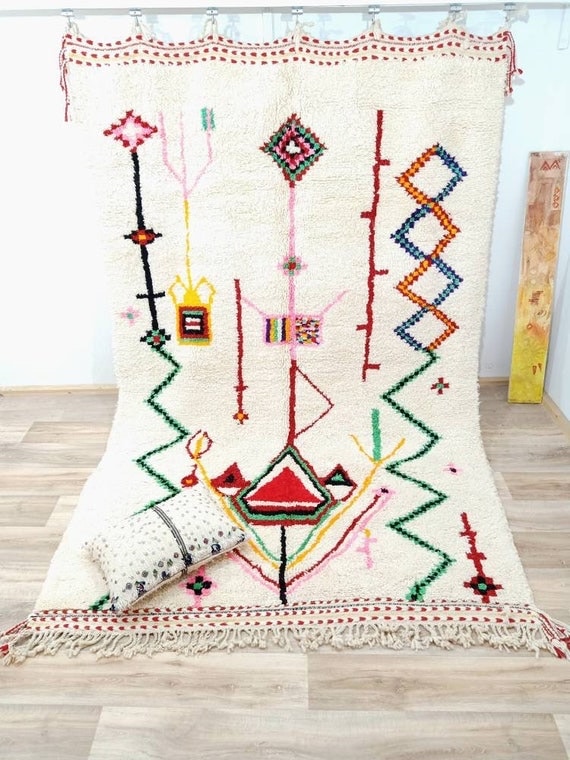
Beni Ourain rugs are soft, neutral, and minimal, designed to blend seamlessly into calm interiors. Azilal rugs are playful and abstract, often using bright colors but with looser, more spontaneous compositions.
Tazenakht rugs sit in a different category. They are more structured, more intentional, and visually grounded. Their patterns feel architectural rather than whimsical, and their color palettes are bold but controlled.
If you want a rug that anchors a room and immediately draws the eye—without feeling trendy or decorative—Tazenakht rugs are often the strongest choice.
How to Style a Tazenakht Rug Without Overwhelming Your Space


Because Tazenakht rugs are visually powerful, styling them well is about balance rather than restraint. The simplest rule is to let the rug lead.
In living rooms, pair a Tazenakht rug with neutral walls, natural wood furniture, linen or leather seating, and minimal accessories. This gives the rug space to breathe and keeps the room from feeling busy.
These rugs work especially well in creative spaces, studios, eclectic interiors, and homes that mix modern and artisanal elements. Even in contemporary settings, a Tazenakht rug can act as a grounding element that adds warmth and character without disrupting clean lines.
Rather than matching colors exactly, echo one or two tones from the rug subtly through cushions, ceramics, or artwork to create cohesion.
How to Recognize an Authentic Tazenakht Rug


Authentic Tazenakht rugs have a presence that’s difficult to fake. The first thing you’ll notice is texture: they feel dense, slightly firm, and substantial underfoot.
Look closely at the weave. Small irregularities in pattern, line thickness, or shape are a good sign—they show that the rug was woven by hand, not produced on a machine. Colors should appear rich but not flat, with gentle variations caused by natural dyes.
An authentic rug will also come with transparency about its origin. Sellers should be able to tell you where it was woven, how it was made, and what materials were used. If a rug looks overly perfect or overly bright, it’s often a sign of mass production.
Is a Tazenakht Rug Worth the Investment?


Tazenakht rugs are not inexpensive, and that’s precisely the point. Their value lies in time, skill, and cultural depth.
A single rug can take months to complete, from wool preparation to dyeing to weaving. Natural dyes age gracefully, developing character rather than fading. With proper care, a Tazenakht rug can last for decades.
Beyond durability, these rugs offer something rarer: emotional longevity. They don’t follow trends, and they don’t lose relevance. Many owners describe them as pieces they would never replace—only pass on.
If you’re looking for a rug that feels meaningful, personal, and enduring, a Tazenakht rug is very often worth the investment.
How to Care for a Tazenakht Rug (So the Colors Stay Alive)


Caring for a Tazenakht rug is simpler than many people expect. Regular, gentle vacuuming without a rotating brush helps remove dust while protecting the fibers.
In case of spills, blot immediately with cold water and a clean cloth. Avoid harsh detergents or chemical cleaners, as they can damage natural dyes. Rotating the rug once or twice a year ensures even wear and sun exposure.
Professional cleaning is rarely needed and should only be done by specialists familiar with handwoven wool rugs. With mindful care, your Tazenakht rug will not only last—it will improve with age.
Final Thoughts
A Moroccan Tazenakht rug is not meant to fade into the background. It brings color, confidence, and cultural depth into a space, while remaining deeply functional.
If you value craftsmanship, authenticity, and bold design that stands the test of time, Tazenakht rugs offer something truly special. They don’t just decorate a room—they define it.