Top 5 Things That Actually Affect the Price of a Moroccan Rug
Introduction—Why Prices Feel So Confusing
If you’ve spent any time looking for a Moroccan rug, you’ve probably noticed something unsettling.
Two rugs that look similar—same size, similar colors, both labeled “handmade”—can be priced hundreds or even thousands of dollars apart. And most listings don’t explain why.
That gap creates anxiety. You would rather not overpay for marketing. But you also don’t want to miss real quality by chasing the cheapest option.
The truth is simple but rarely explained:
Moroccan rug prices aren’t arbitrary—but the reasons behind them are often invisible.
This guide breaks down the five factors that actually matter, based on how rugs are made, used, and valued over time—not how they’re advertised.
1. Time Spent Weaving (The Biggest Factor People Underestimate)
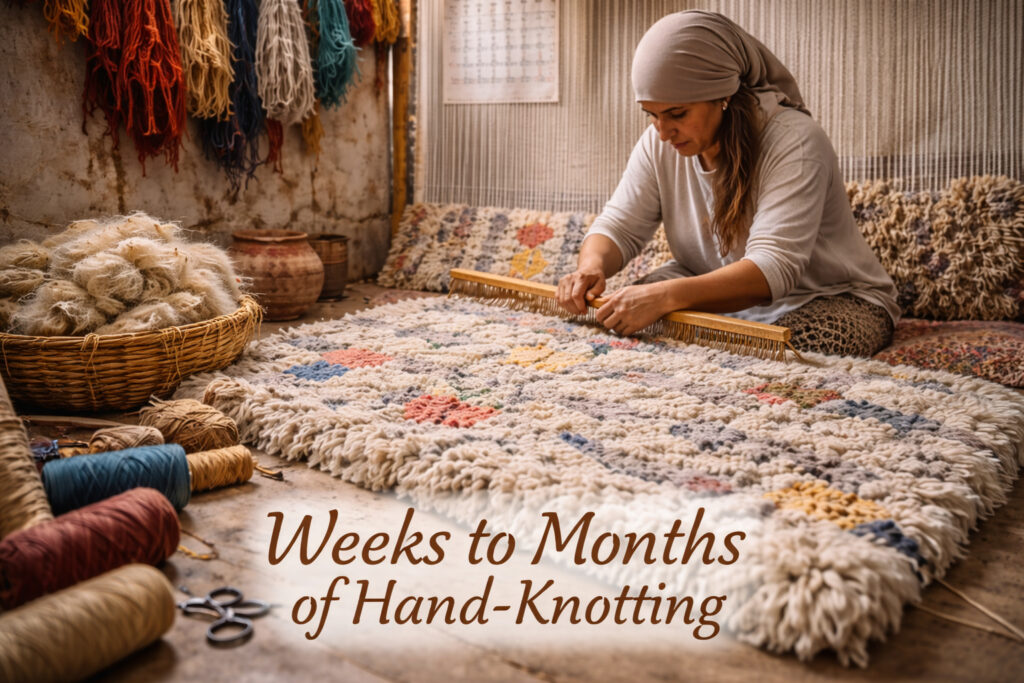
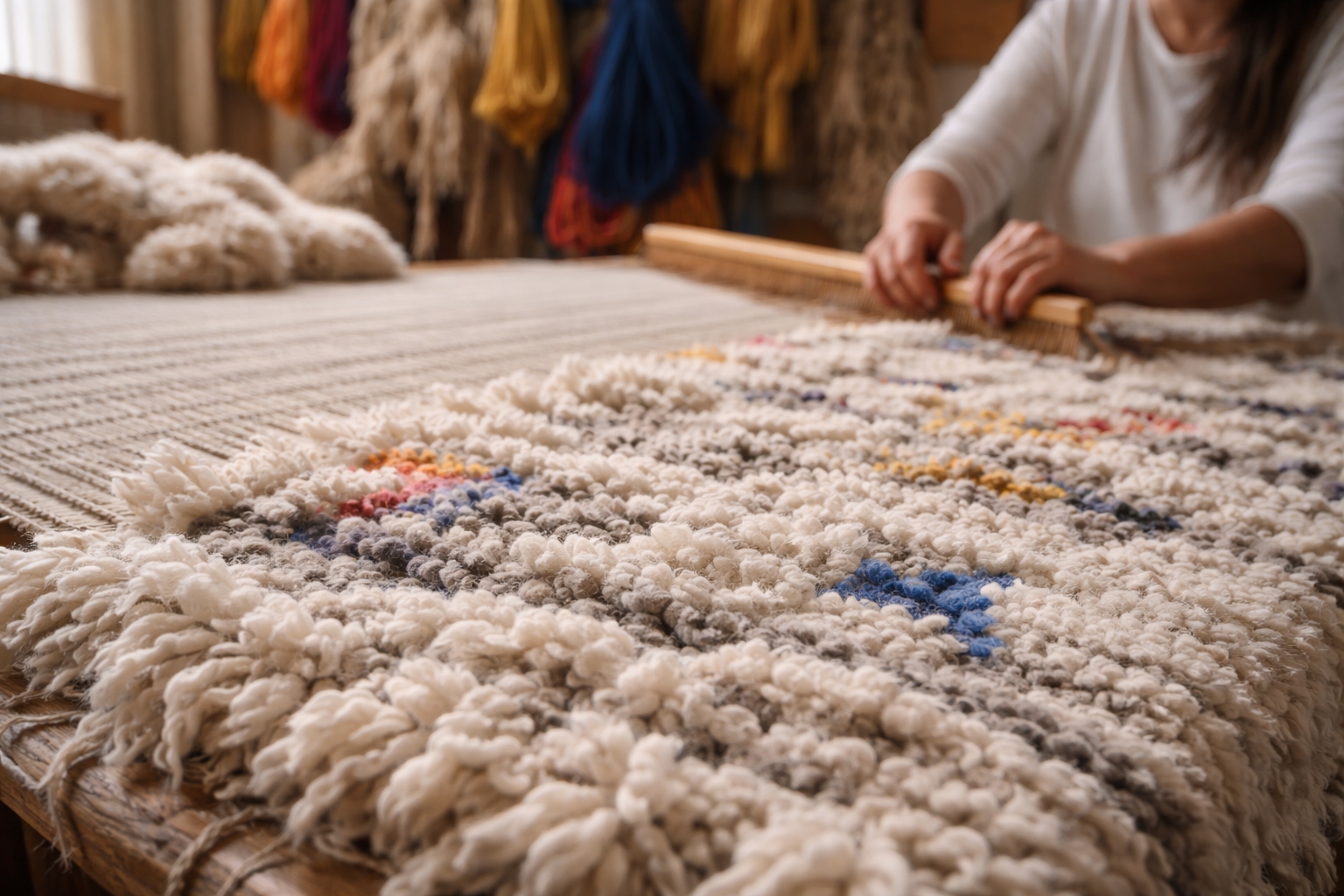
The single biggest driver of price is time.
Not hours.
Weeks. Sometimes months.
A dense, hand-knotted Moroccan rug can take:
- Several weeks for a small size
- Multiple months for larger or more complex pieces
This isn’t factory time. It’s human time—often one weaver, working daily, knot by knot.
Two rugs can be the same size but differ massively in:
- Knot density
- Complexity of weaving
- Finishing work
More time = higher cost.
Not because it’s “luxury,” but because labor adds up.
This factor alone explains why rugs that look similar at first glance can be priced worlds apart.
2. Wool Quality (Not All Wool Is Equal)
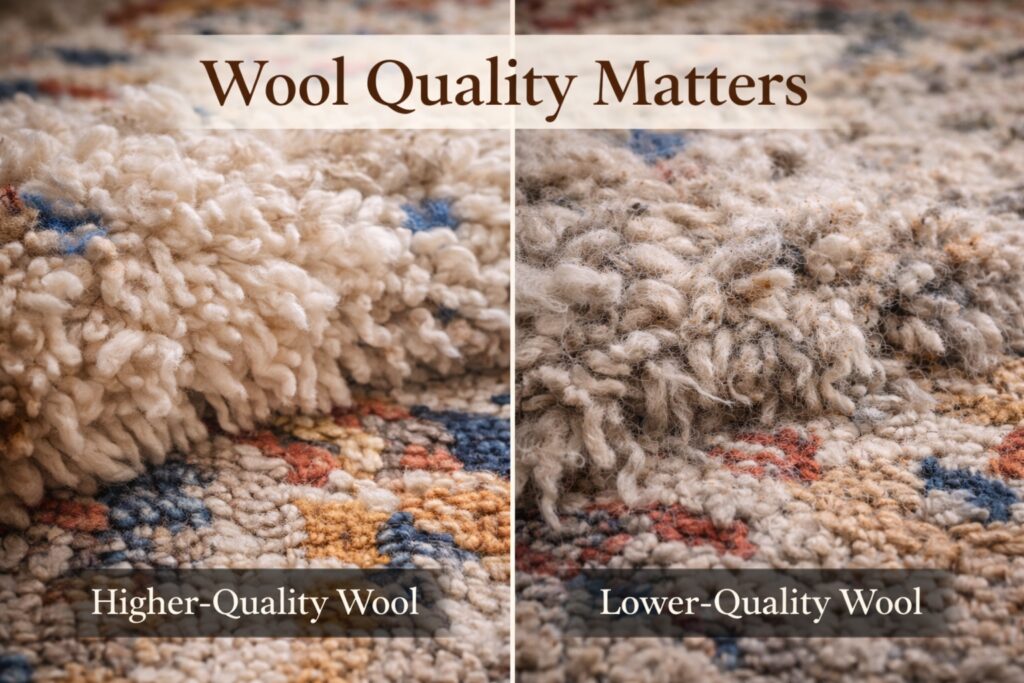
Many buyers assume “wool is wool.” It isn’t.
Price is heavily influenced by:
- Wool thickness and length
- Cleanliness and preparation
- Softness that comes from structure, not treatment
Higher-quality wool:
- Feels softer underfoot without collapsing
- Ages better instead of matting
- Holds color and shape longer
Lower-grade wool may look fine initially—but it often:
- Sheds excessively
- Flattens quickly
- Loses definition over time
You’re not just paying for softness on day one.
You’re paying for how the rug behaves after years of use.
3. Weaving Technique and Density
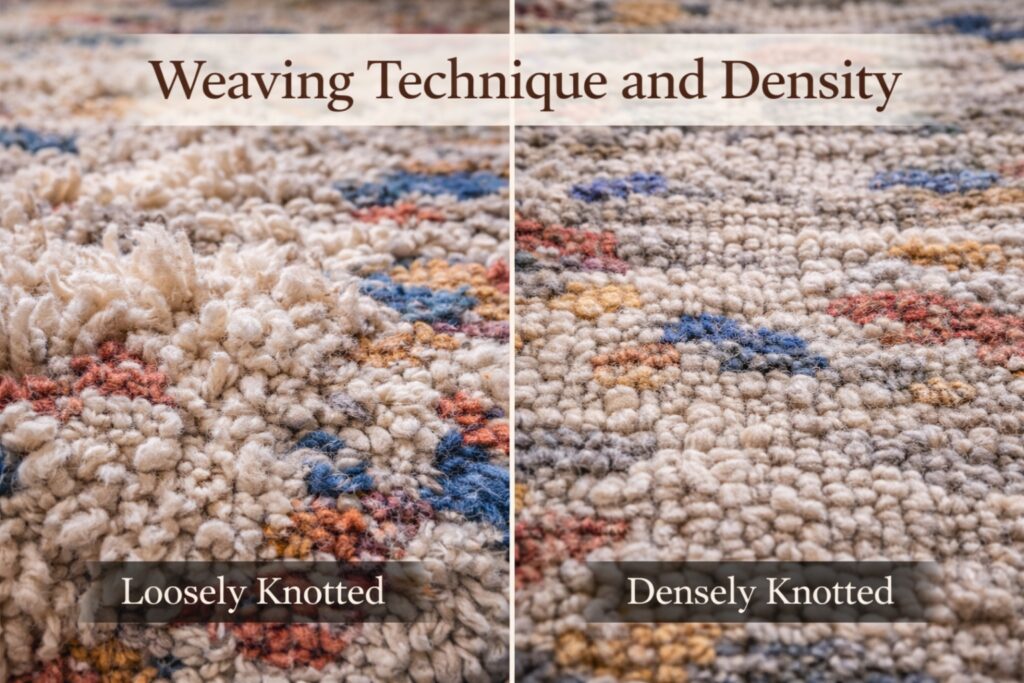
Not all Moroccan rugs are constructed the same way.
Some are:
- Loosely knotted
- Fast to produce
- More expressive and irregular
Others are:
- Very dense
- Structurally controlled
- Slower and more demanding to weave
Higher density generally means:
- More wool
- More labor
- More durability
This is why rugs like Beni Mrirt often cost more than visually similar pieces. The difference is felt underfoot, not always seen in photos.
Density is expensive because it compounds time + material.
4. Region and Tradition (Context Matters)
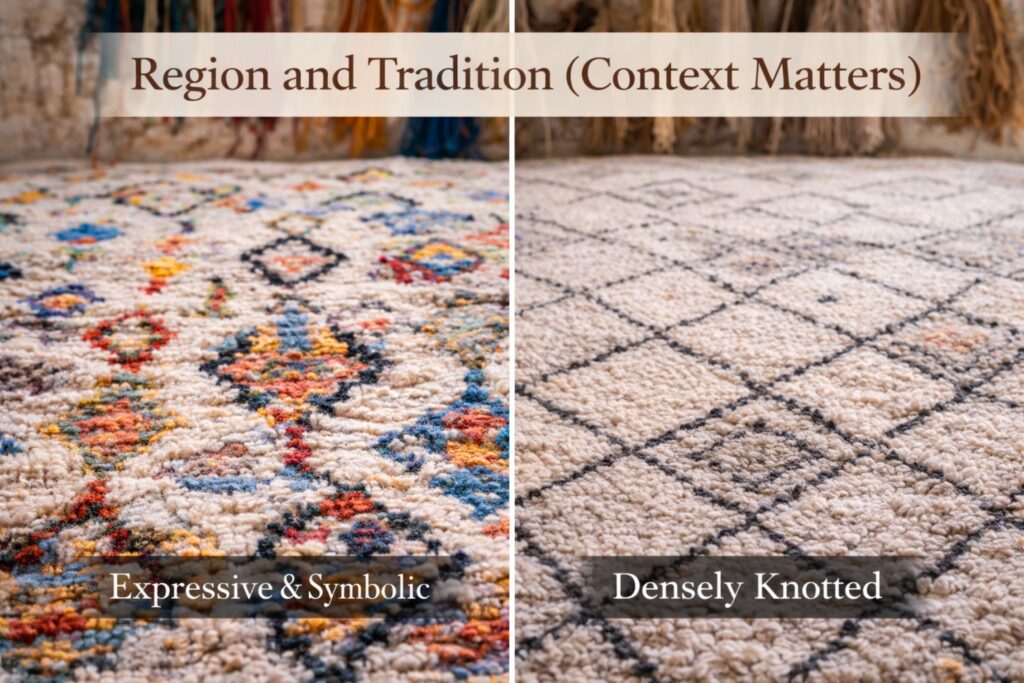
Different Moroccan regions weave with different intentions.
Some traditions prioritize:
- Expression
- Symbolism
- Improvisation
Others emphasize:
- Performance
- Durability
- Refinement
Rugs tied to well-defined regional techniques—where standards are higher or processes more demanding—tend to command higher prices.
This isn’t about prestige.
It’s about what the rug was meant to do.
Understanding the region helps explain why two rugs with similar colors or patterns can carry very different values.
5. Finishing, Not Decoration
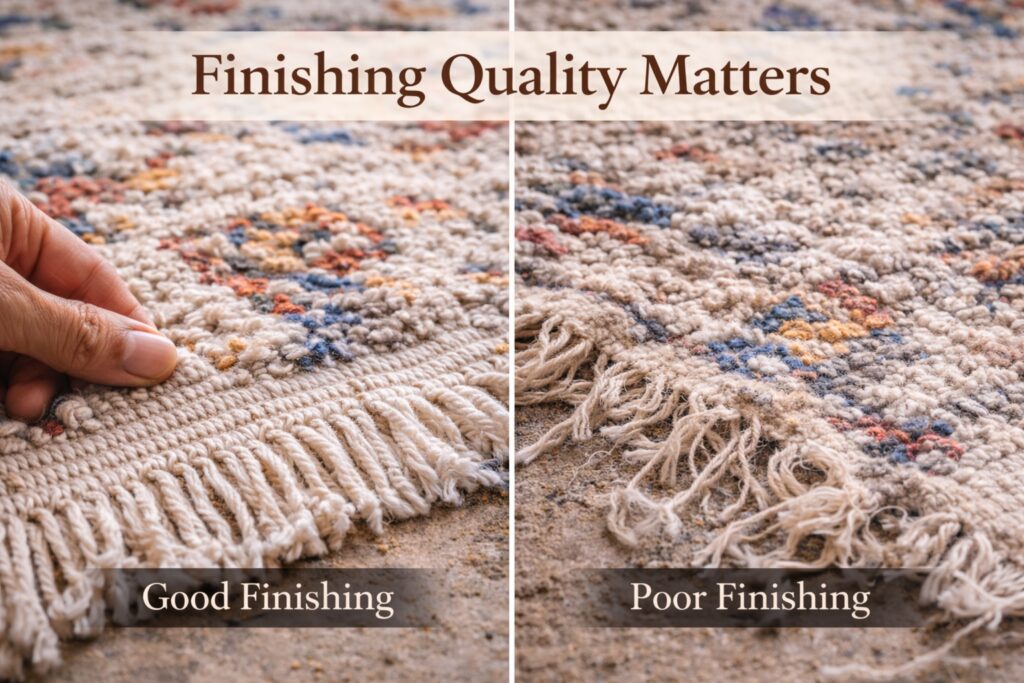
Finishing is where quality quietly reveals itself.
This includes:
- Even pile height
- Strong, clean edges
- Balanced proportions
- Structural consistency
Finishing doesn’t make a rug more decorative.
It makes it more reliable.
Rugs with poor finishing may look fine when new—but show wear faster, curl at the edges, or lose shape.
Good finishing adds cost because it adds:
- Extra labor
- Extra attention
- Extra time after weaving is complete
It’s one of the least visible price factors—and one of the most important.
What Doesn’t Automatically Affect Price (Despite What Listings Say)
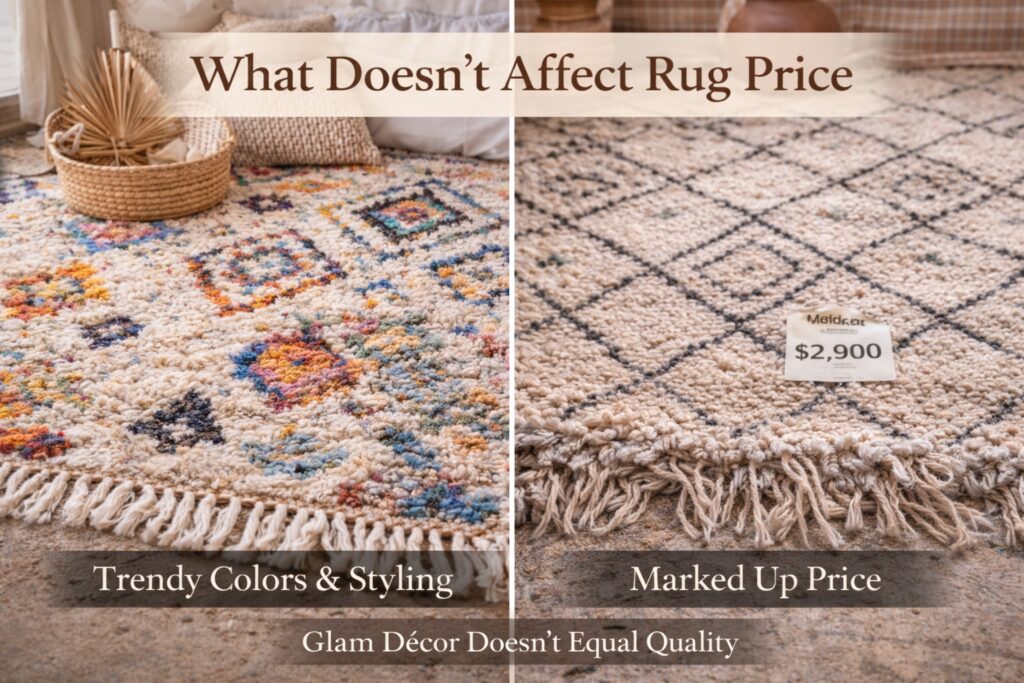
Some things influence marketing more than value:
- Trendy colors
- “Boho” styling language
- Claims of being “vintage-inspired”
- High prices used as a signal of quality
These can matter aesthetically—but they don’t guarantee craftsmanship or longevity.
A high price doesn’t mean a rug is well made.
And a lower price doesn’t automatically mean it’s poor quality.
What matters is why it costs what it does.
How to Think About Price Without Regret
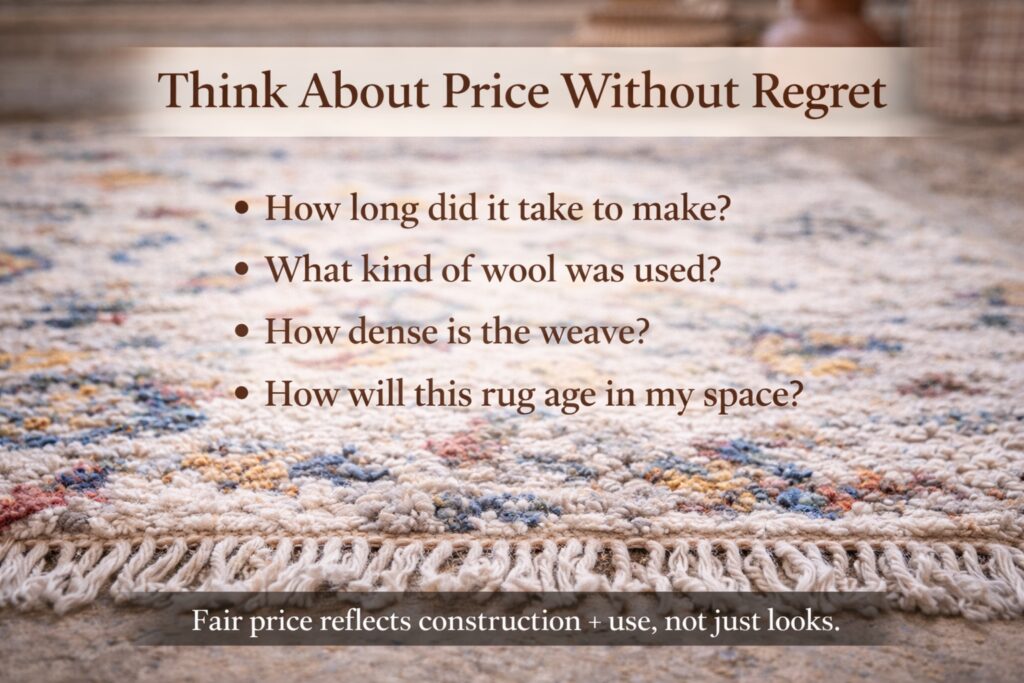
Instead of asking:
“Is this rug expensive?”
Ask:
- How long did it take to make?
- What kind of wool was used?
- How dense is the weave?
- How will this rug age in my space?
When price aligns with construction and use, it feels fair—even years later.
Final Thought—Price Is About Structure, Not Status
Moroccan rug pricing only feels confusing when it’s detached from how rugs are actually made.
Once you understand the real drivers—time, wool, technique, region, and finishing—prices stop feeling arbitrary.
They become a reflection of human effort and material reality, not marketing language.
And that’s where confident decisions start.