Buying Moroccan Decor as a Gift: What Works (and What Often Fails)
Introduction—Why Gifting Moroccan Decor Feels Risky
Buying Moroccan decor for yourself already involves choices. Buying it as a gift adds a different kind of pressure.
You want the object to feel thoughtful, not imposing. It should be culturally significant, yet not overly complex. It should convey a sense of meaning without necessitating an explanation or commitment from the recipient.
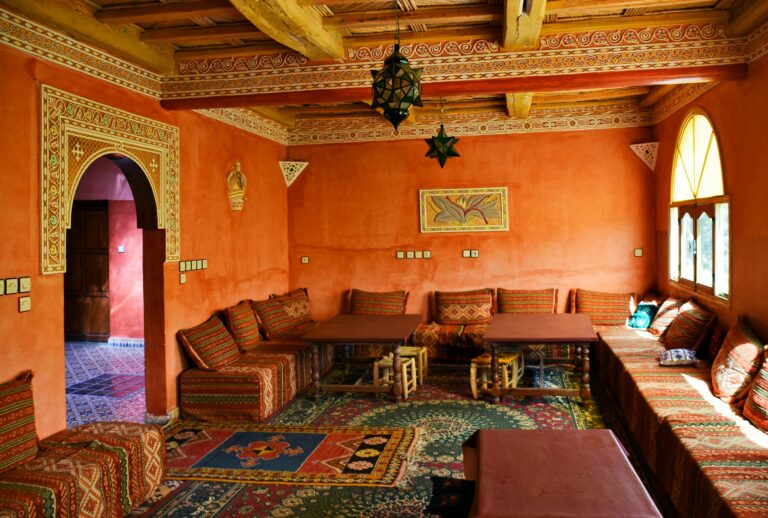
That hesitation is understandable. Moroccan decor often has strong materials, distinctive forms, and a presence that can feel personal. Some pieces settle easily into unfamiliar homes. Others, even when beautifully made, don’t.
This guide isn’t about finding the most impressive gift. It’s about understanding which Moroccan decor objects tend to travel well between homes—and which ones often don’t, so your gift feels generous rather than risky.
What Usually Makes a Good Moroccan Decor Gift?
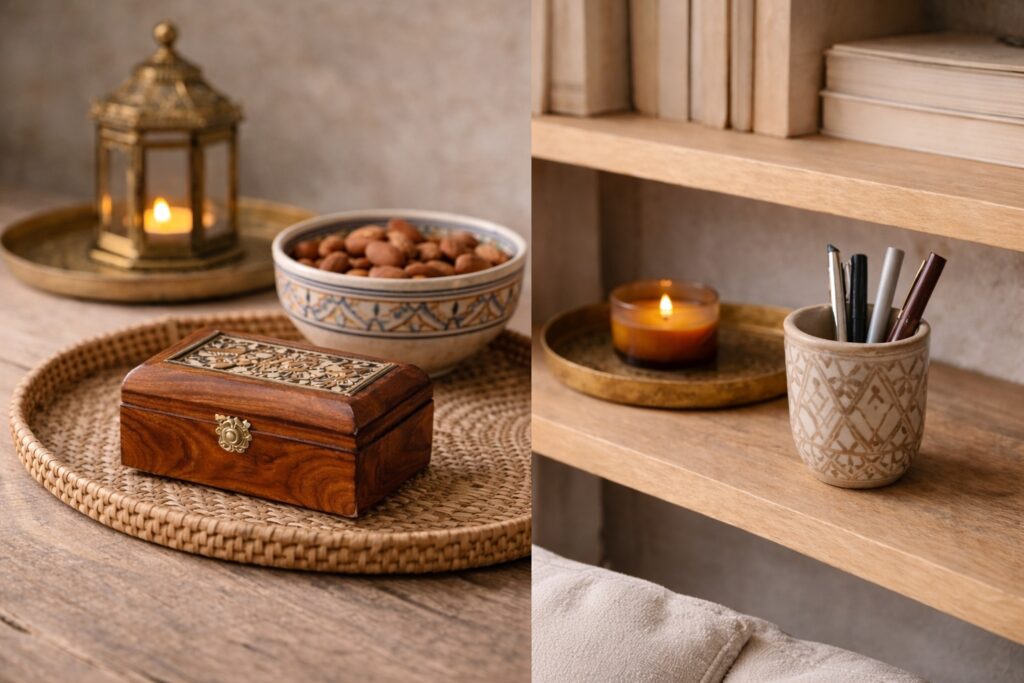
A few traits characterize the Moroccan items that consistently receive positive feedback.
They are:
- Small- to medium in scale
- Clearly functional, even if decorative
- Easy to place without rearranging a room
Think of objects that can quietly integrate into daily life.
Good examples include:
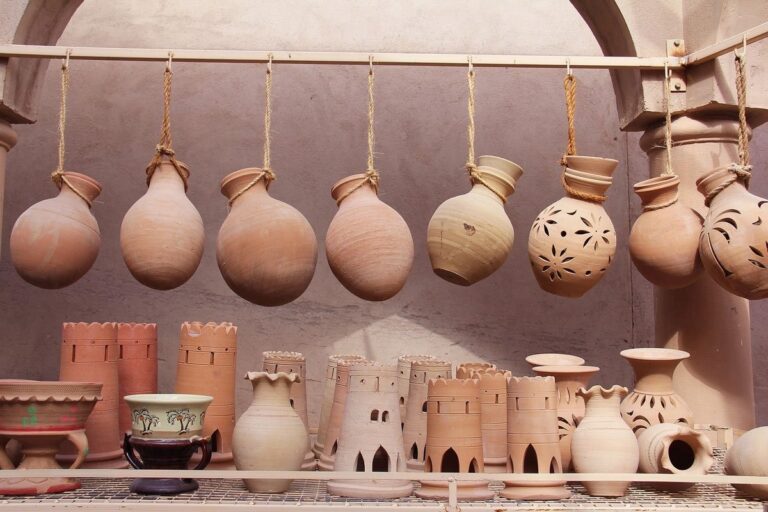
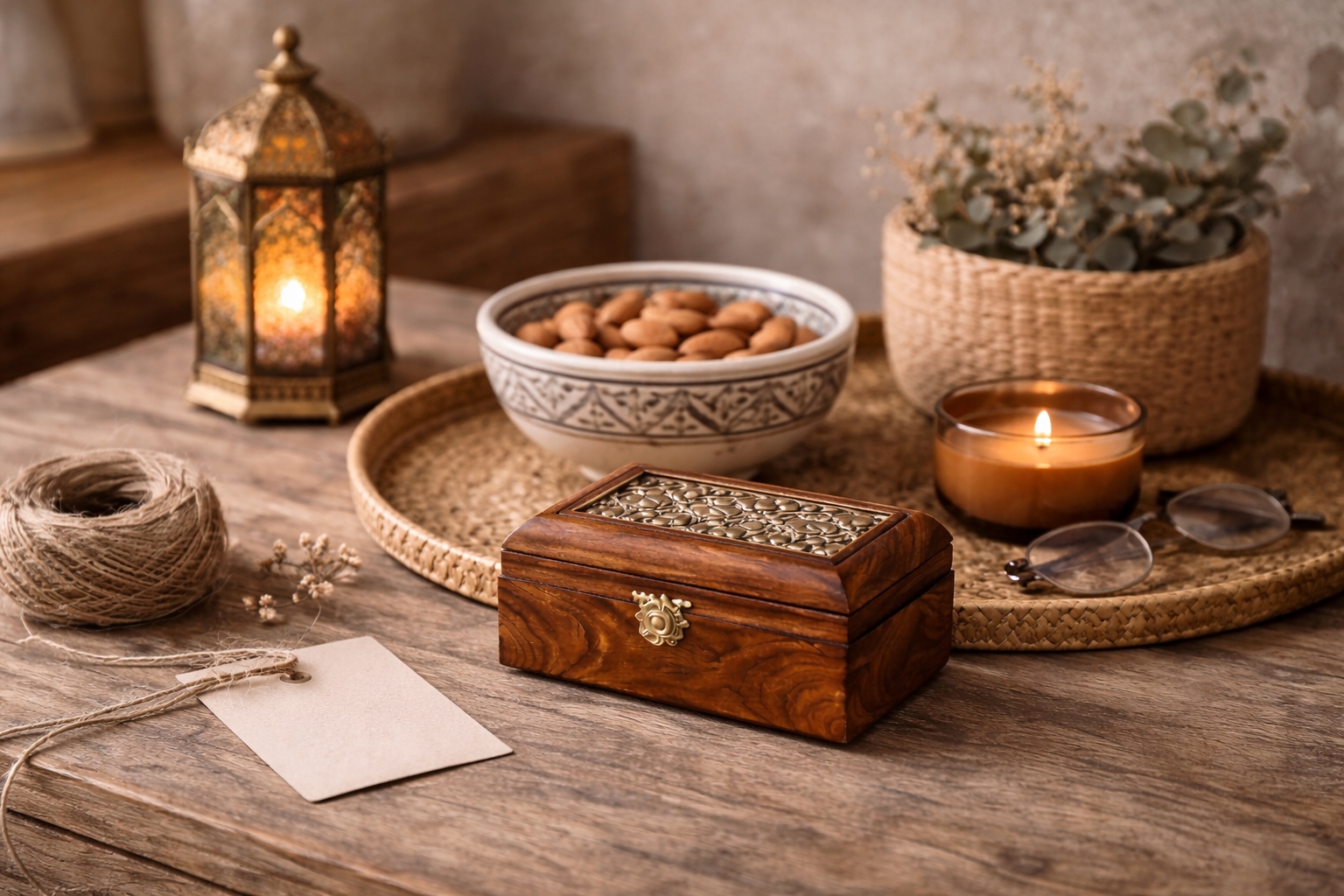
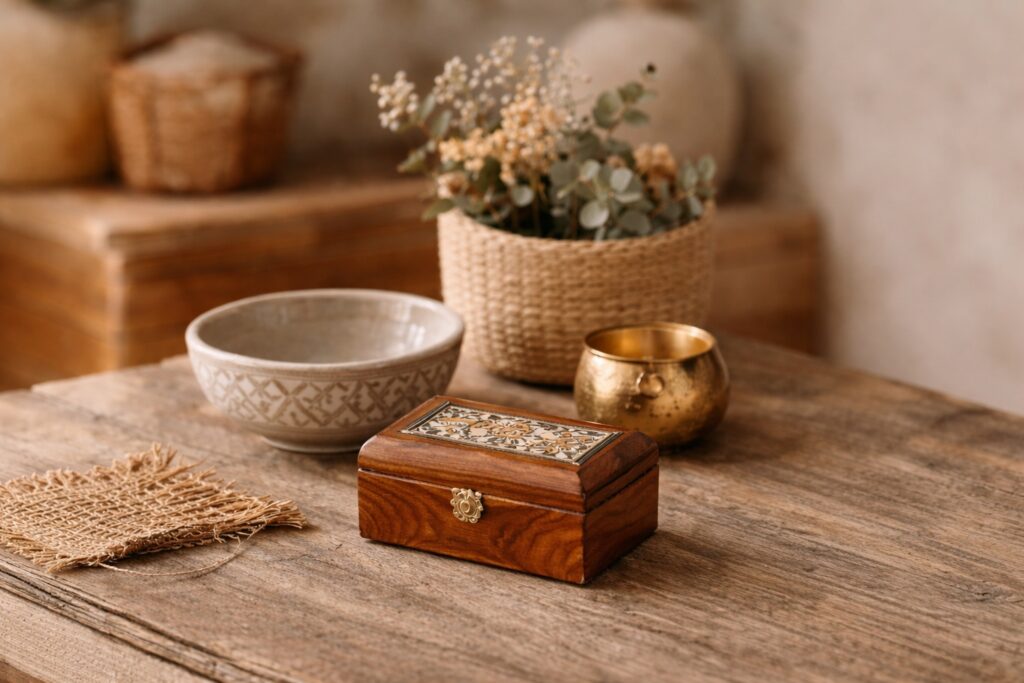
- Small ceramic bowls or cups
- Hand-carved wooden boxes
- Trays or low-profile decorative pieces
These objects don’t ask the recipient to commit to a style. They offer presence without pressure.
Why Practical Objects Outperform Purely Decorative Ones
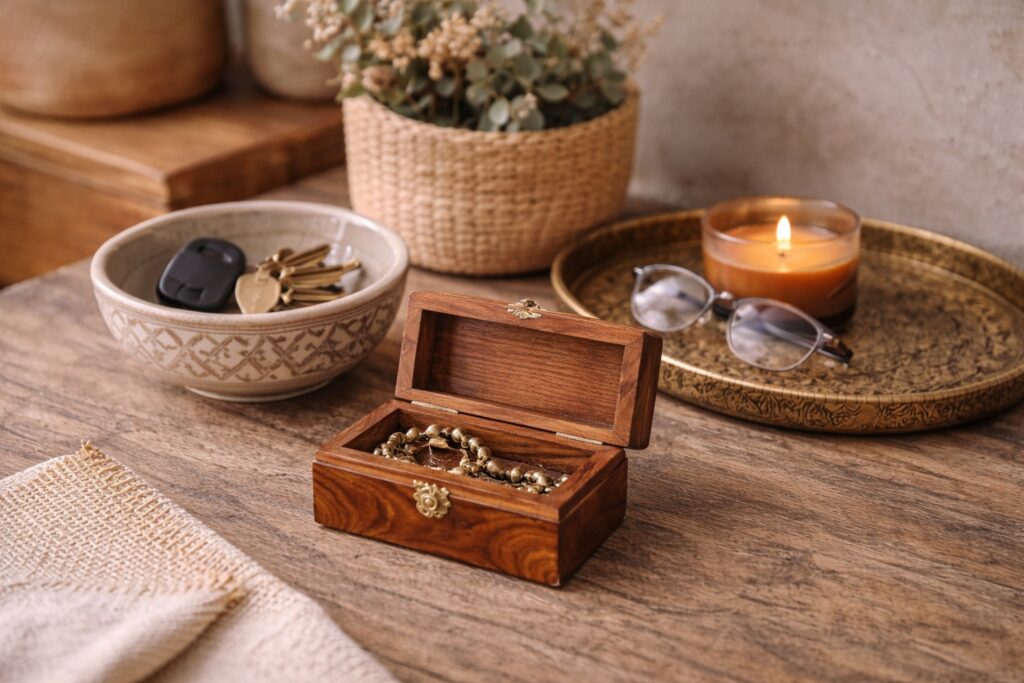
One pattern comes up again and again: gifts that can be used are remembered more fondly.
A bowl that holds keys.
A tray that lives on a coffee table.
A box serves as a personal storage space.
When Moroccan decor has a role, it stops feeling like “foreign decor” and starts feeling like part of someone’s routine.
Purely decorative objects—especially highly ornate ones—can feel harder to place unless the recipient already loves that style.
What Often Fails: Big, Bold, or Too Personal
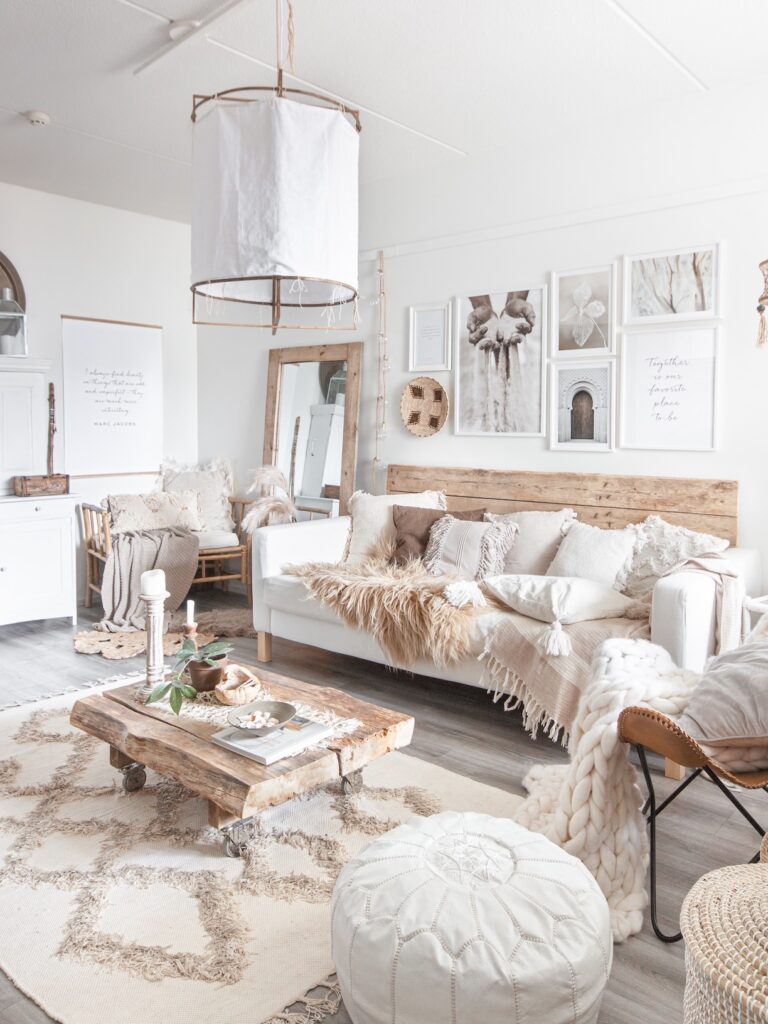
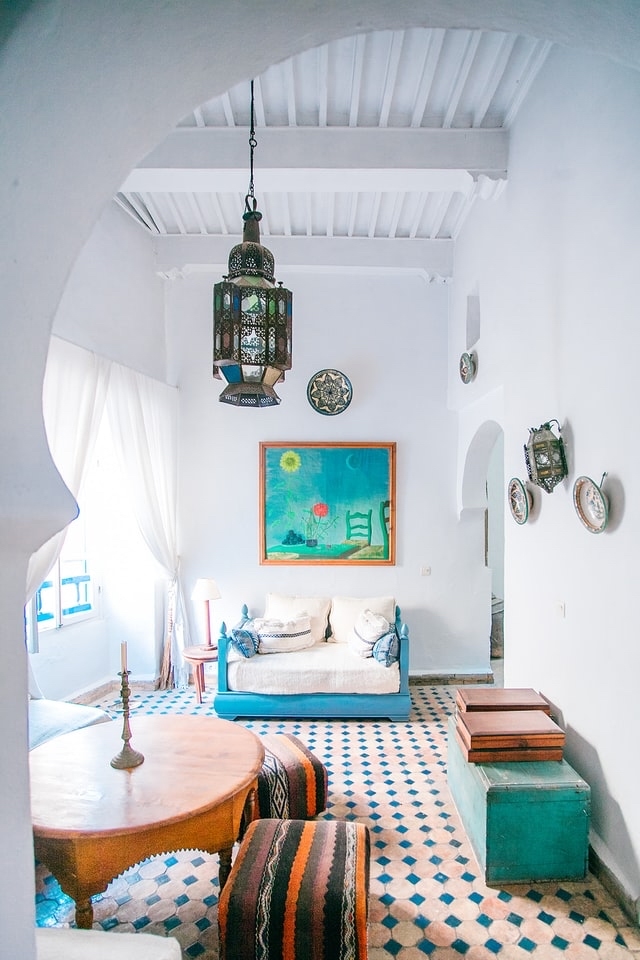
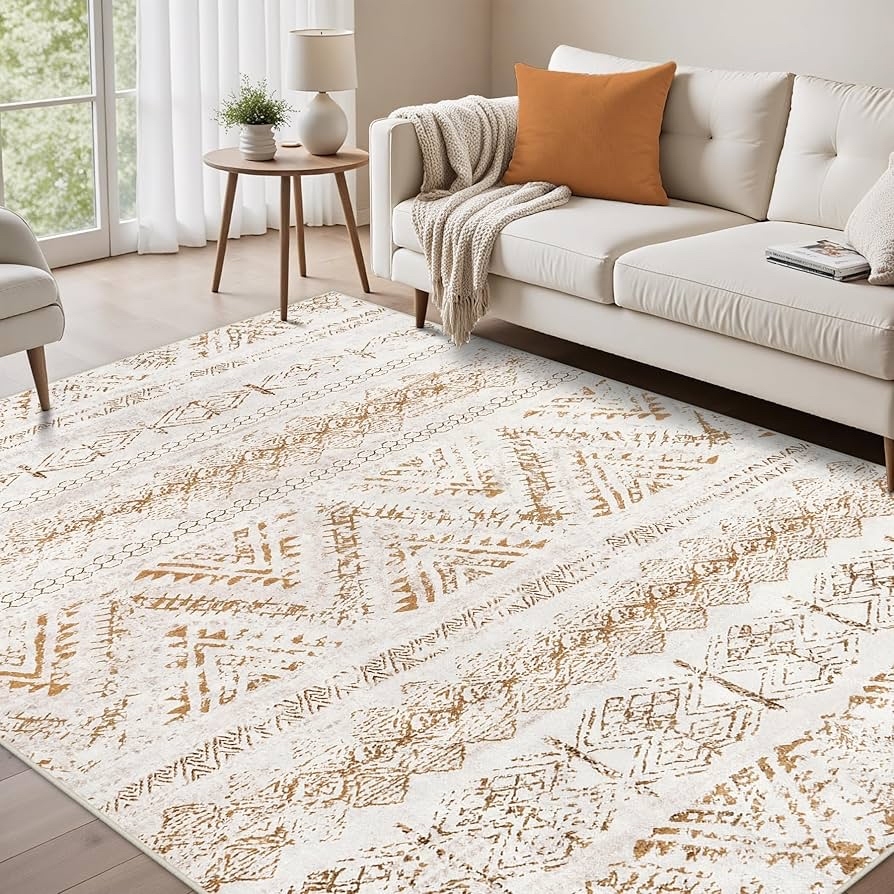
Often, well-intentioned gifts fall short not due to their poor quality, but because they overestimate the recipient’s expectations.
Common problem gifts include:
- Large rugs
- Oversized wall pieces
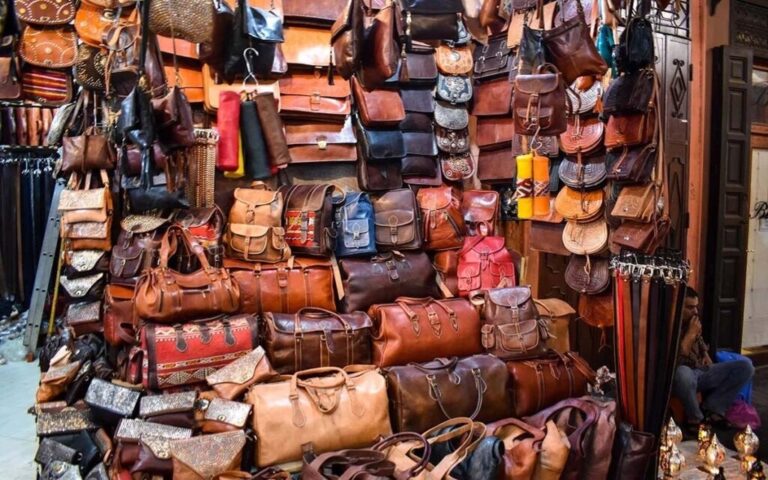
- Highly symbolic or regional items
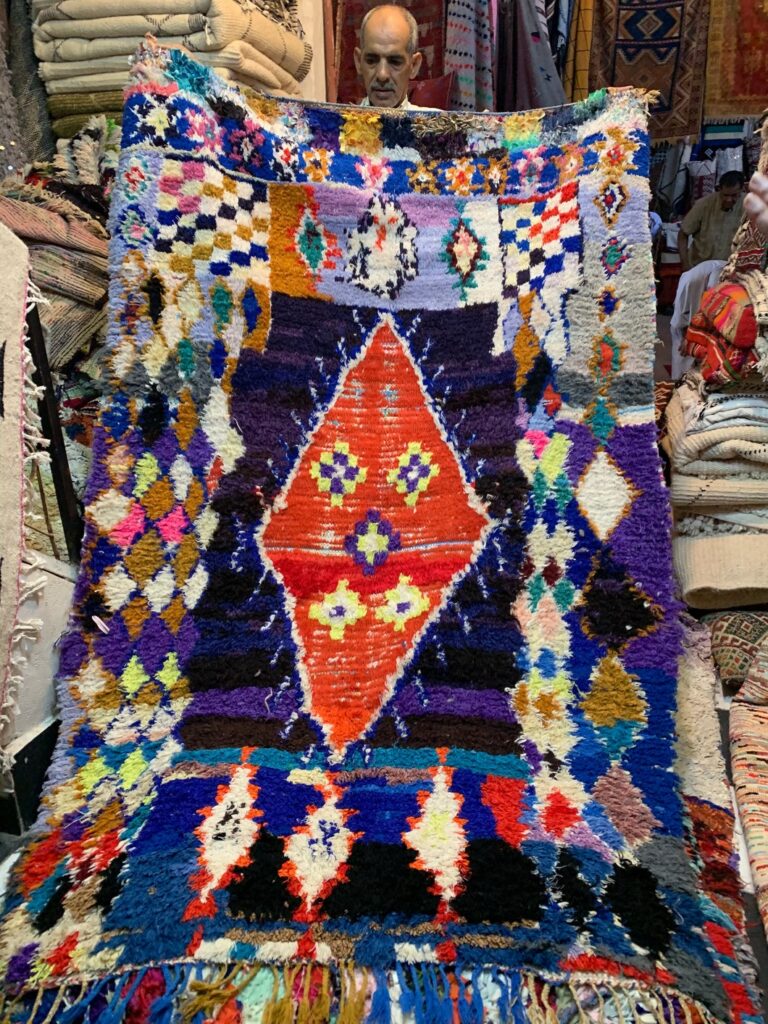
A large Boujad rug might be stunning—but it assumes space, taste, and layout. A strongly symbolic object assumes shared cultural understanding.
These pieces can work beautifully when chosen for yourself. As gifts, they often feel like obligations rather than pleasures.
Scale Matters More Than Style
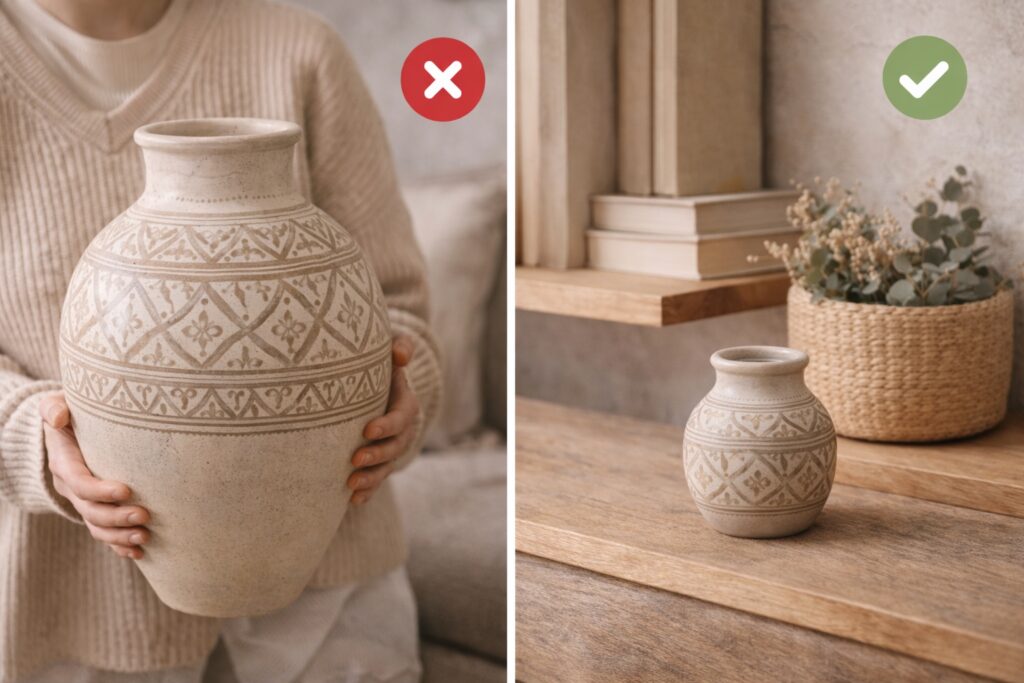
One of the most overlooked factors in gifting decor is scale.
Even neutral, well-made Moroccan pieces can feel intrusive if they’re too large. Smaller objects give the recipient freedom:
- to move them
- to store them.
- to integrate them gradually.
When in doubt, choose the version that feels modest. It’s rarely the wrong call.
When Neutral Works Better Than “Traditional”
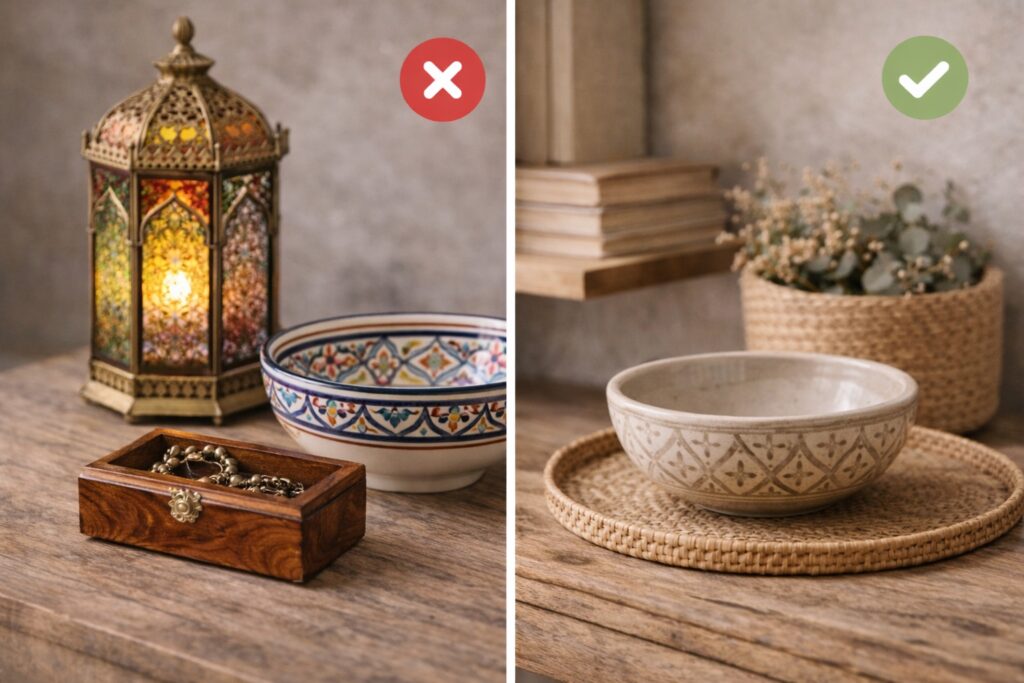
Highly patterned, colorful Moroccan decor is beautiful—but not always gift-friendly.
Neutral or subdued pieces tend to:
- Blend with more homes.
- Feel less culturally intimidating
- Age more gracefully in unfamiliar spaces
This doesn’t mean bland. It means quiet confidence.
A simple clay bowl often lands better than an ornate lantern—especially when the recipient didn’t ask for Moroccan decor specifically.
The Power of a Small Story
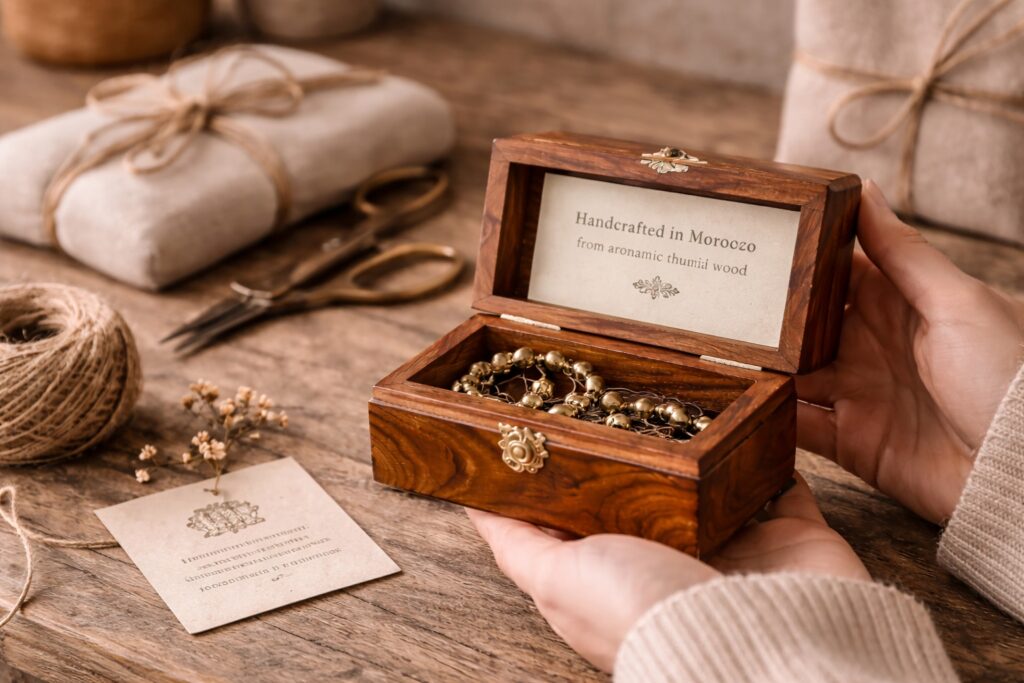
One thing consistently improves how a gift is received: context.
Even a single sentence about:
- Where was it made?
- What material does it use?
- how it’s traditionally used
…changes how the object is understood.
A handmade gift without context can feel random. With a short story, it feels intentional.
You don’t need to explain everything. You only need to explain enough to anchor meaning.
A Simple Gifting Framework (When You’re Unsure)
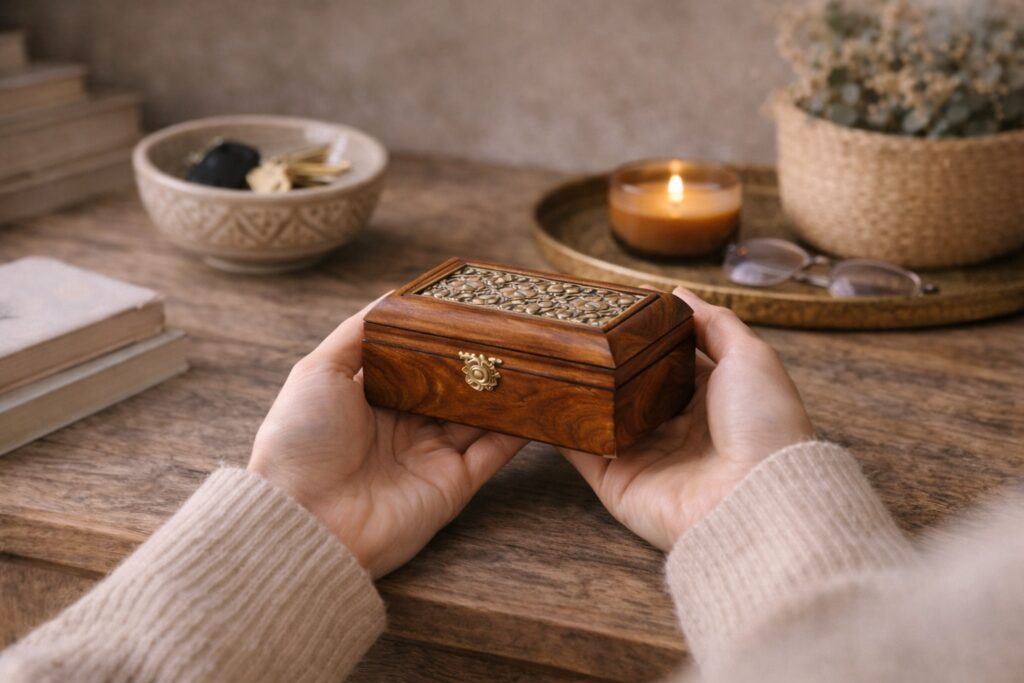
Before choosing, ask yourself:
- Can this be used easily?
- Does it fit in one hand or on one shelf?
- Would it still feel appropriate if placed anywhere in a home?
If the answer is yes, you’re likely on safe ground.
Final Thought—A Good Gift Doesn’t Ask for Commitment
The best Moroccan decor gifts don’t demand understanding, rearrangement, or explanation.
They arrive quietly, earn their place over time, and carry their craftsmanship without insisting on attention.
When you approach Moroccan decor with that mindset, it ceases to be risky and instead garners genuine appreciation.
A Quick Checklist for Safe Moroccan Decor Gifts
Before you buy, check these boxes:
- ☐ Small to medium size: Fits easily on a shelf, table, or entryway without rearranging a room.
- ☐ Clear everyday use Can hold, store, serve, or support something—even if it’s decorative.
- ☐ Neutral or balanced tones work across different interiors, not tied to a strong color scheme.
- ☐ Low symbolic weight No deep cultural or ceremonial meaning that requires explanation.
- ☐ Easy to move or repurpose —the recipient can relocate it without guilt if needed.
- ☐ Handmade details visible Texture, material, or slight variation that signals craft without shouting.
If a piece passes most of these checks, it’s unlikely to feel awkward, intrusive, or unused—no matter the home.