Top 5 Signs a Moroccan Rug Is Truly Handmade
Buying a Moroccan rug online often comes with one big question:
Is this actually handmade—or just described that way?
“Handmade” is one of the most overused words in Moroccan rug listings. It appears on rugs that are genuinely woven knot by knot… and on others that are partially machine-made or produced in small factories.
The challenge is that most advice assumes you’re standing in front of the rug.
But many buyers aren’t.
This guide focuses on what you can realistically check—even online—to tell whether a Moroccan rug is truly handmade.
1. The Back of the Rug Is Never Perfect
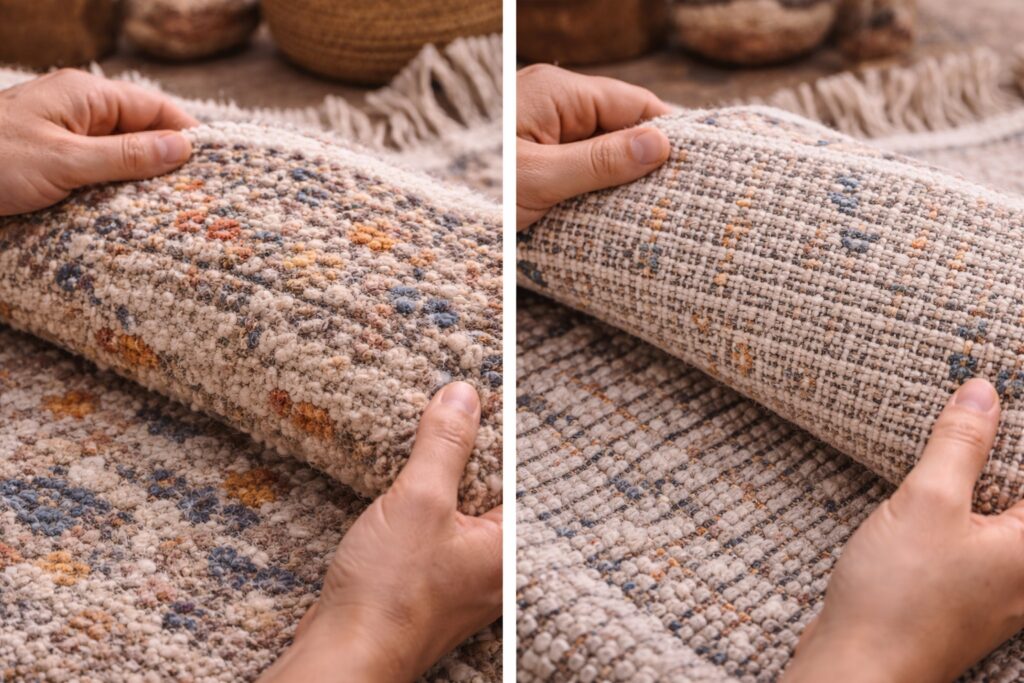
If there’s one place where handmade rugs reveal themselves, it’s the back.
On a truly handwoven Moroccan rug, the reverse side usually shows:
- Slight irregularity in knot alignment
- Variations in spacing
- A design that’s recognizable, but not perfectly crisp
Machine-made rugs tend to have:
- Uniform, grid-like backs
- Perfectly straight rows
- Repeated patterns with no deviation
Why this matters:
A human ties knots by hand. Small inconsistencies are inevitable—and expected.
If a listing never shows the back of the rug, ask why.
2. Edges and Fringes Look Functional, Not Decorative
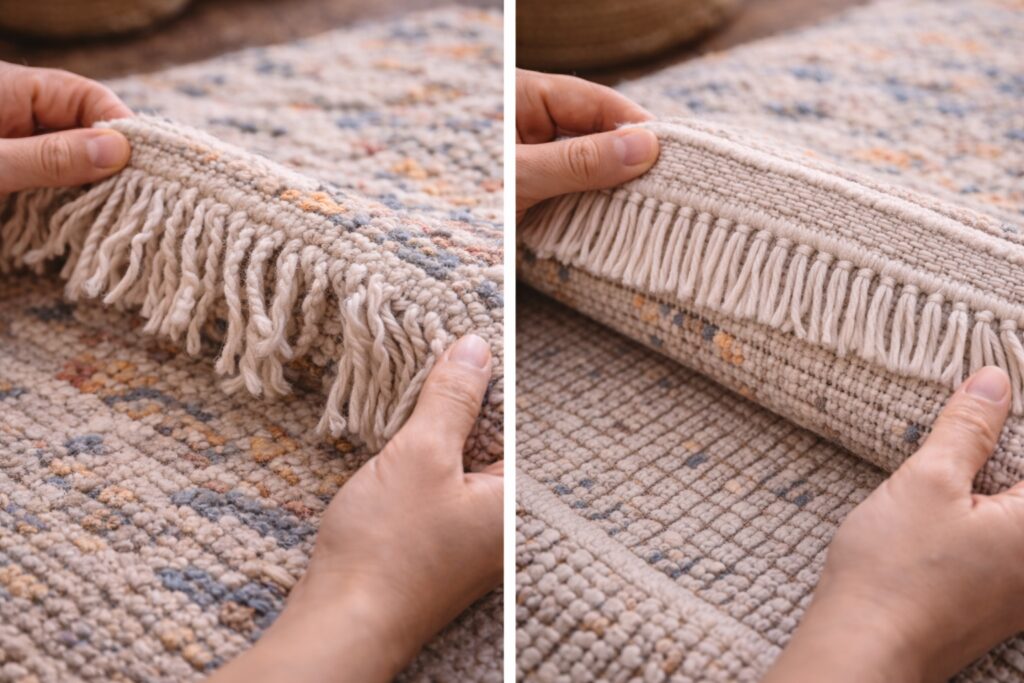
In handmade Moroccan rugs, fringes are not added later.
They are the ends of the warp threads—part of the structure.
Look for:
- Fringes that vary slightly in thickness or length
- Edges that are reinforced but not laser-straight
- Small asymmetries where finishing was done by hand
Be cautious if:
- Fringes look sewn-on or overly uniform
- Edges appear heat-sealed or perfectly identical on both sides
Neat doesn’t mean machine-made—but perfect often does.
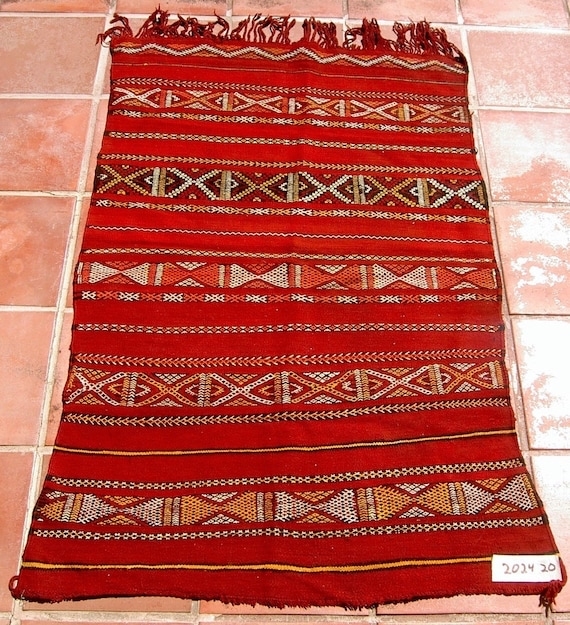
3. Patterns Aren’t Mathematically Symmetrical
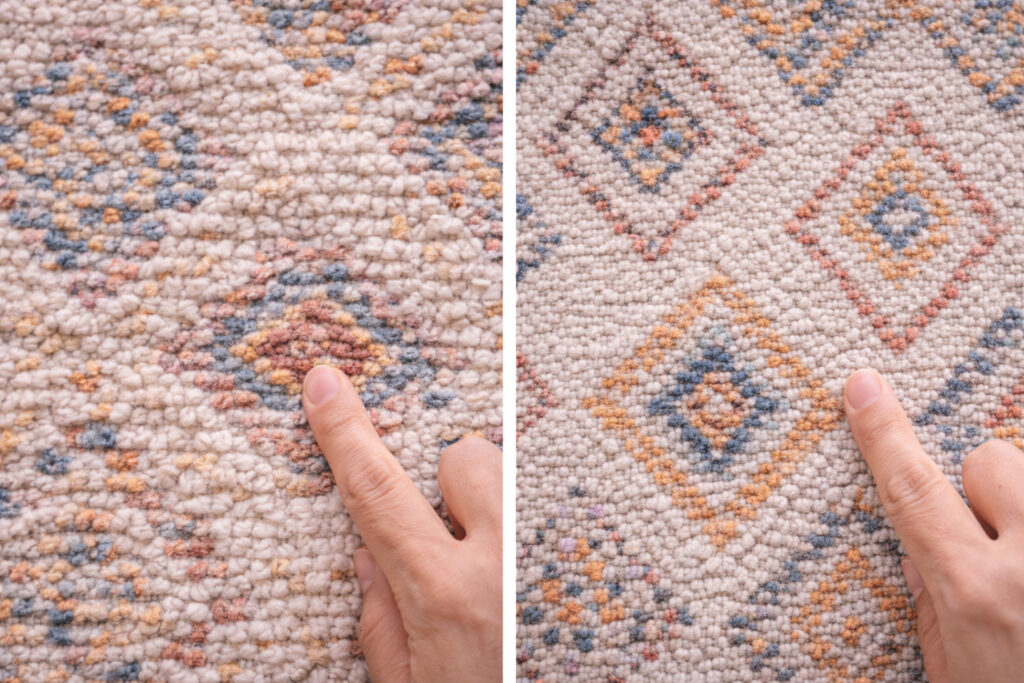
Handmade Moroccan rugs often carry visual balance, not symmetry.
Common signs of handweaving include:
- Motifs that shift slightly as they repeat
- Lines that wander gently rather than staying rigid
- Shapes that feel intuitive instead of measured
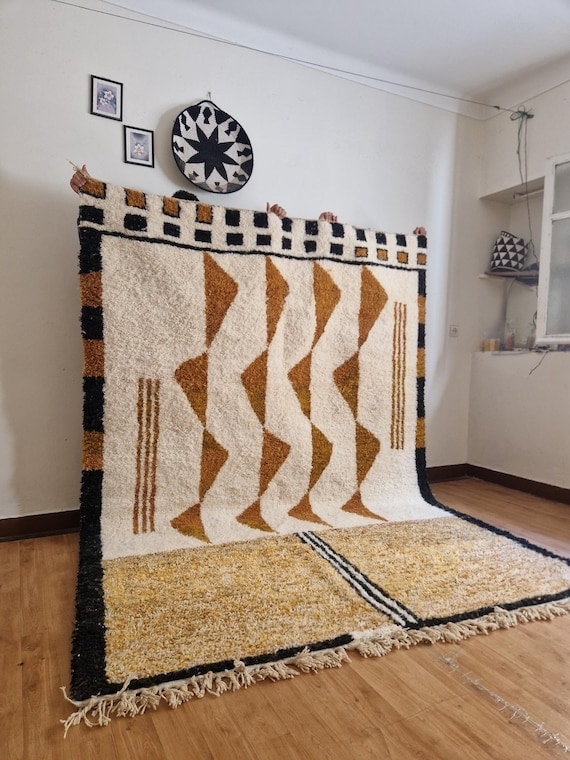
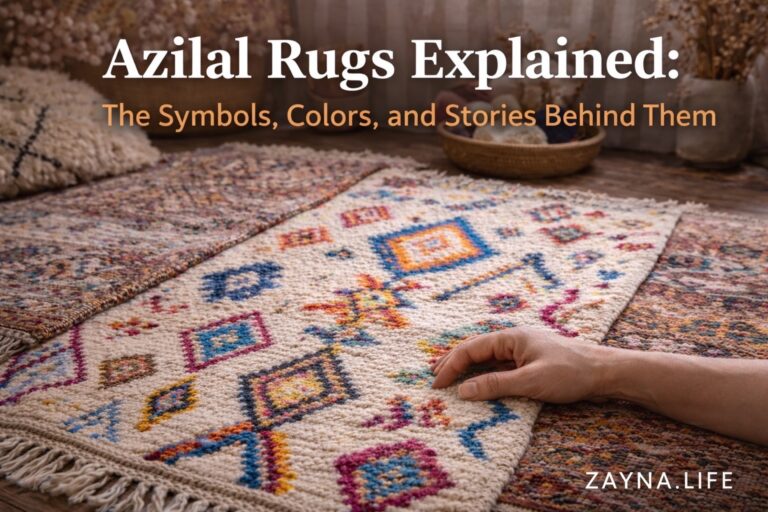
This is especially true in tribal rugs like Boujad, Boucherouite, or Azilal.
Machine-made rugs excel at repetition.
Handmade rugs reflect decision-making in real time.
If every diamond is identical down to the millimeter, pause.
4. The Rug Feels “Uneven” in a Subtle Way
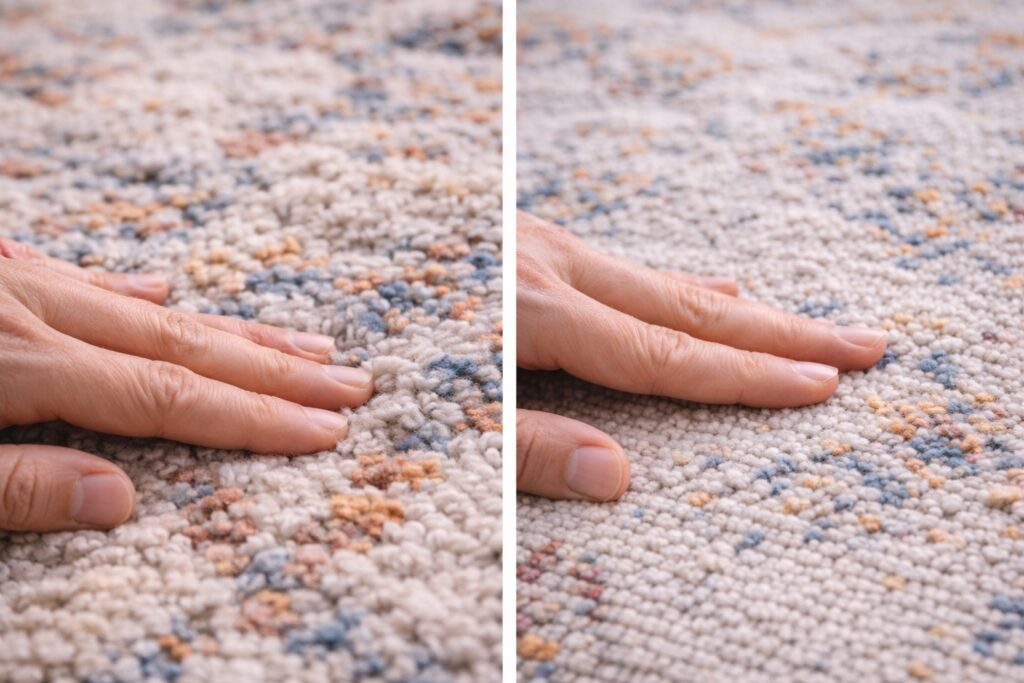
This is hard to explain until you’ve handled both types—but it’s noticeable.
Handmade rugs often show:
- Slight variations in pile height
- Areas that feel denser or looser
- A surface that changes subtly underfoot
Machine-made rugs tend to feel:
- Uniform across the entire surface
- Predictable in texture
- Identical no matter where you step
Even in high-quality handmade rugs, perfection isn’t the goal—durability and intention are.
5. The Seller Can Explain the Rug Without Hiding Behind Buzzwords
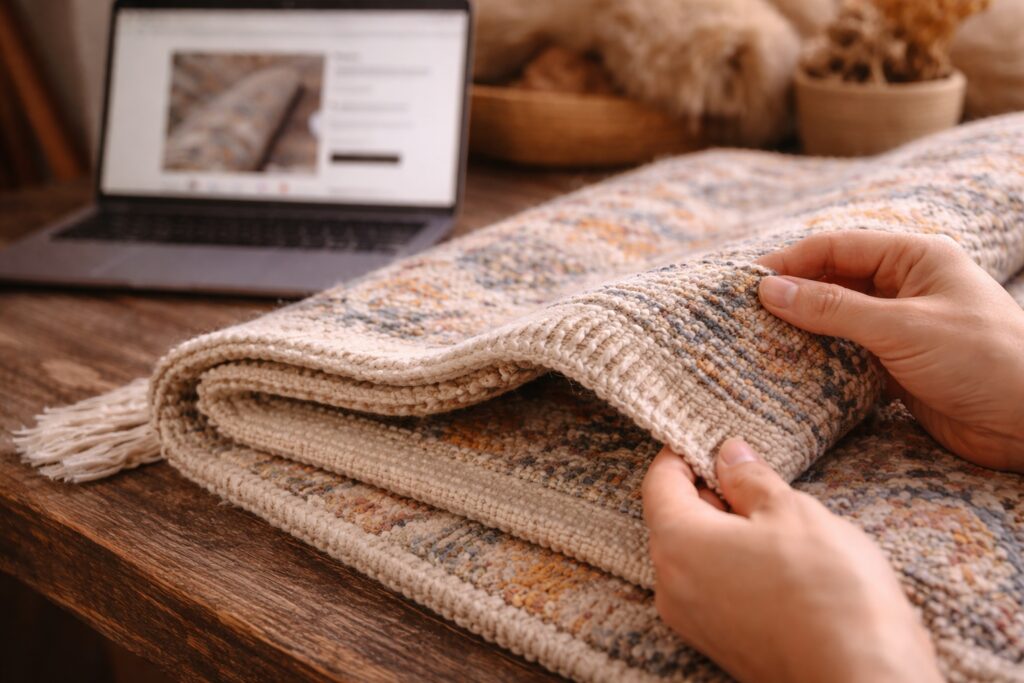
One of the clearest signs doesn’t come from the rug—it comes from the seller.
When asked, a trustworthy seller can usually answer:
- How the rug was woven (hand-knotted, flatwoven, etc.)
- Where it was made (region or city, not just “Morocco”)
- What materials were used
Be cautious of answers that rely only on:
- “Authentic”
- “Artisan-made”
- “Traditional style”
Artisans and direct sourcers tend to speak simply.
Resellers often lean on vague language.
Common Mistakes Buyers Make
Even careful buyers fall into these traps:
- Assuming higher price automatically means handmade
- Trusting labels without visual proof
- Thinking neat finishing means machine-made
- Expecting handmade rugs to look “rustic” or rough
Some handmade rugs are refined.
Some machine-made rugs imitate imperfection convincingly.
That’s why context matters more than any single detail.
How to Use These Signs Together
No single sign proves a rug is handmade.
But when you see:
- An irregular back
- Natural fringes
- Subtle pattern variation
- Honest seller explanations
…you’re likely looking at real handweaving.
If most of these signs are missing, proceed carefully.
Final Thought — Handmade Leaves Traces
A truly handmade Moroccan rug always carries traces of the hands that made it.
Not flaws.
Not defects.
But small decisions, adjustments, and human rhythms.
Once you learn to recognize those traces, shopping online stops feeling like guesswork—and starts feeling intentional.
That’s the difference between buying a rug—and choosing one.