Boujad Rugs Explained: Bold Colors, Hidden Symbols, and What Makes Them Unique
When a Rug Looks Modern but Feels Ancient
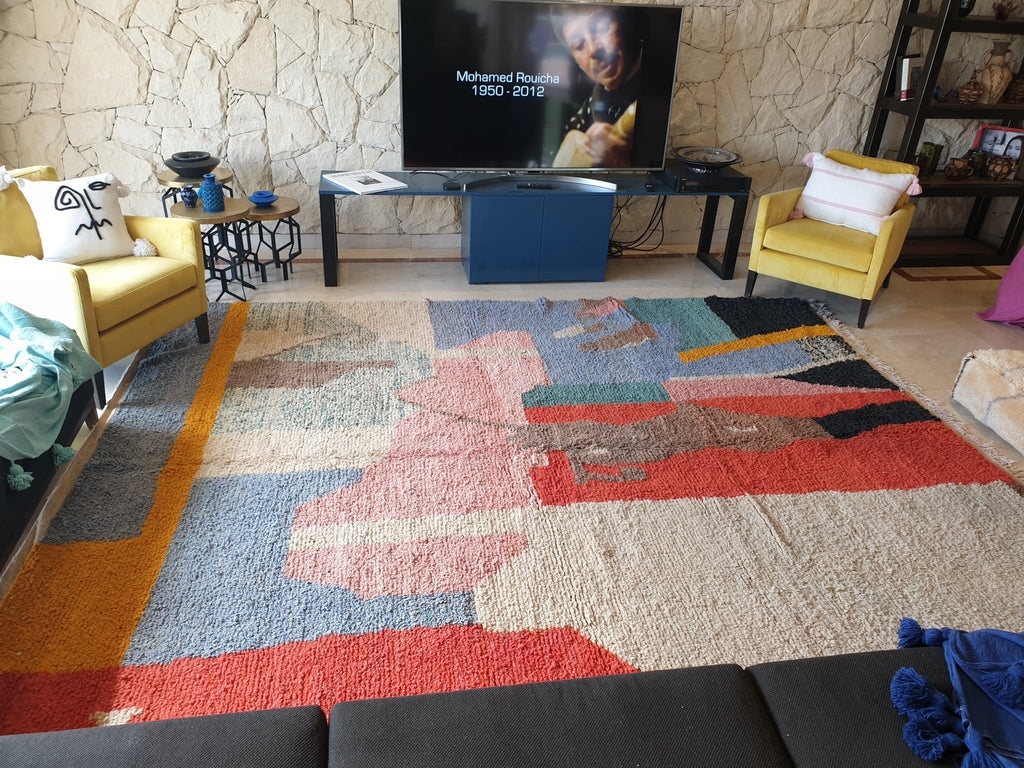
If you’ve spent any time browsing Moroccan rugs on Instagram or in boutique interiors, Boujad rugs tend to stop the scroll.
They’re bold. Graphic. Almost abstract.
They look surprisingly modern—sometimes more like contemporary art than traditional craft.
And yet, that’s exactly where confusion begins.
Many people fall in love with Boujad rugs for their visual impact, without understanding where they come from, what the symbols mean, or why two rugs that look similar can vary wildly in price and authenticity.
This guide is here to bring depth back into the picture—to explain what Boujad rugs really are, why they look the way they do, and how to read them beyond color alone.
Where Boujad Rugs Come From (And Why That Matters)
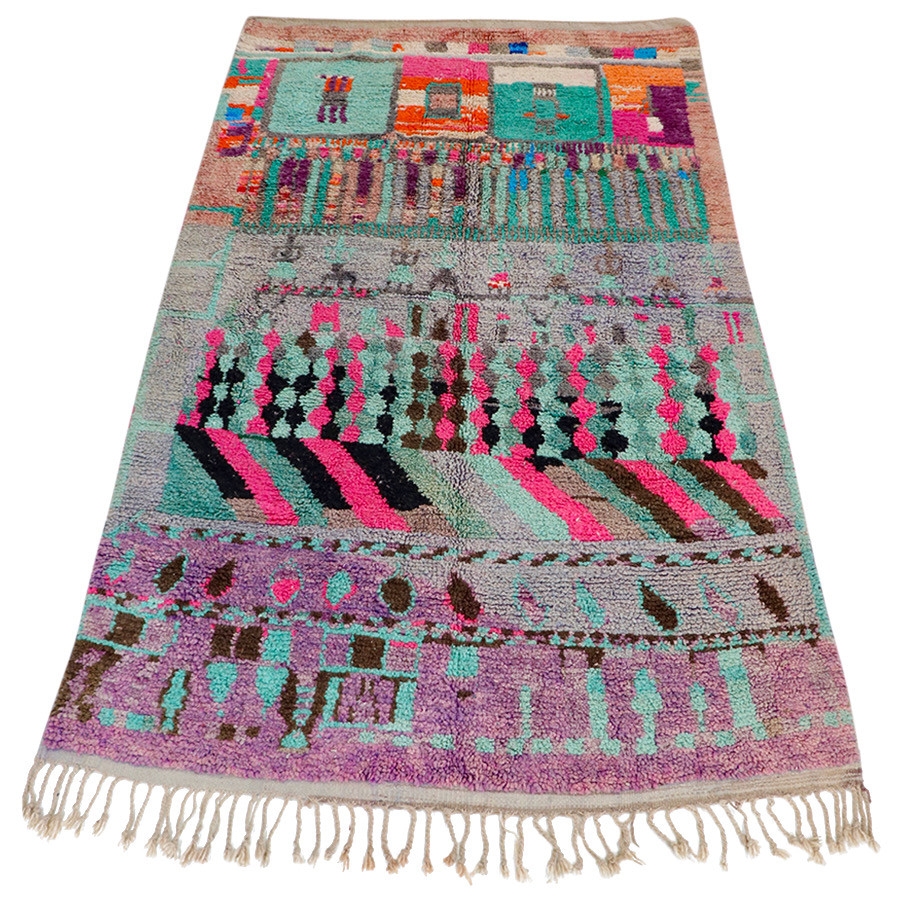
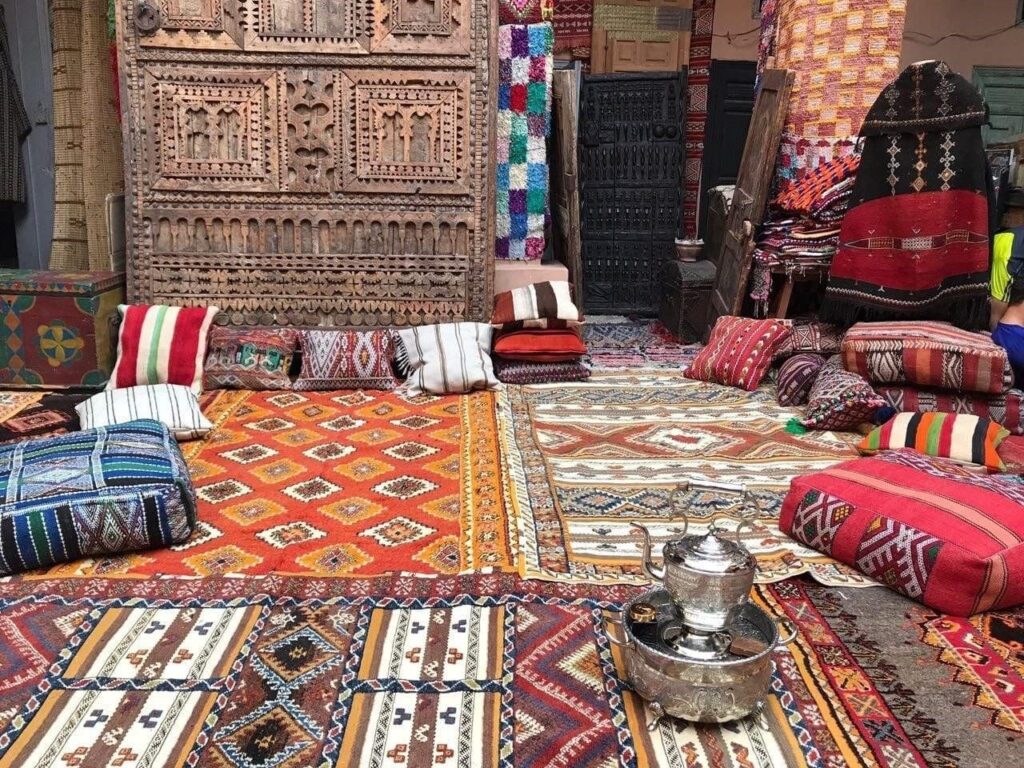
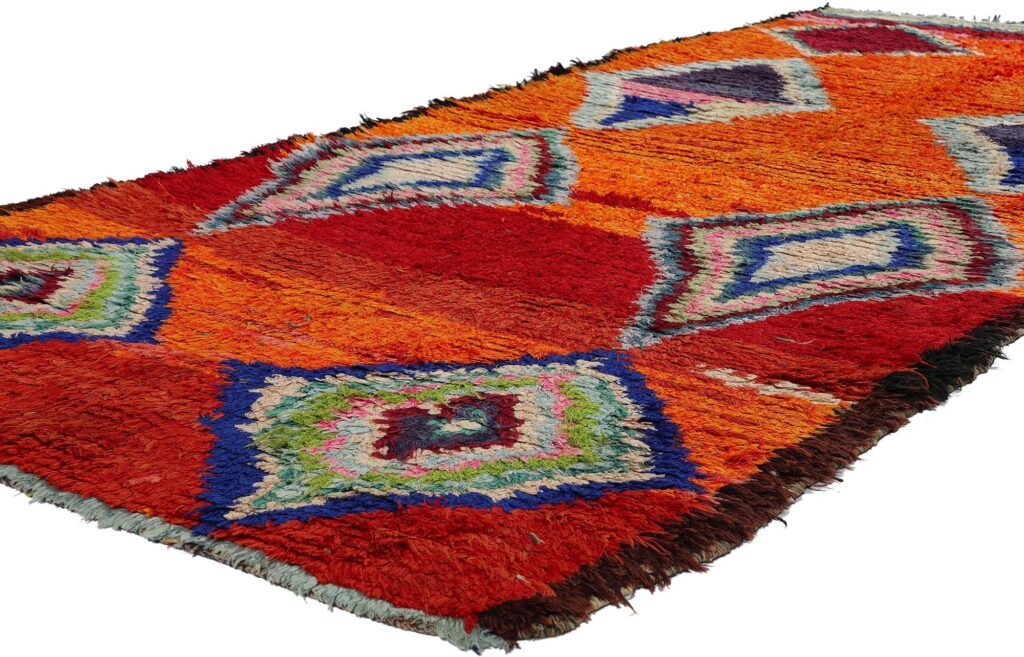
Boujad rugs originate from the region around Boujad, in central Morocco.
This area sits between major weaving regions, which partly explains why Boujad rugs don’t fit neatly into one established “style.” They are neither minimal like some High Atlas rugs nor heavily structured like others.
Historically, Boujad rugs were woven for domestic use, not for trade or decoration. They lived on floors, absorbed daily life, and were made without concern for outside tastes.
That context matters. Boujad rugs were never meant to conform—and that nonconformity is what makes them so visually compelling today.
Why Boujad Rugs Look So Expressive
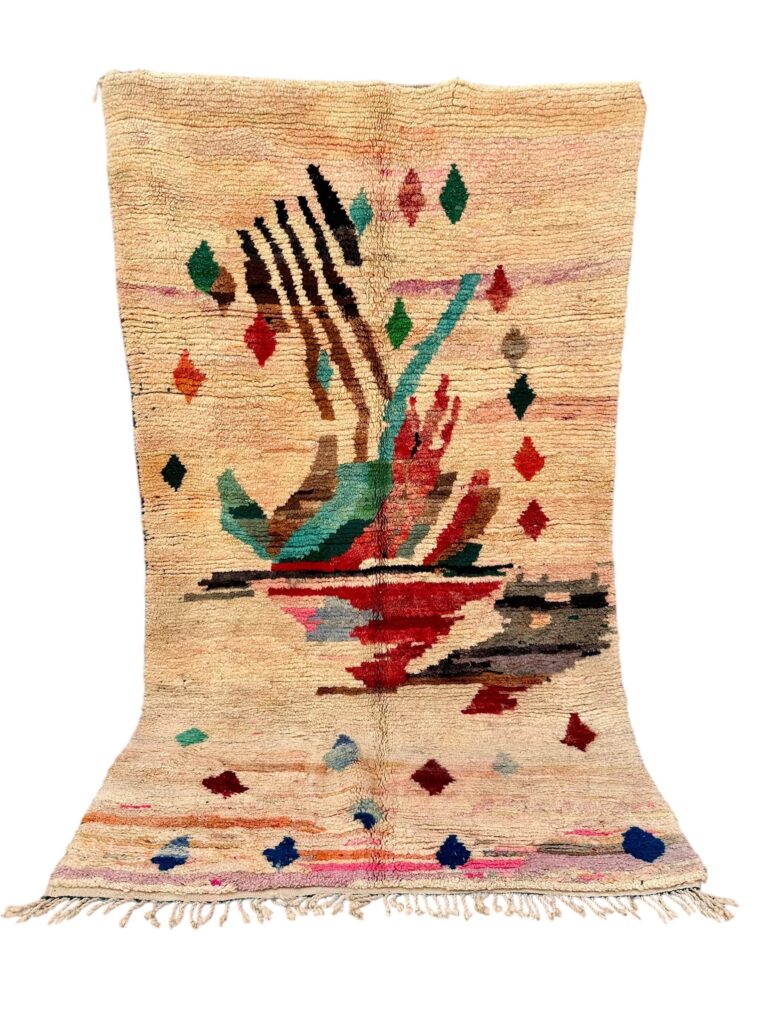
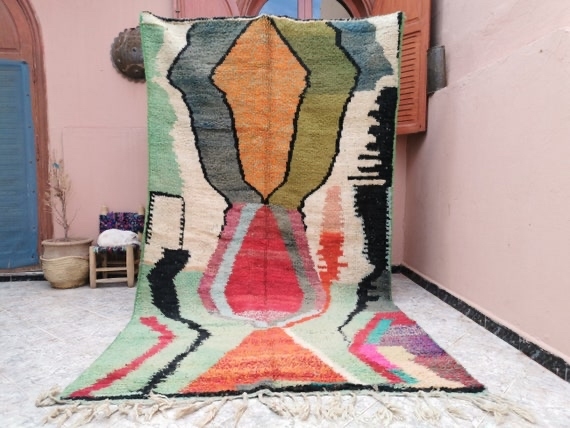
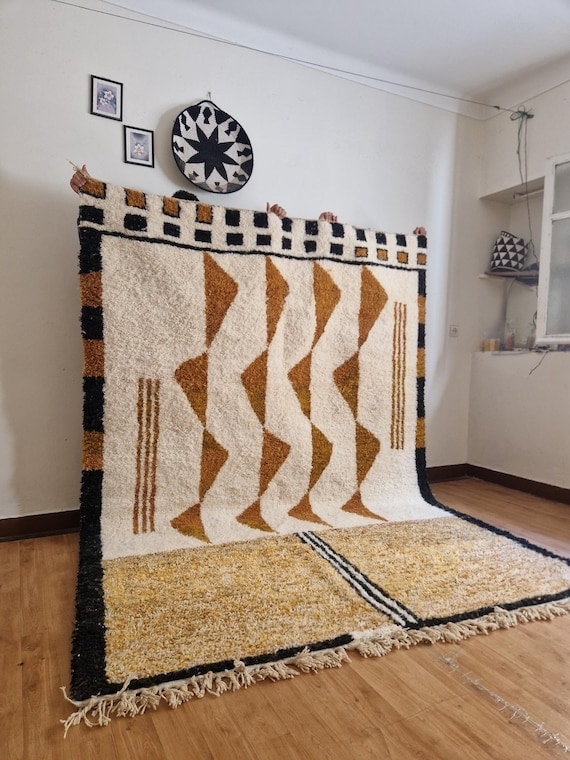
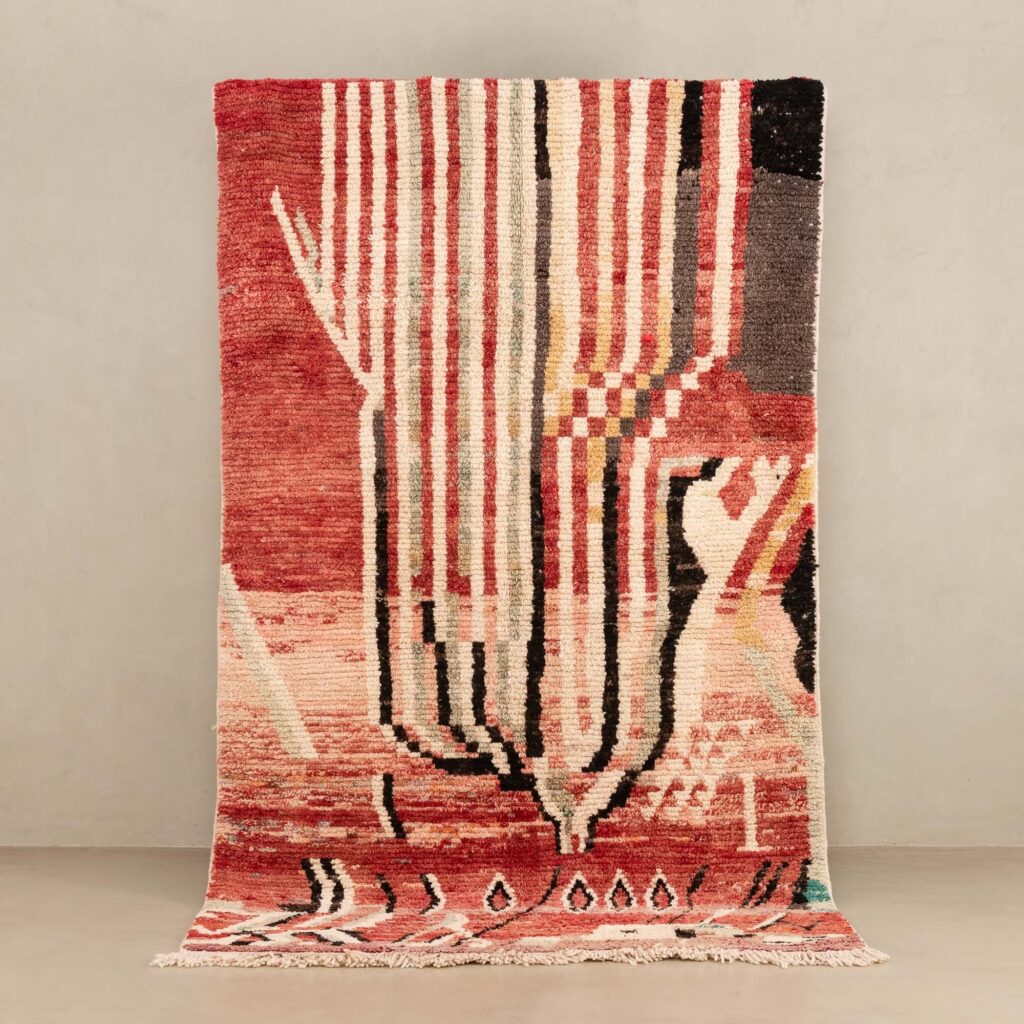
Boujad rugs are often described as “abstract,” but that abstraction isn’t decorative—it’s intuitive.
Weavers worked without strict templates. Patterns emerge organically, guided by memory, emotion, and circumstance rather than rules.
What you’ll often see:
- Asymmetrical layouts
- Unexpected color combinations
- Shapes that feel spontaneous rather than planned
To modern eyes, this reads as contemporary design. In reality, it’s the absence of standardization—each rug reflecting an individual hand and moment in time.
Color in Boujad Rugs: More Than Visual Impact
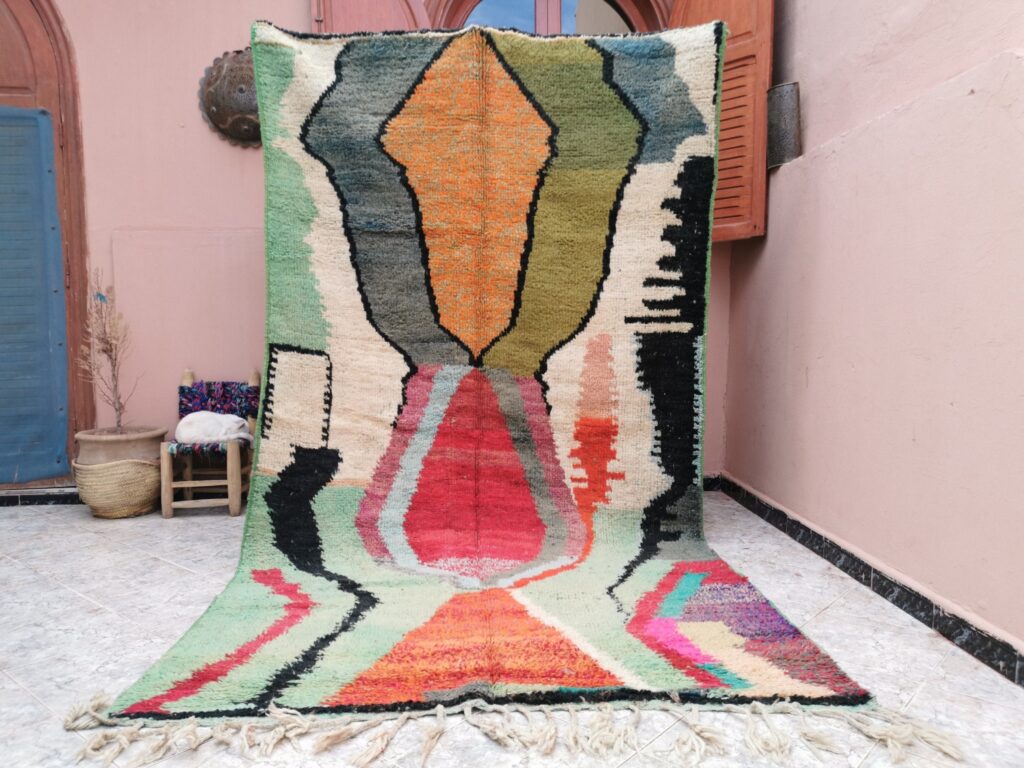
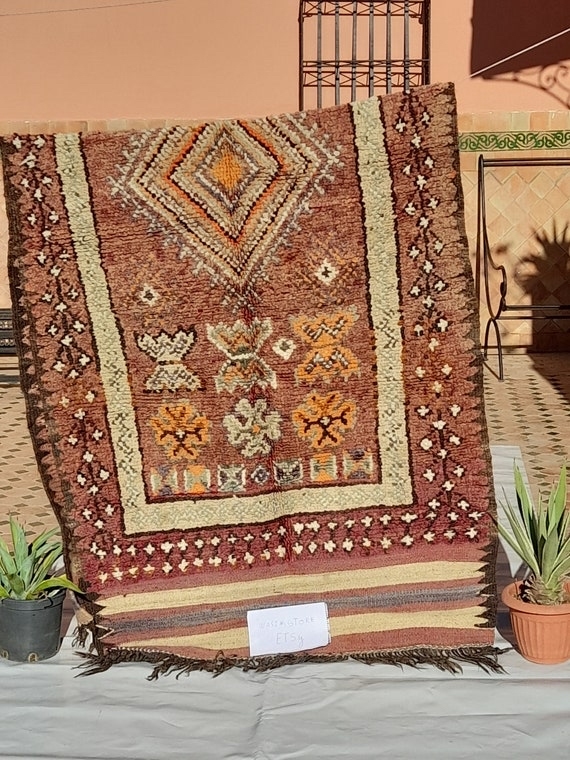
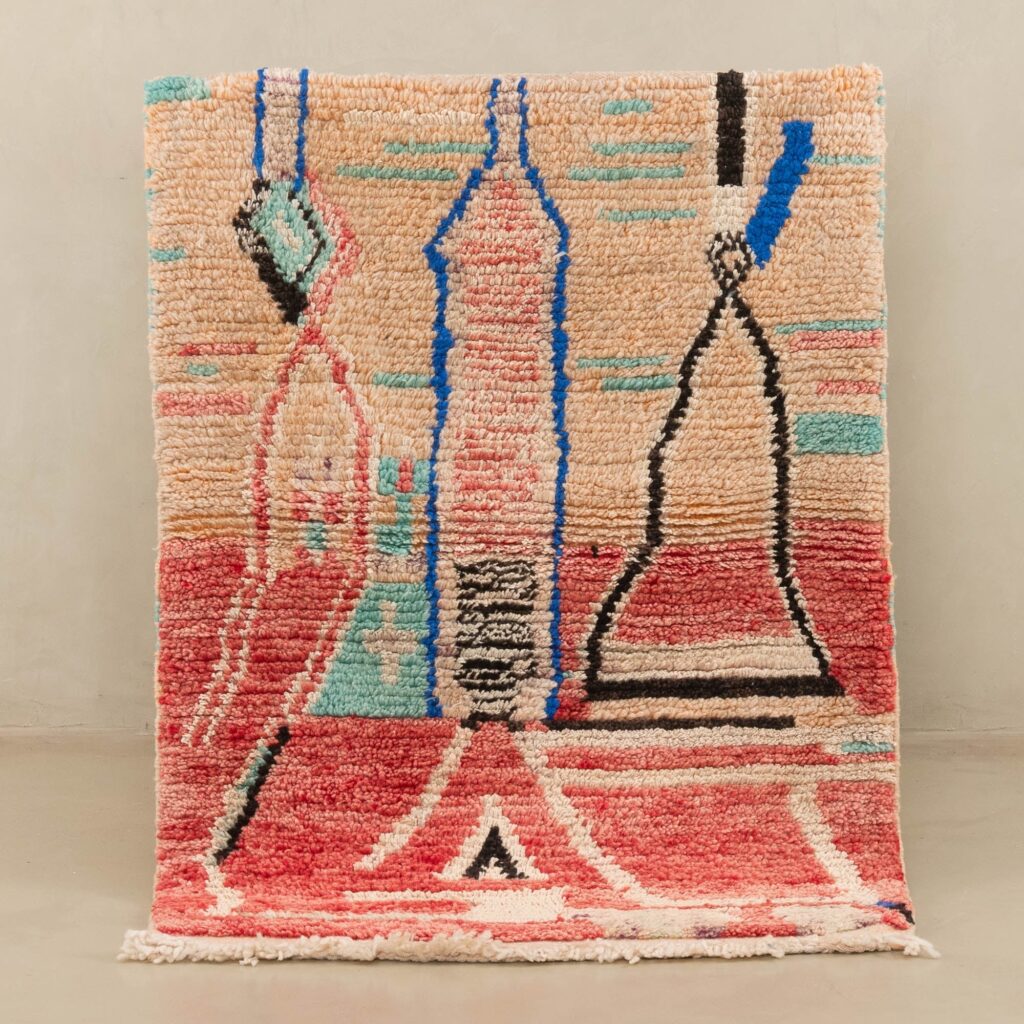
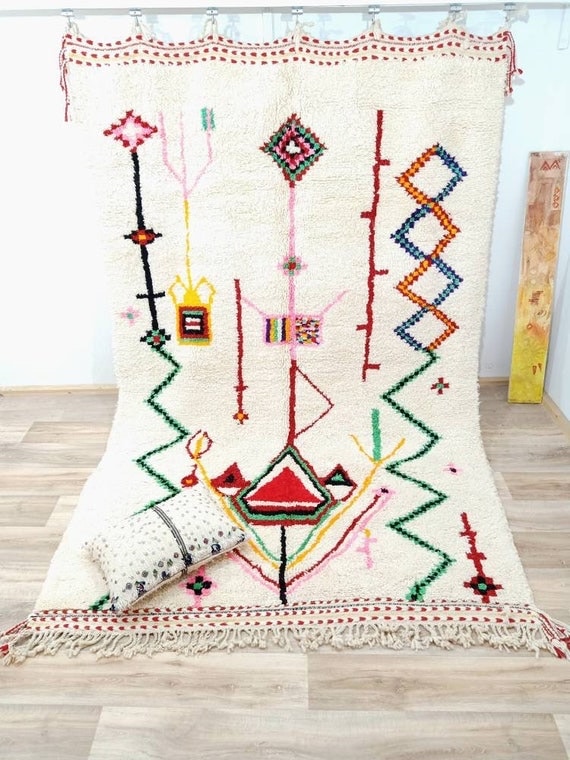
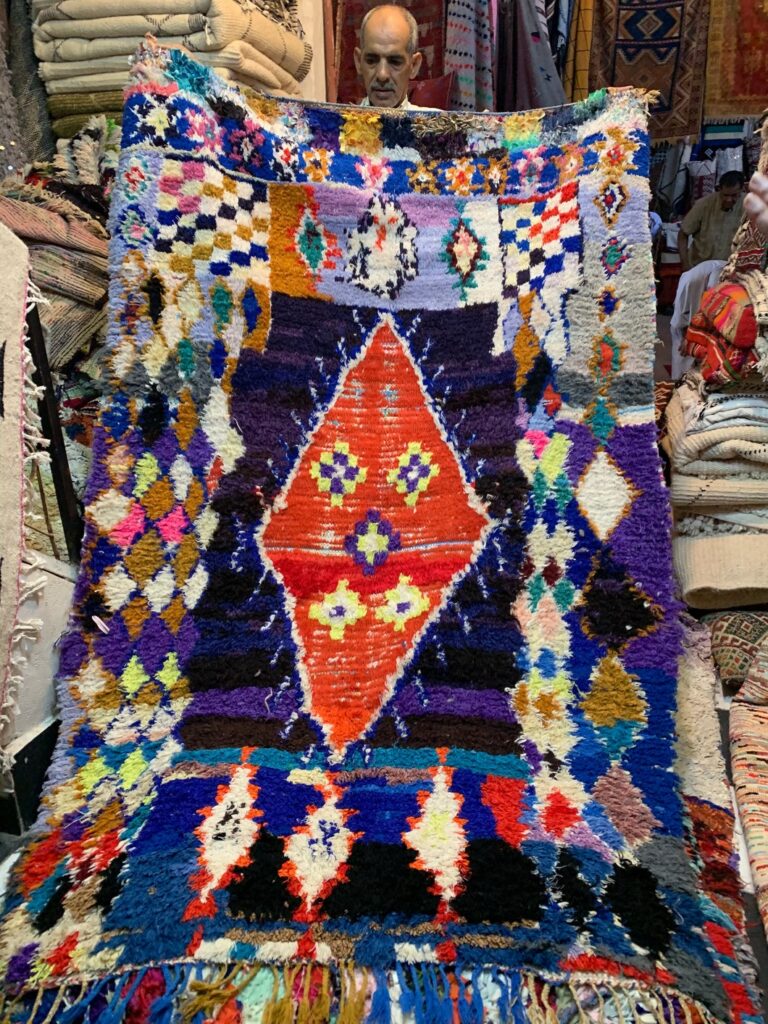
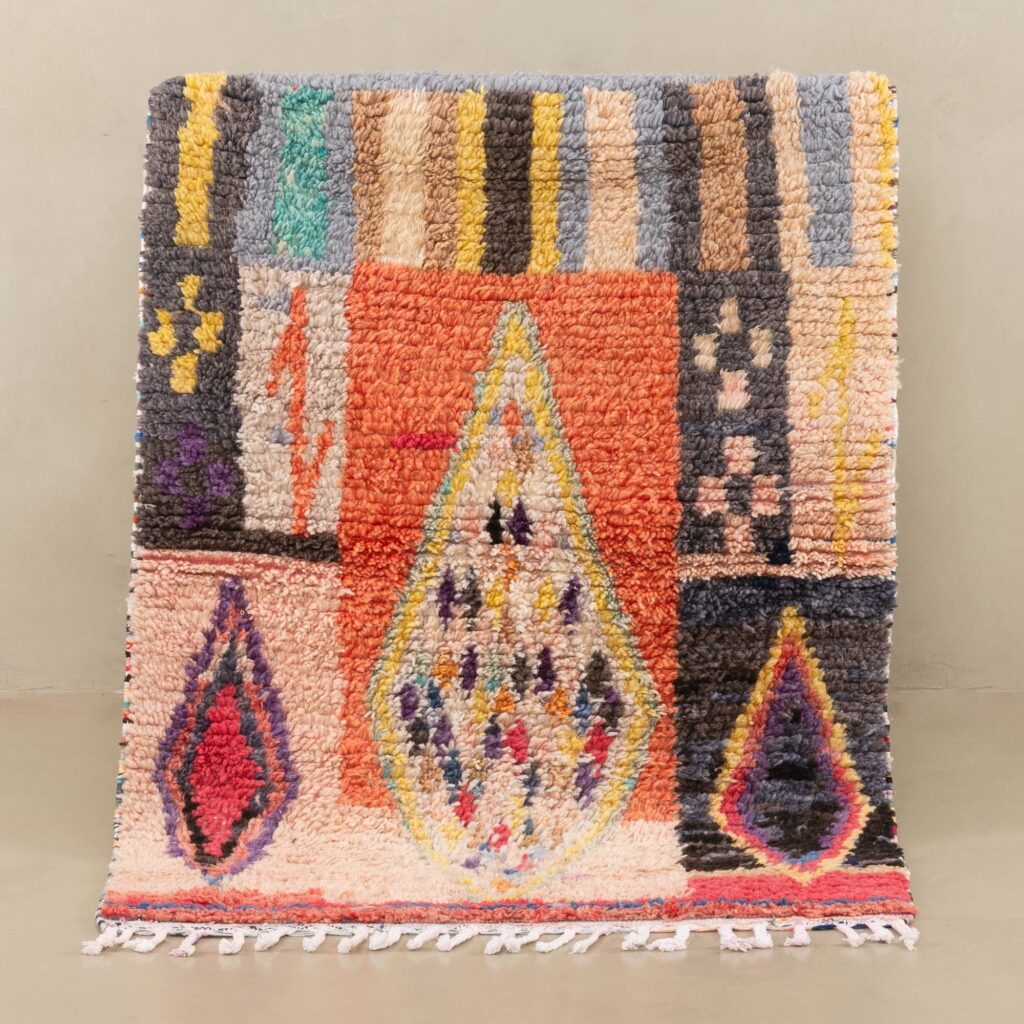
Boujad rugs are known for their rich reds, pinks, oranges, and purples—but color here is not about trend.
Traditionally:
- Colors came from natural dyes
- Shades varied based on materials, water, and time
- Aging softened tones rather than dulling them
One common misconception is that brighter colors mean newer rugs or lower quality. In reality, older Boujad rugs can be just as vivid—sometimes more so—than recent pieces.
Color variation, especially within the same rug, is usually a sign of authenticity, not inconsistency.
Understanding Boujad Symbols (Without Over-Interpreting)
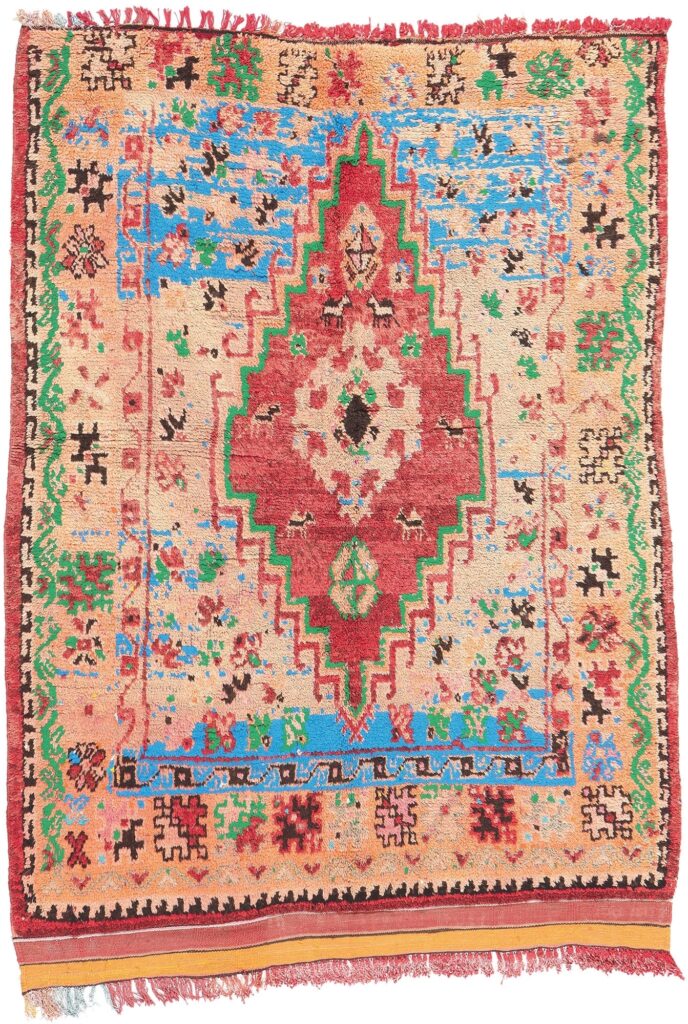
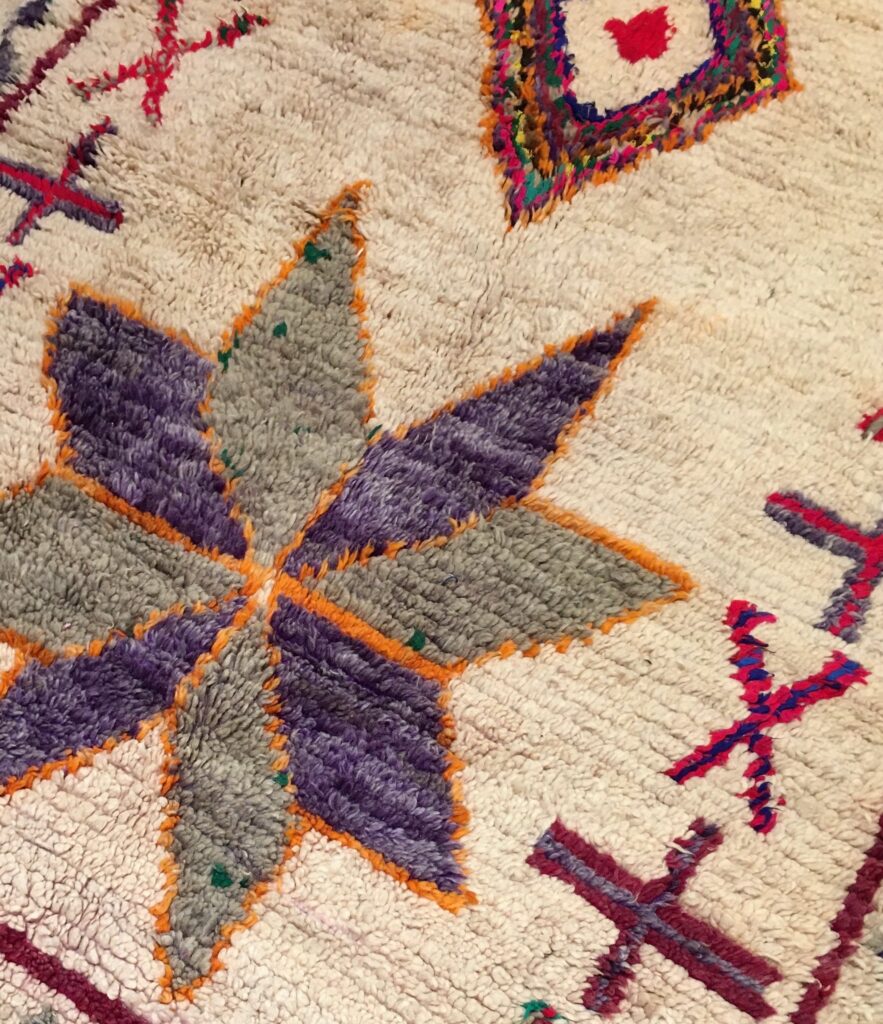
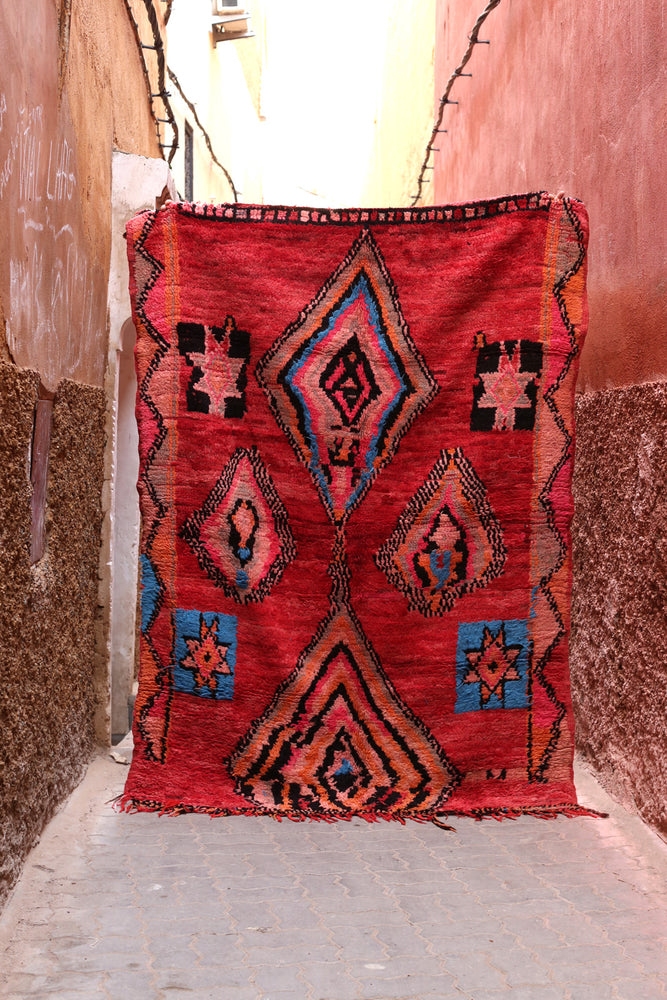
Boujad rugs often feature recurring motifs—diamonds, lines, and abstract forms—but they don’t follow a strict symbolic dictionary.
These symbols are
- Personal rather than standardized
- Often linked to protection, memory, or daily life
- Woven intuitively, not academically
Many modern explanations try to assign fixed meanings to every shape. That approach can be misleading.
What matters more is understanding that Boujad symbols were expressive, not decorative. They weren’t meant to be decoded by outsiders—they were meant to be lived with.
Boujad Rugs vs Other Colorful Moroccan Rugs
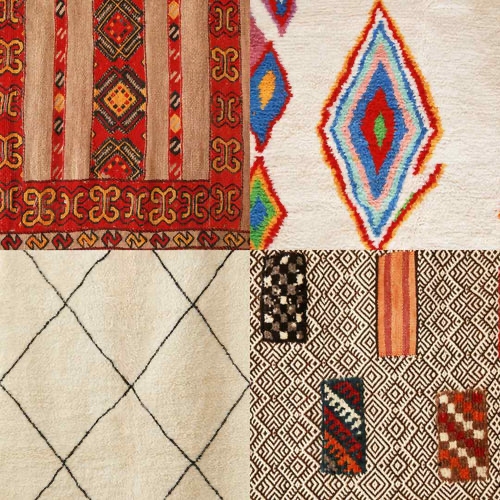
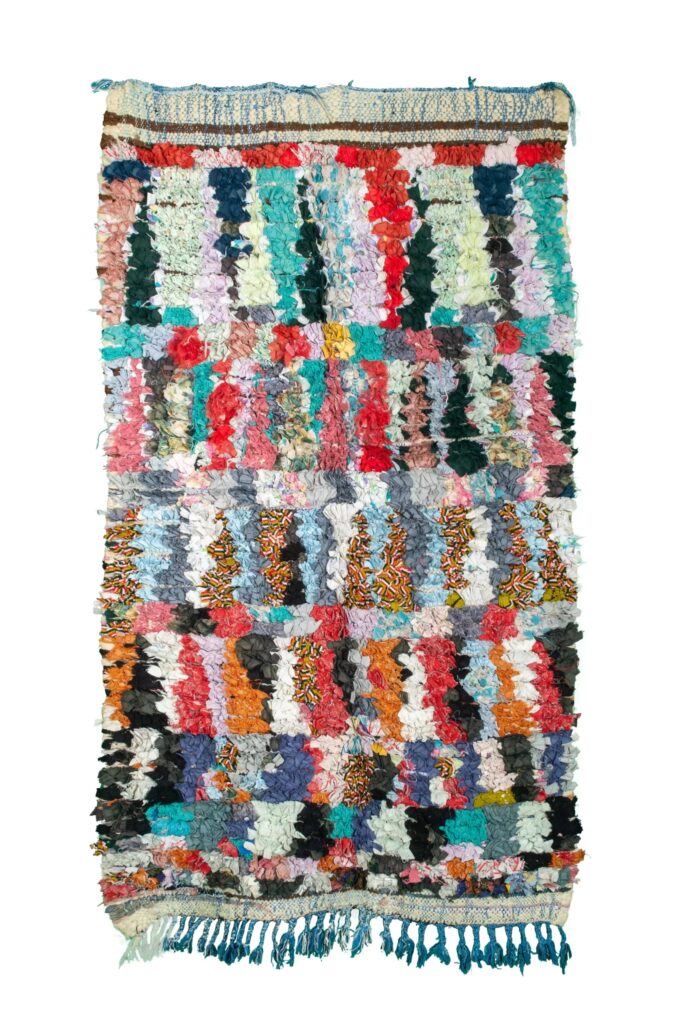
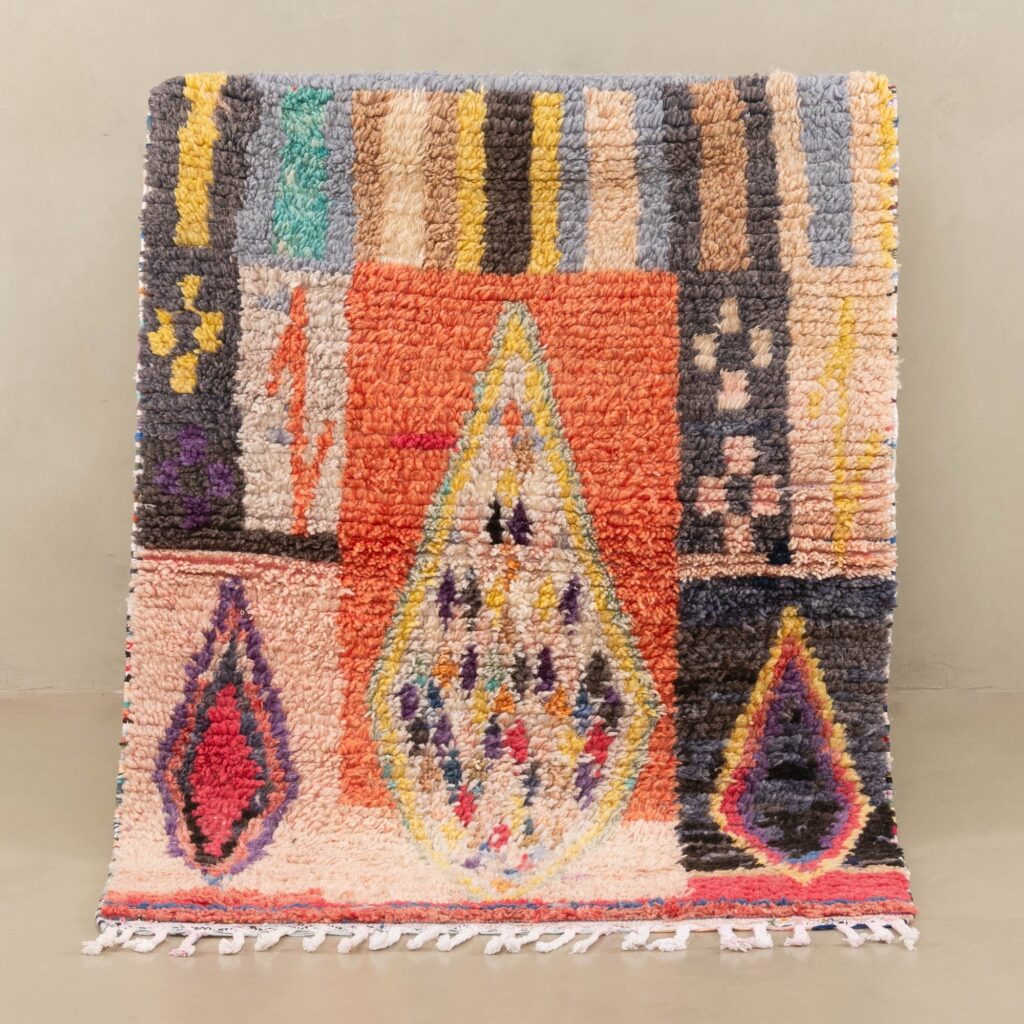
Boujad rugs are often grouped with other colorful Moroccan rugs, but there are key differences.
- Boujad vs Boucherouite Boucherouite rugs are made from recycled textiles and feel playful and chaotic. Boujad rugs are wool-based and structurally more grounded.
- Boujad vs High Atlas rugs High Atlas rugs often follow clearer geometric logic. Boujad rugs feel freer, more emotional.
Understanding these differences helps avoid buying something that looks right but feels wrong for your space or expectations.
Authentic Boujad Rugs vs Modern Reinterpretations
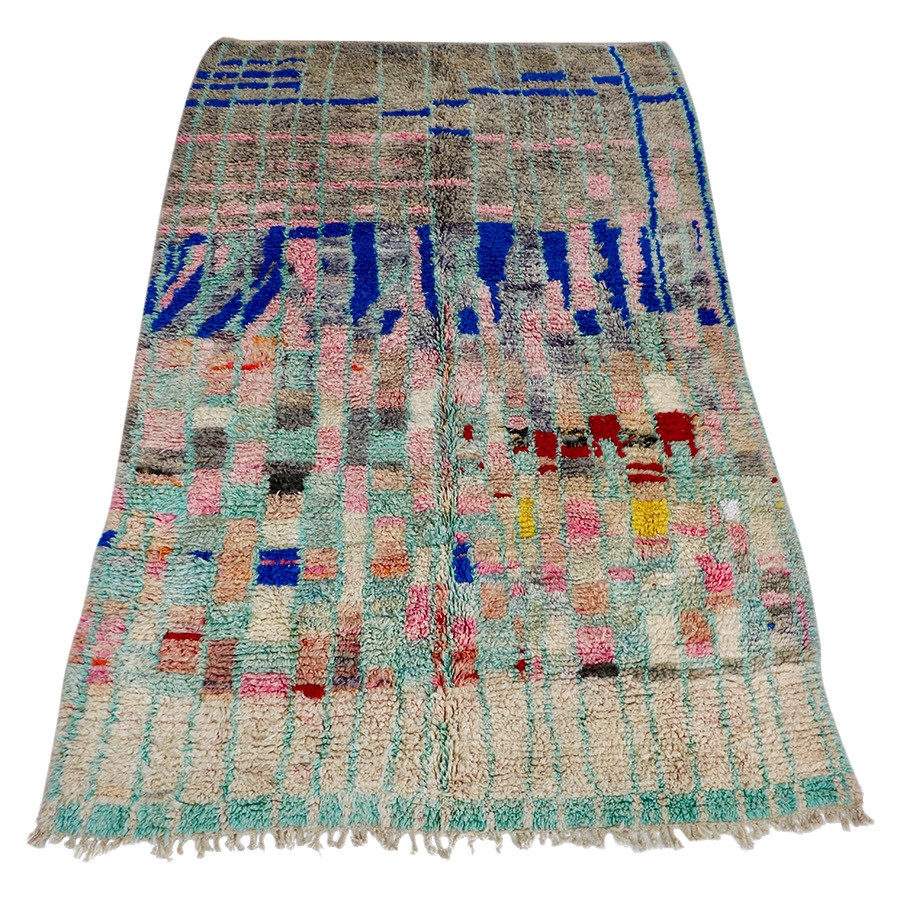
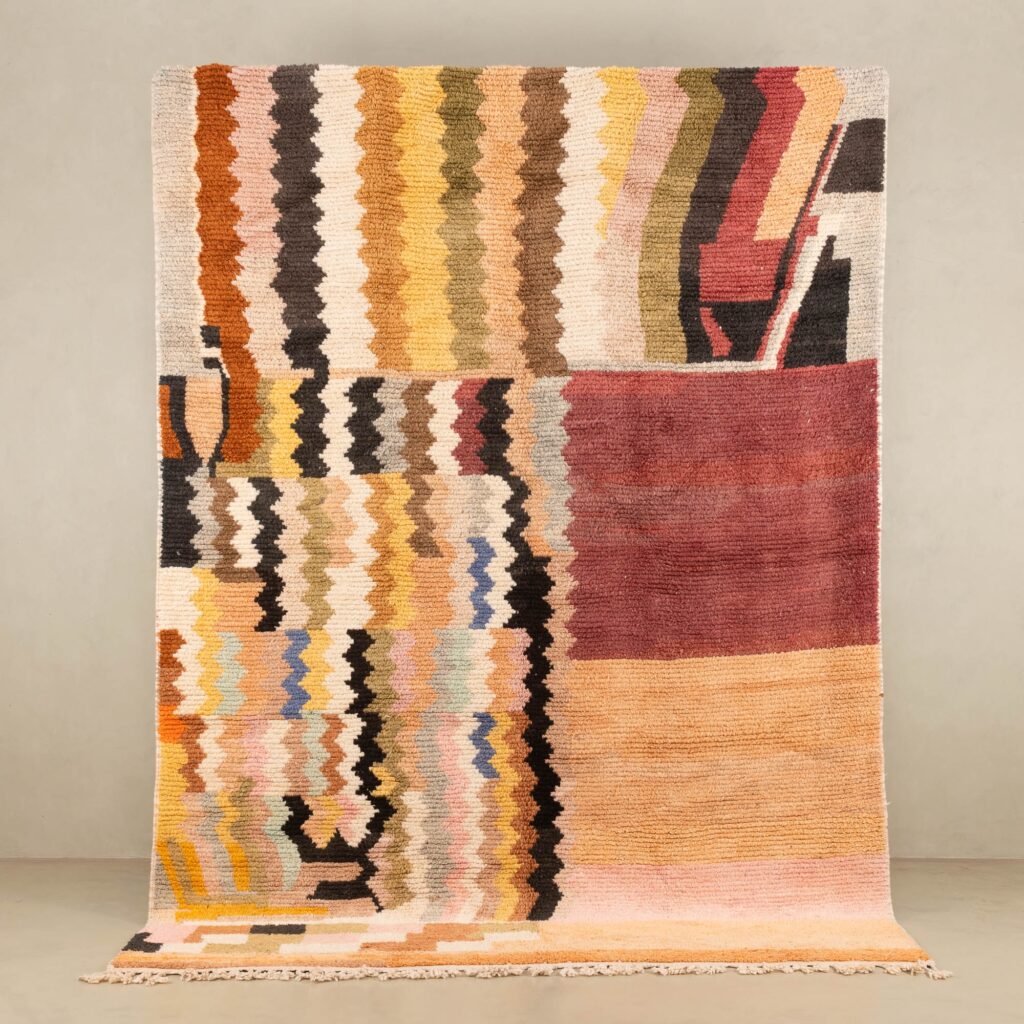
Today, Boujad rugs are widely reinterpreted for global markets.
That’s not inherently negative—but it’s important to know the difference.
Authentic, older Boujad rugs often show:
- Irregular weaving density
- Subtle wear and patina
- Natural color shifts
Modern reinterpretations may:
- Follow more predictable patterns
- Use synthetic dyes
- Be made to meet design trends
Neither is “wrong,” but they serve different purposes—and shouldn’t be priced or described the same way.
Common Buyer Mistakes
If you’re encountering Boujad rugs for the first time, a few assumptions tend to creep in—often without you realizing it.
One of the most common is equating bold color with lower quality. In reality, some of the most vibrant Boujad rugs are older pieces, dyed with natural pigments that have aged unevenly rather than faded away. Brightness, here, is not a shortcut—it’s often a clue.
Another easy trap is buying with your screen instead of your senses. Instagram tends to flatten everything into a style moment: the rug looks perfect in someone else’s light, against someone else’s furniture. What gets lost is texture, weight, and the way the rug actually behaves in a room.
The most costly mistake, though, is paying a premium for a rug that’s been stripped of its story. When origin, age, and weaving context disappear from the description, you’re left judging only by appearance—and Boujad rugs were never meant to be read that way.
A Boujad rug holds its value not because it looks striking, but because of how it was made, where it comes from, and why it exists at all.
Who Boujad Rugs Are (and Aren’t) For
A Boujad rug usually makes its decision before you do.
If you’re drawn to it immediately—if the colors feel slightly unexpected, if the pattern doesn’t resolve neatly, if your eye keeps moving across the surface—then you’re probably already its kind of person.
Boujad rugs tend to resonate if you:
- Are comfortable with irregularity and don’t need every line to align
- See rugs as pieces that live in a space, not just decorate it
- Enjoy objects that create conversation rather than blending quietly into the background
On the other hand, a Boujad rug can feel unsettling if you:
- Prefer symmetry and repetition
- Build interiors around calm, neutral palettes
- Want visual control and predictability from every element in a room
There’s nothing wrong with either response. Boujad rugs aren’t meant to please everyone. They’re expressive by nature—sometimes restless, sometimes intense—and they tend to work best when you allow them to be exactly that.
If you’re looking for a rug that disappears, Boujad may frustrate you.
If you’re looking for one that speaks, it often feels like it’s been waiting for you.
Final Thought—Art, Memory, and Wool
Boujad rugs sit in a rare space: between traditional craft and modern abstraction.
They weren’t designed to be fashionable. They became relevant because they were honest—woven without concern for trends, only for use and expression.
Understanding that context doesn’t just help you buy better.
It helps you see these rugs for what they truly are.