Boucherouite Rug Guide: The Most Expressive Moroccan Rugs You’ll Ever See
Boucherouite rugs sit at the far end of the Moroccan rug spectrum. They are bold, irregular, emotional, and unapologetically expressive. Unlike more familiar Moroccan styles, they don’t aim for balance or harmony. They exist to reflect lived experience, resourcefulness, and personal freedom.
This guide covers Boucherouite rugs’ origins, unique features, and intended audience.
1. What Is a Boucherouite Rug? (And Why It Looks Like Nothing Else)
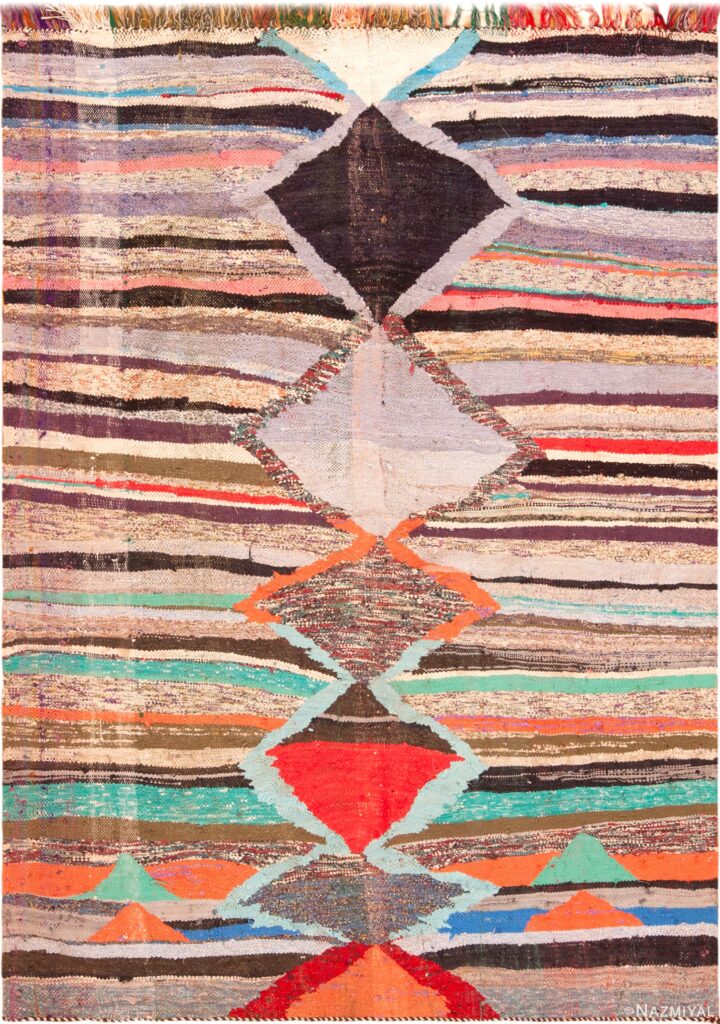
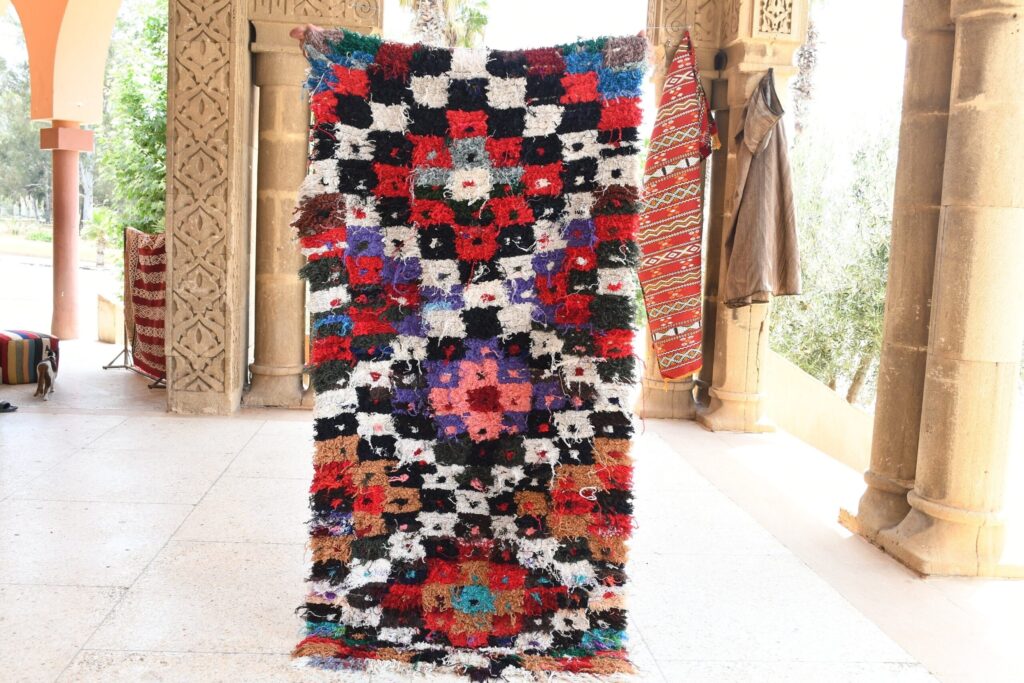
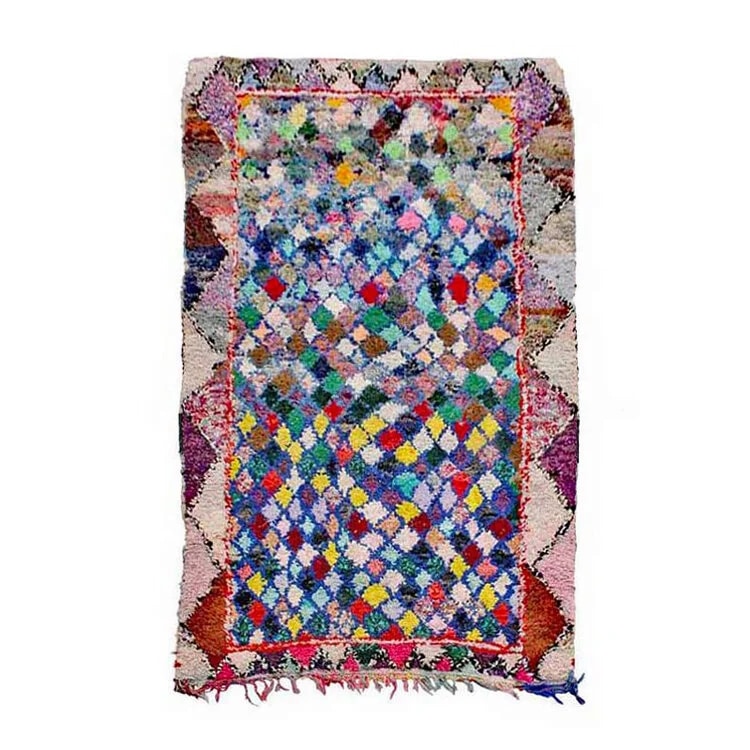
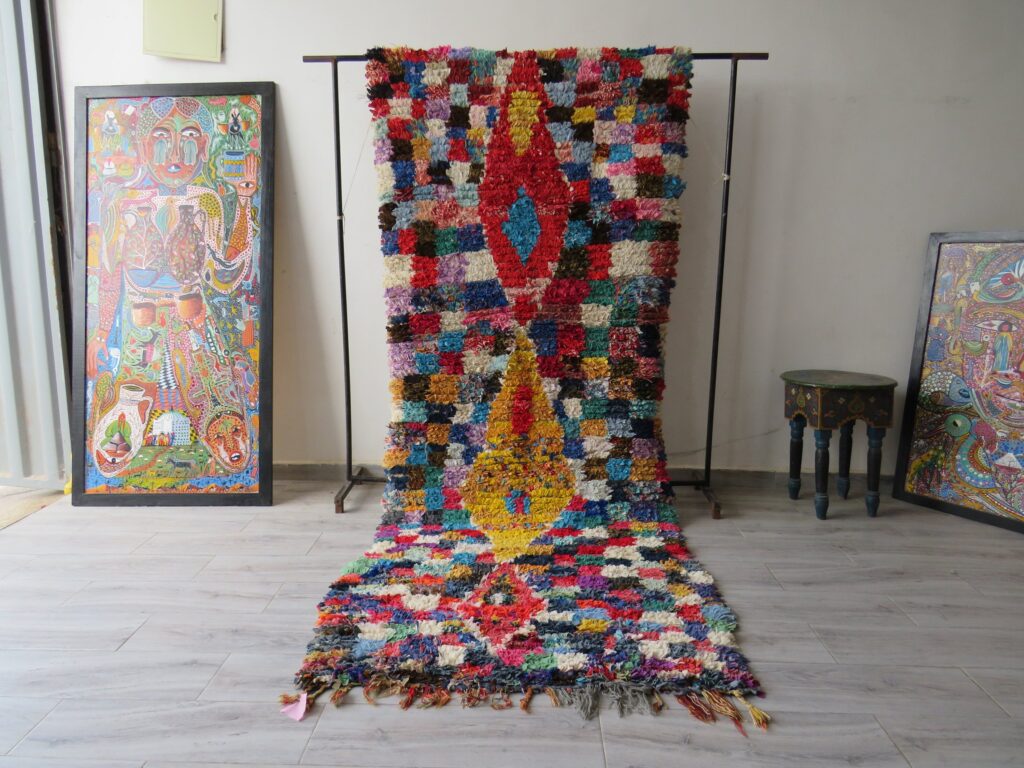
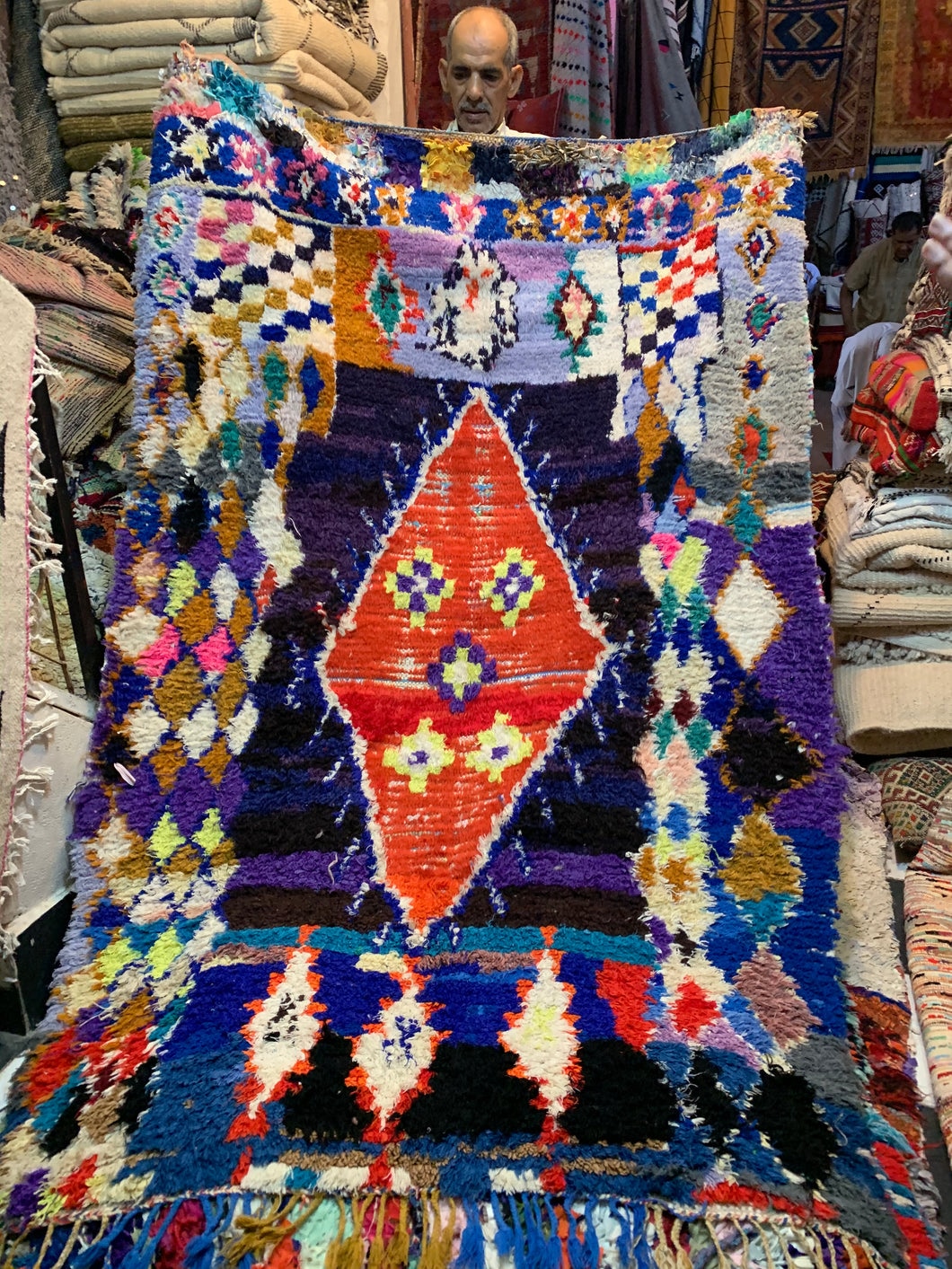
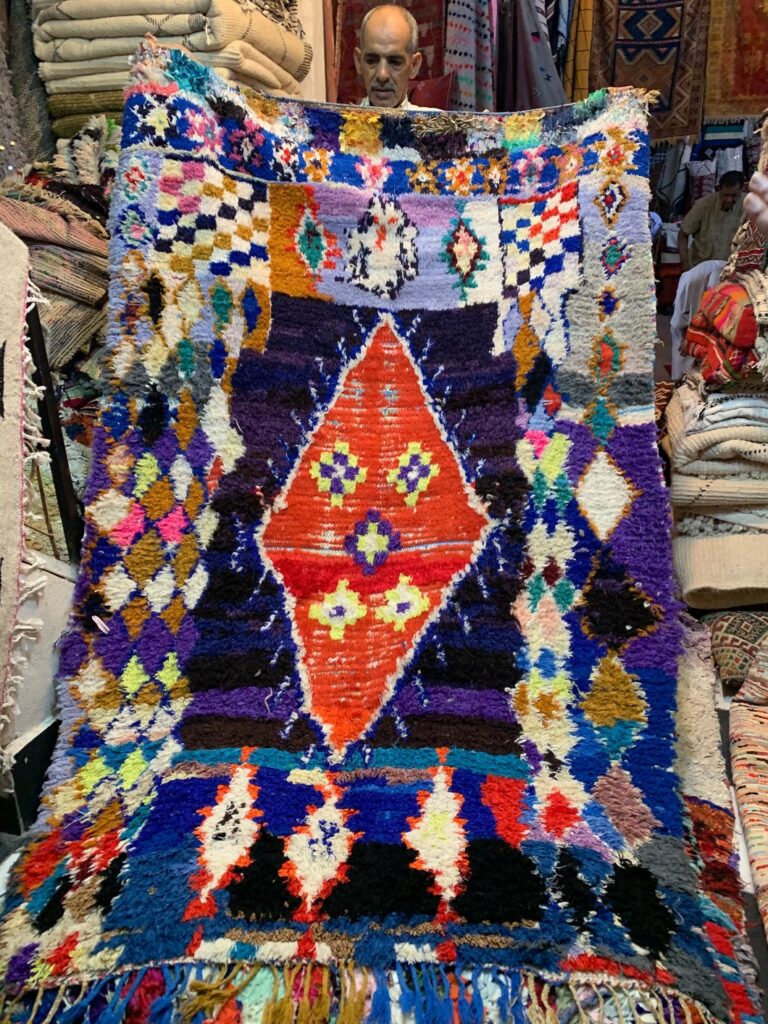
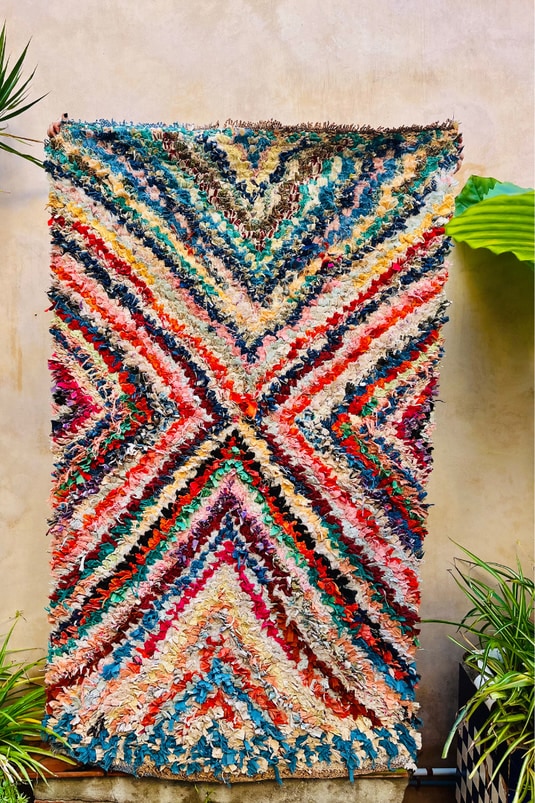
A Boucherouite rug is a Moroccan rug unlike any other. At first glance, it can feel chaotic—bold colors, irregular patterns, and unexpected textures. That reaction is natural. Boucherouite rugs were never meant to follow traditional design rules or visual harmony as we usually define it.
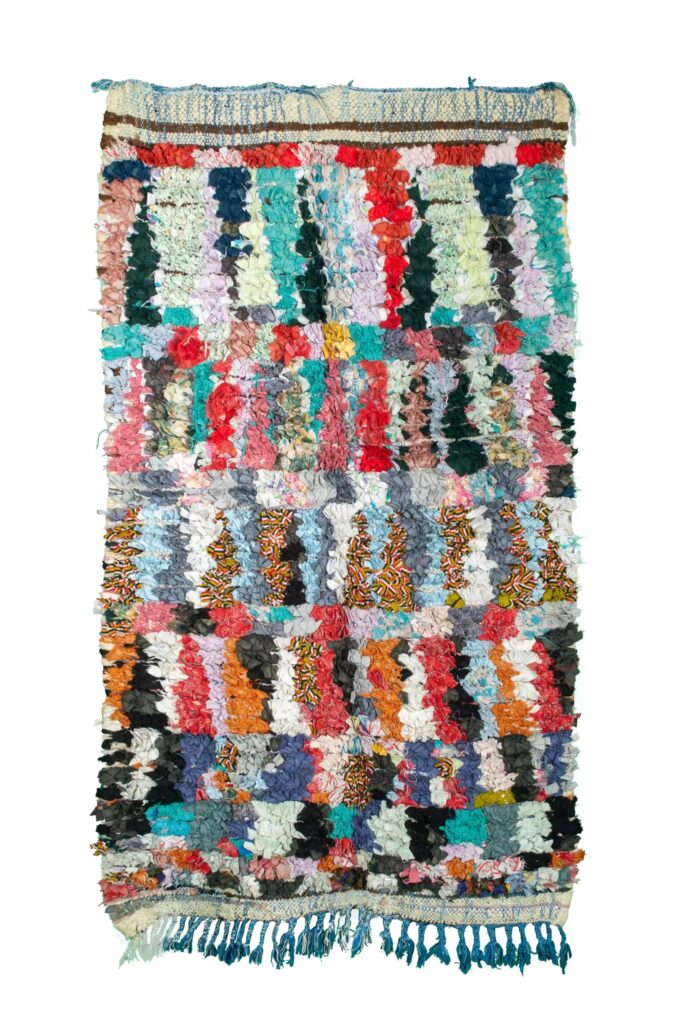
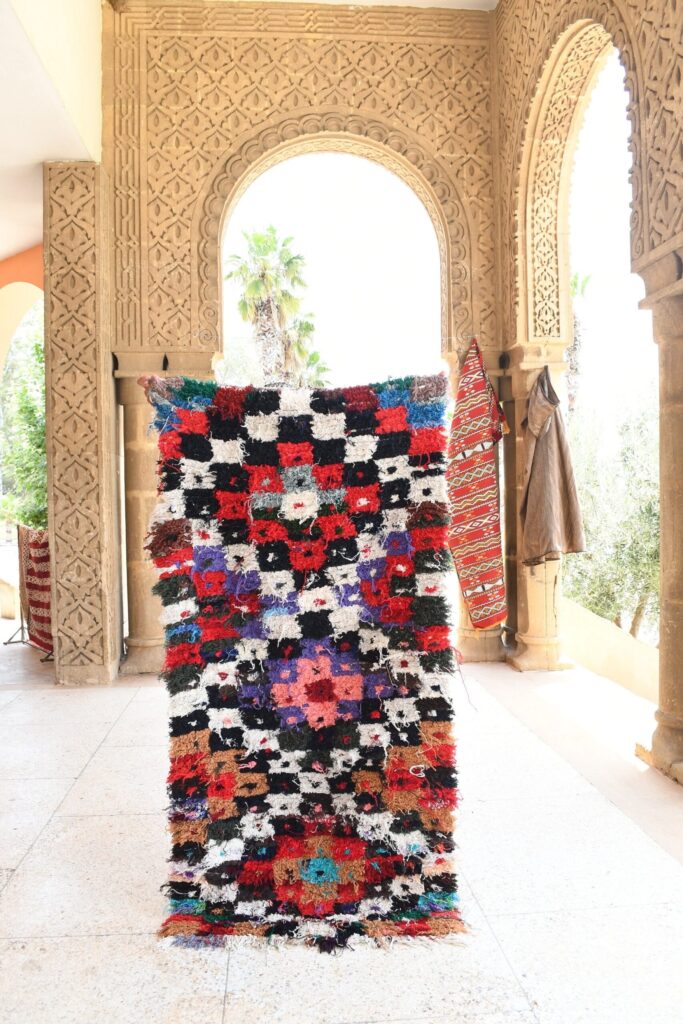
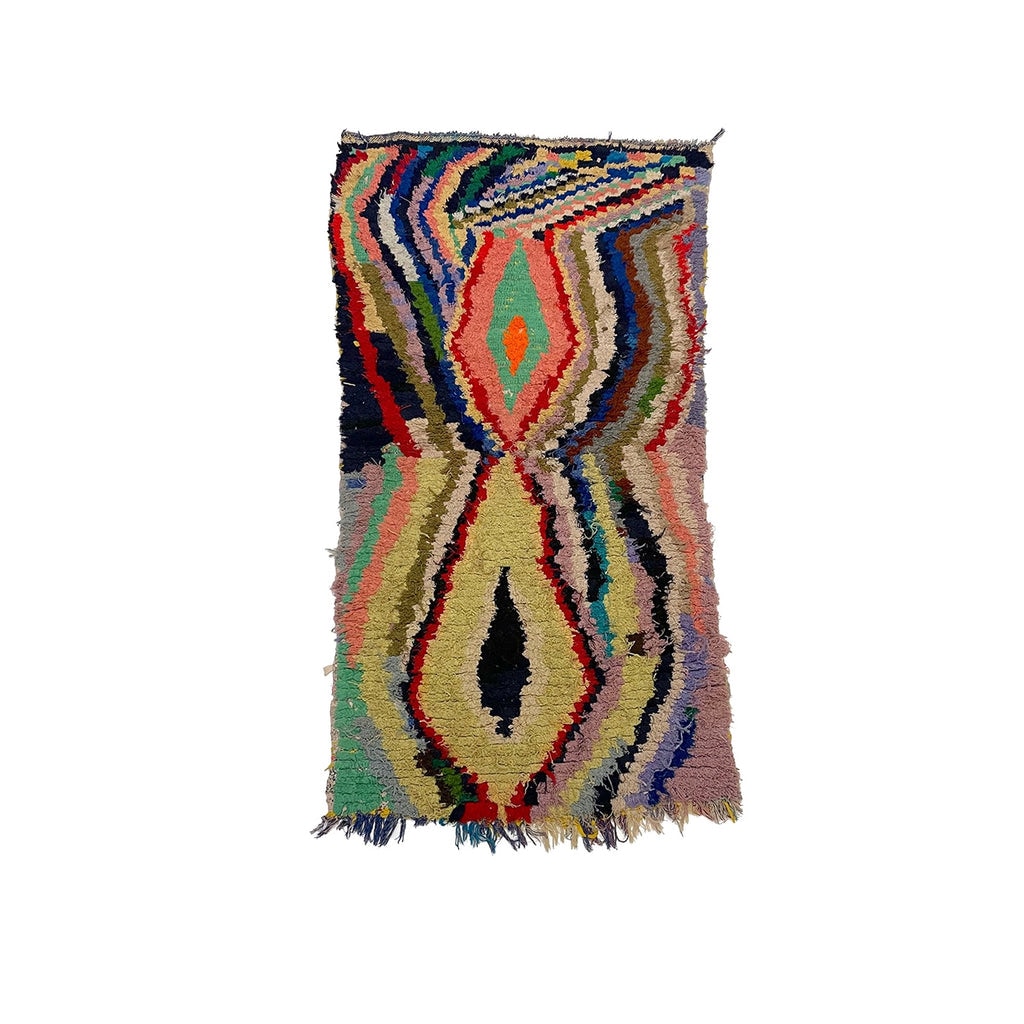
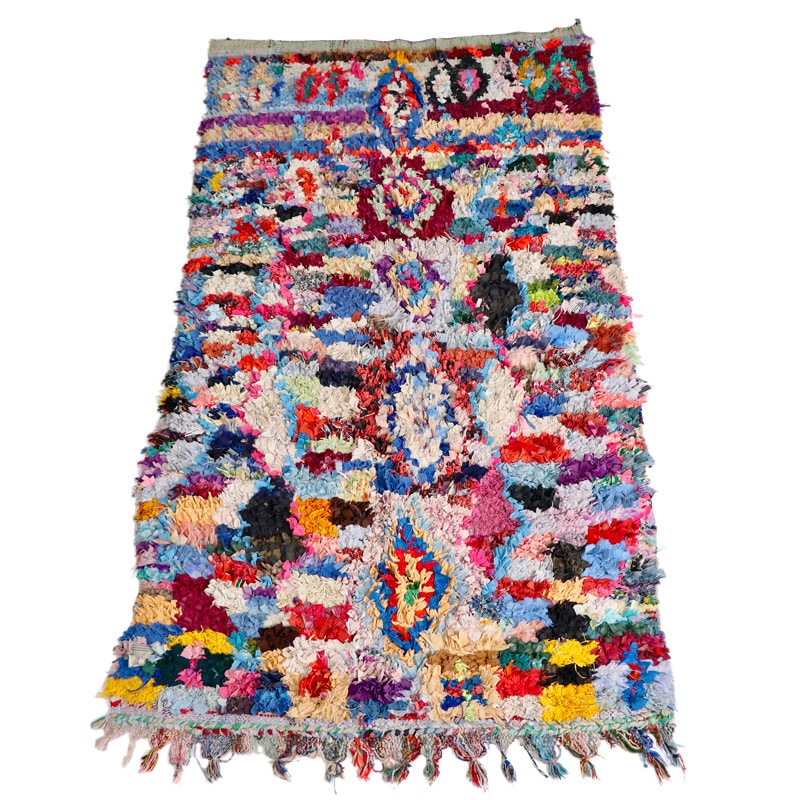
Made from recycled textiles rather than wool, these rugs are woven using strips of old clothing, cotton, nylon, and fabric remnants. What emerges is a layered, highly expressive surface, shaped by availability rather than planning. Each rug is unique, built from what the weaver had at hand at that moment.
There is no standard palette or pattern. Color shifts abruptly, textures change mid-weave, and symmetry is largely absent. What may appear random is, in fact, deeply personal. These rugs reflect emotion, resourcefulness, and freedom from convention rather than decorative intention.
A Boucherouite rug is not designed to blend in. It takes presence in a space and asks to be understood on its own terms—not as a background object, but as an expressive one.
2. The Origins of Boucherouite Rugs: Necessity Turned Into Art
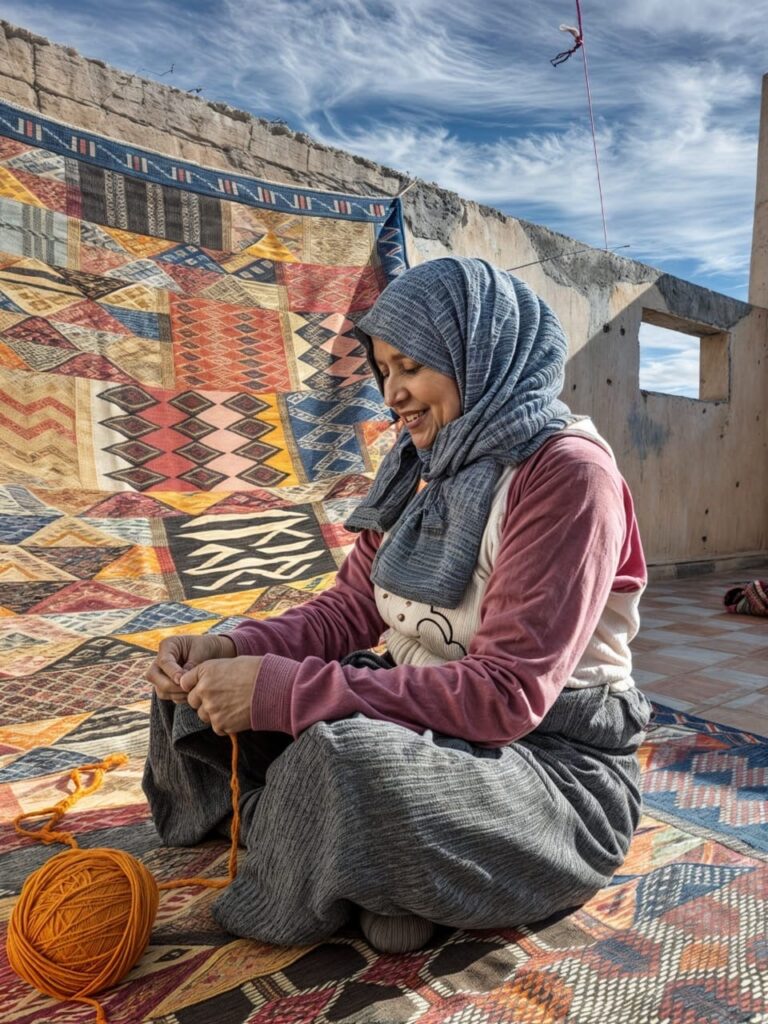
Boucherouite rugs emerged from necessity rather than aesthetics. In rural parts of Morocco, especially in the Atlas regions, wool was not always available or affordable. Instead of abandoning weaving altogether, women adapted—using whatever materials were at hand.
Old garments, worn fabrics, cotton scraps, and synthetic threads were cut into strips and woven into rugs for everyday use. These rugs were not created for sale or display. They were practical objects, made for warmth and daily life.
Because there was no external market or expectation, the weaver had complete freedom. Colors were chosen instinctively, and patterns evolved as the rug grew. Over time, this practicality gave rise to a visual language that feels remarkably modern—raw, expressive, and unconcerned with symmetry.
Seen this way, Boucherouite rugs are honest objects. Their beauty lies not in polish, but in adaptation and creative resilience.
3. Why Boucherouite Rugs Are So Visually Powerful
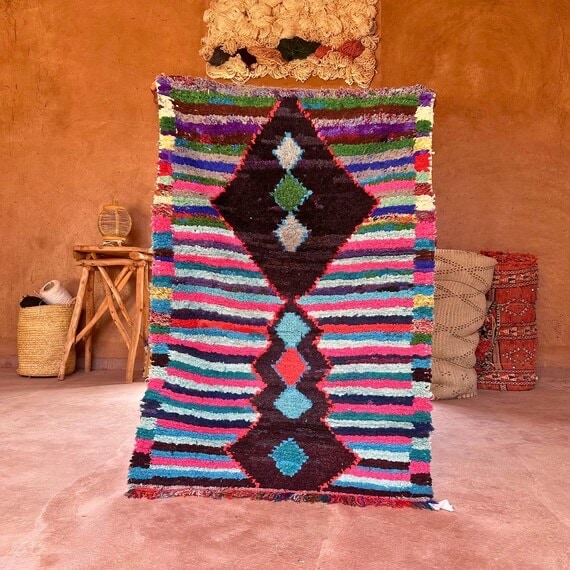
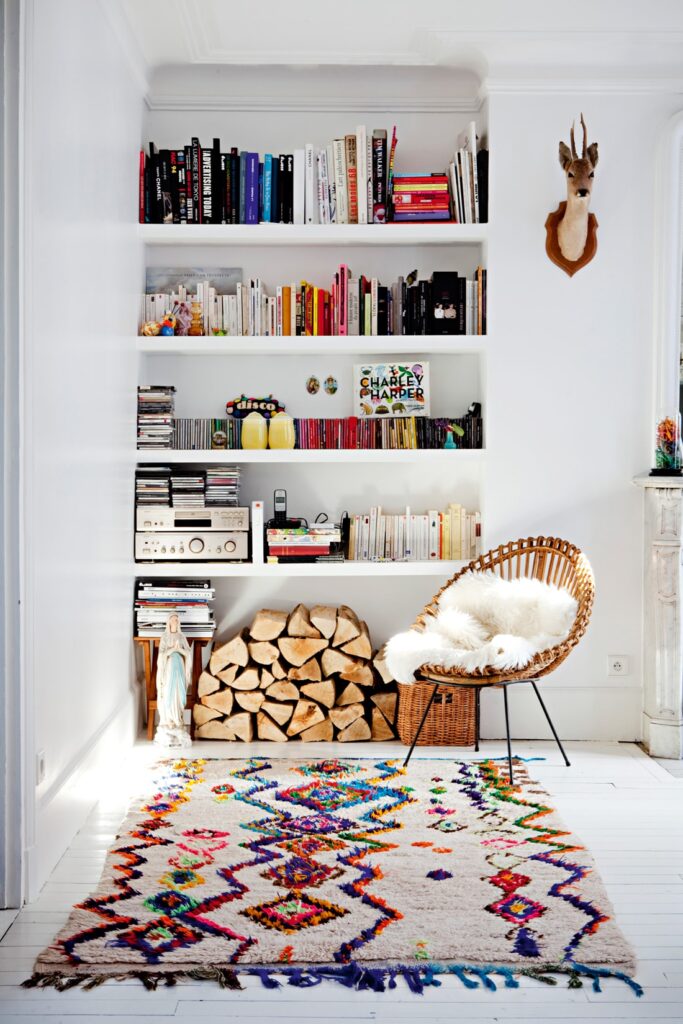
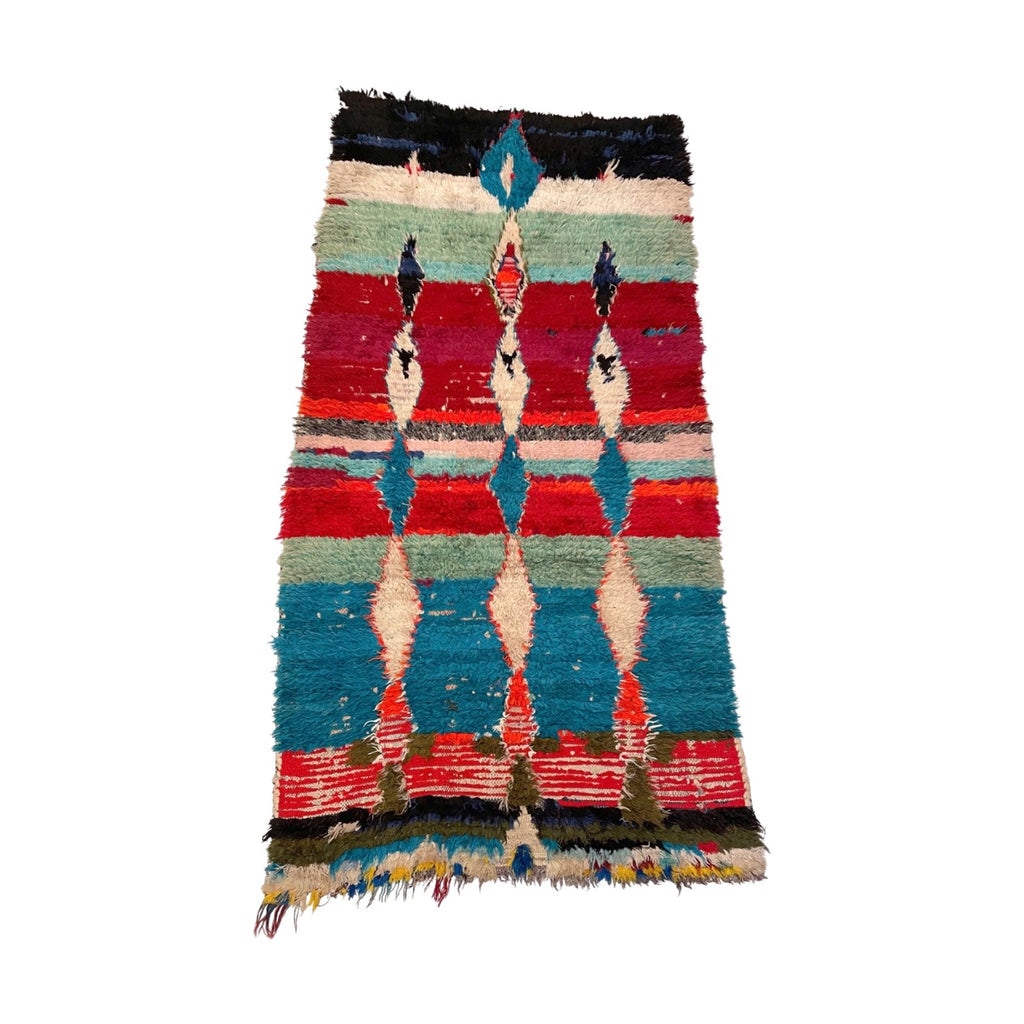
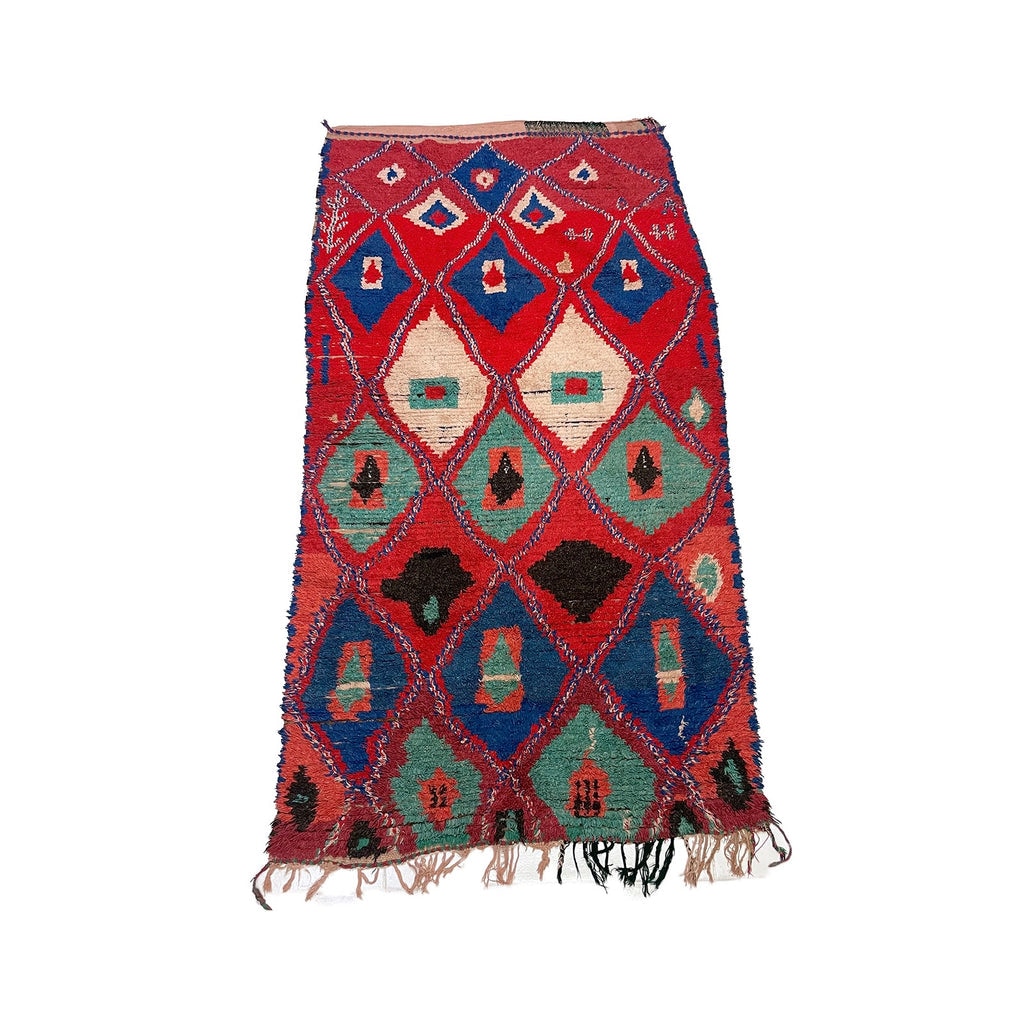
The visual power of a Boucherouite rug comes from contrast. Colors collide rather than harmonize. Bright tones sit next to muted ones, and unexpected combinations emerge naturally from reused materials.
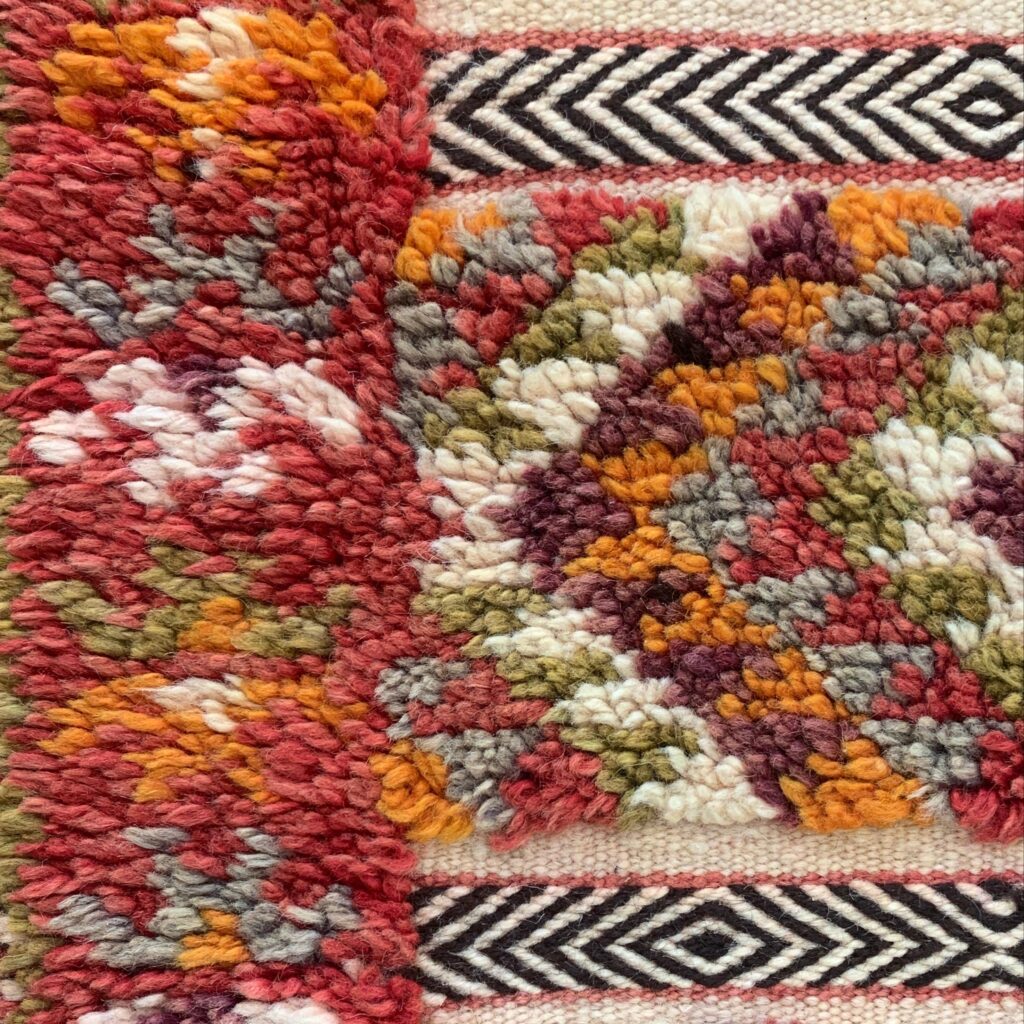
Texture adds another layer of intensity. Some areas are dense and heavy, others lighter and more open. This uneven surface catches light differently across the rug, creating movement and depth. The eye never settles—it keeps exploring.
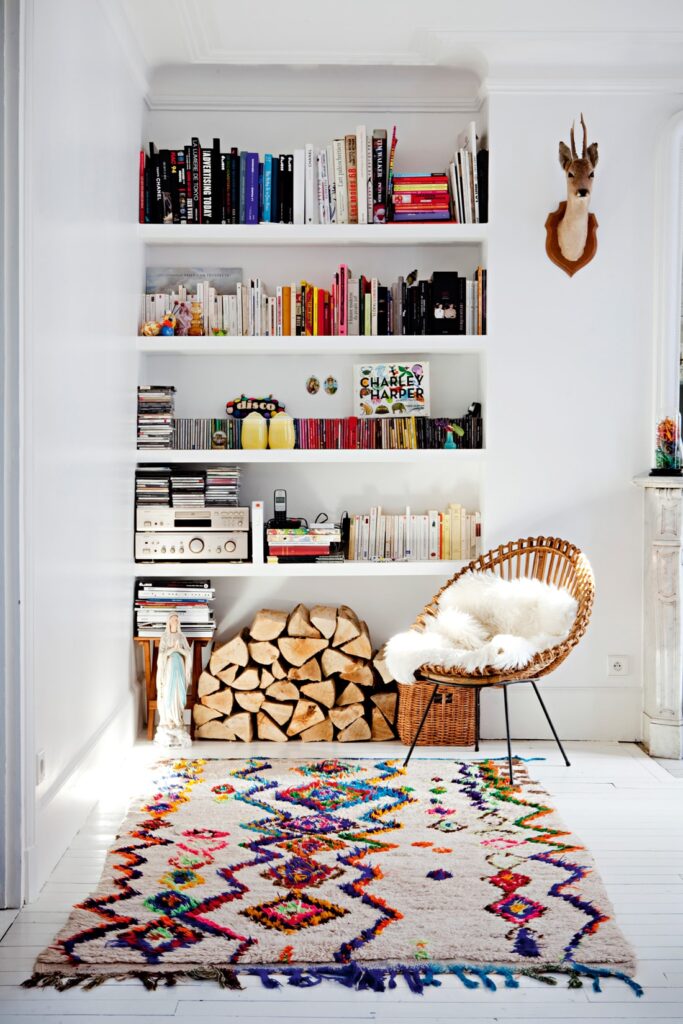
In an interior, this energy is transformative. A Boucherouite rug doesn’t quietly support a room; it activates it. Even the most minimal space gains warmth and personality when paired with something so visually alive.
4. Not a Trend: How Boucherouite Rugs Challenge Traditional Luxury
Boucherouite rugs stand apart from traditional ideas of luxury. They are not polished, uniform, or restrained. There is no promise of symmetry or refinement—and that is precisely their strength.
While conventional luxury values control and perfection, Boucherouite rugs favor expression and authenticity. They don’t try to look expensive or impressive. Their value comes from individuality and cultural depth.
Often described as “trendy,” these rugs actually predate modern design cycles. What feels contemporary today is not the rug itself, but the shift in taste toward imperfection, character, and emotional honesty.
5. How to Read a Boucherouite Rug (Beyond the Colors)
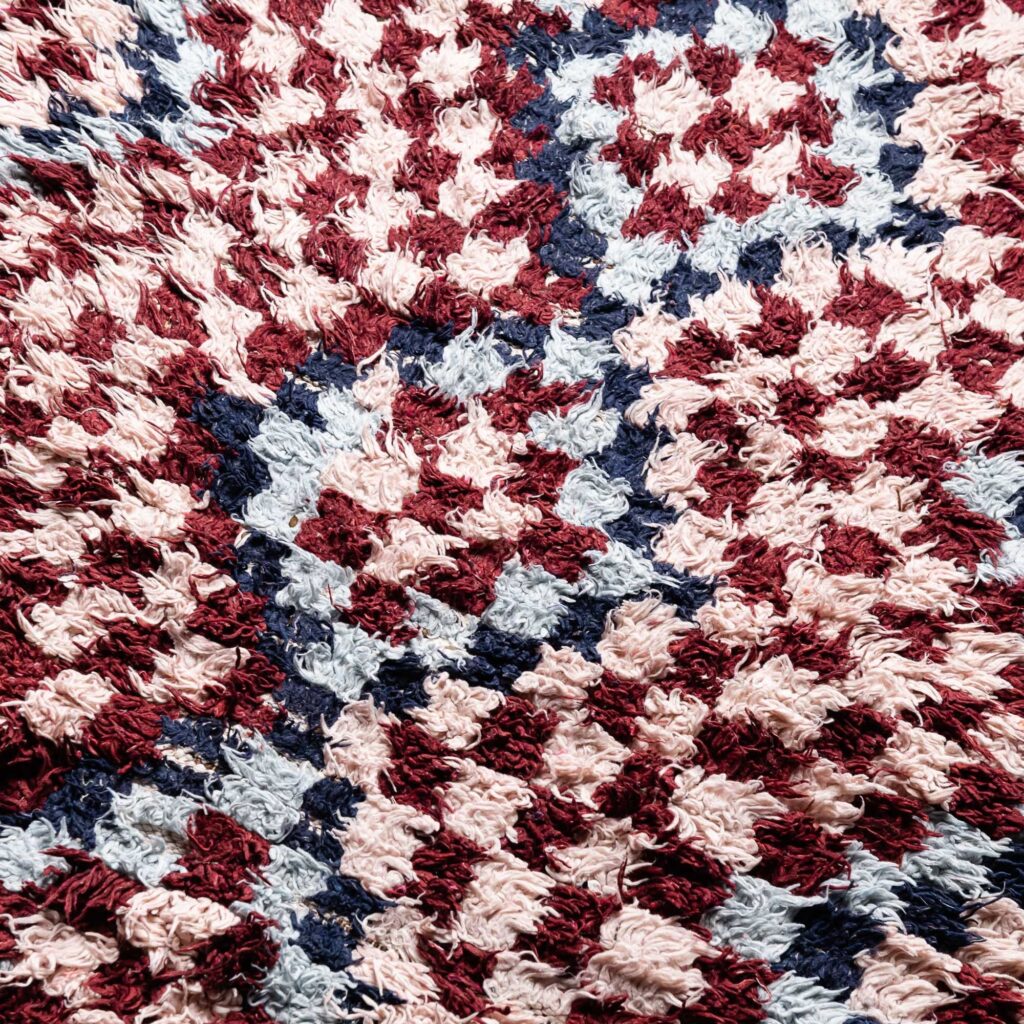
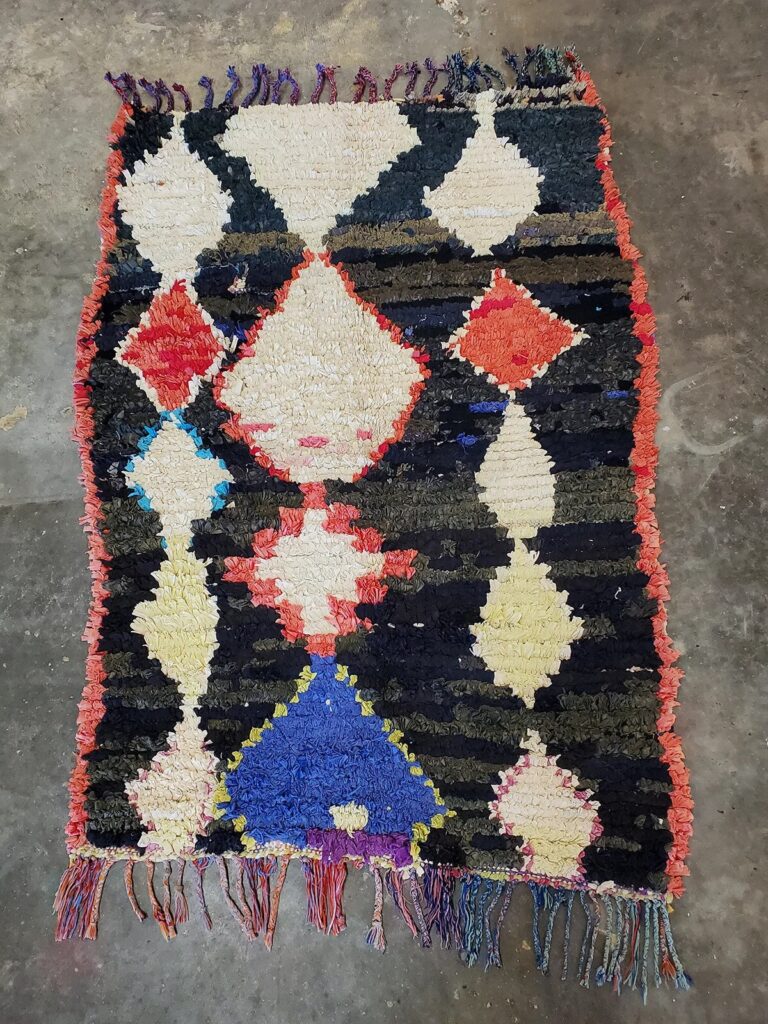
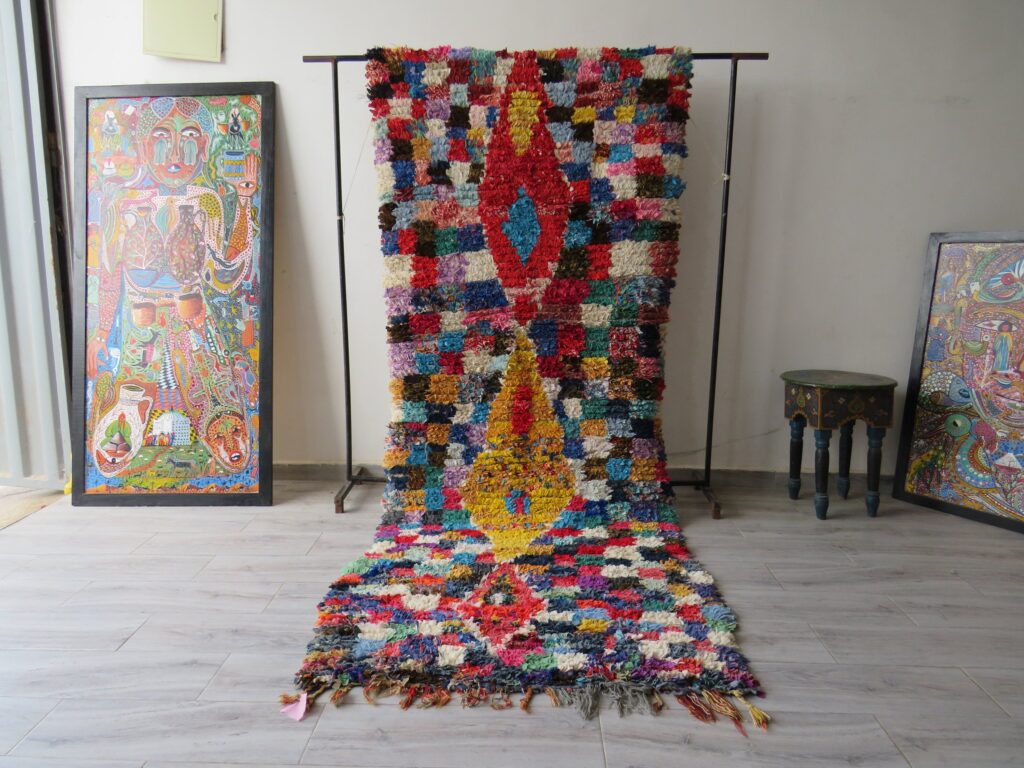
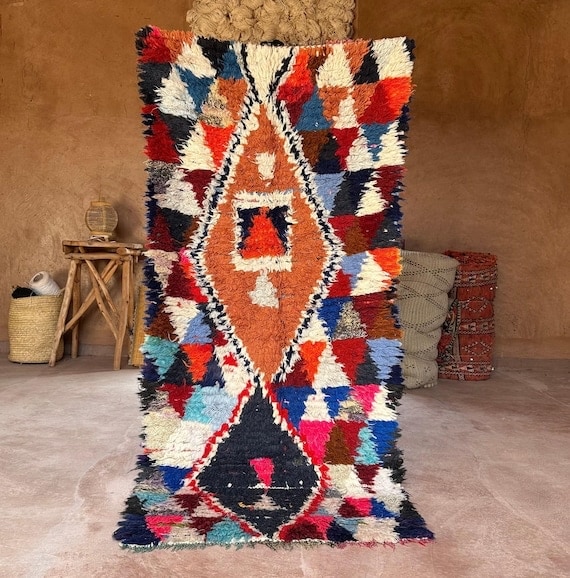
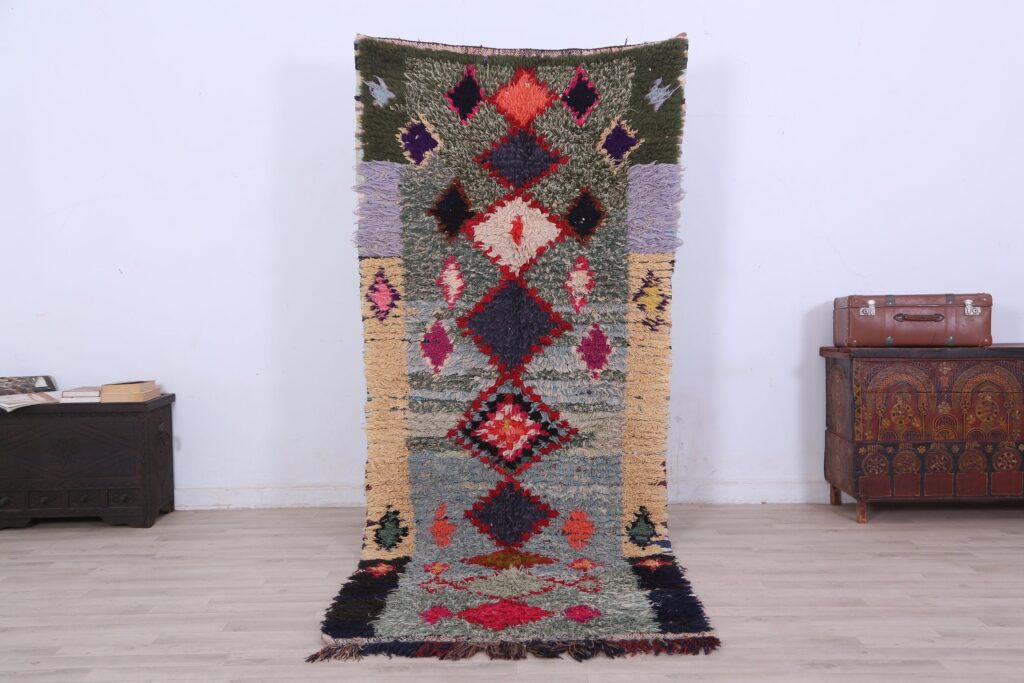
To read a Boucherouite rug, start with its materials. Mixed fibers, uneven thickness, and visible joins are all intentional results of reuse. These shifts create rhythm across the surface rather than uniformity.
Patterns are rarely symbolic in a traditional sense. They emerge organically as the rug is woven, shaped by emotion, memory, and circumstance. Interpretation here is personal rather than academic.
There is no correct way to understand a Boucherouite rug. It communicates through the parts that catch your eye, the textures you notice, and the feelings it evokes.
6. How to Style a Boucherouite Rug Without Overwhelming Your Space
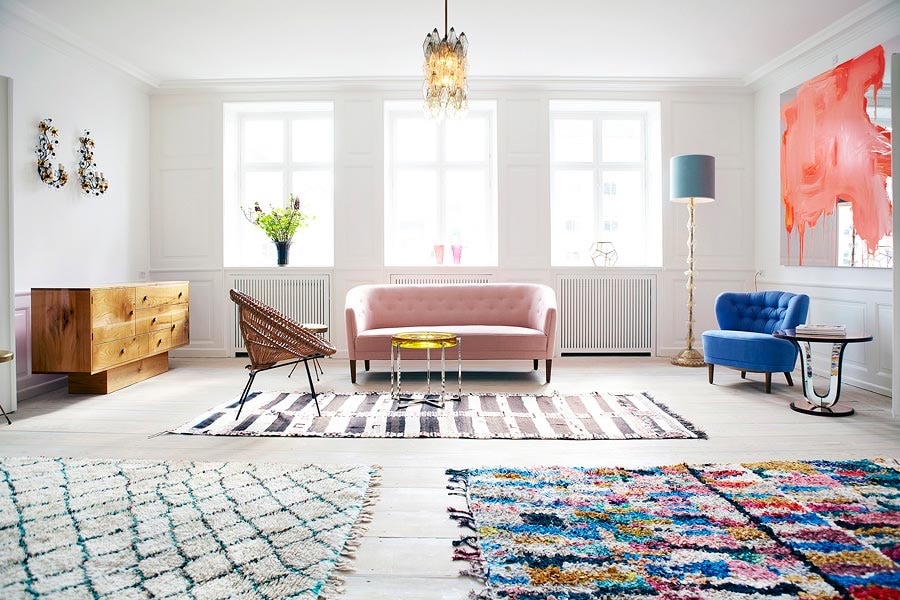
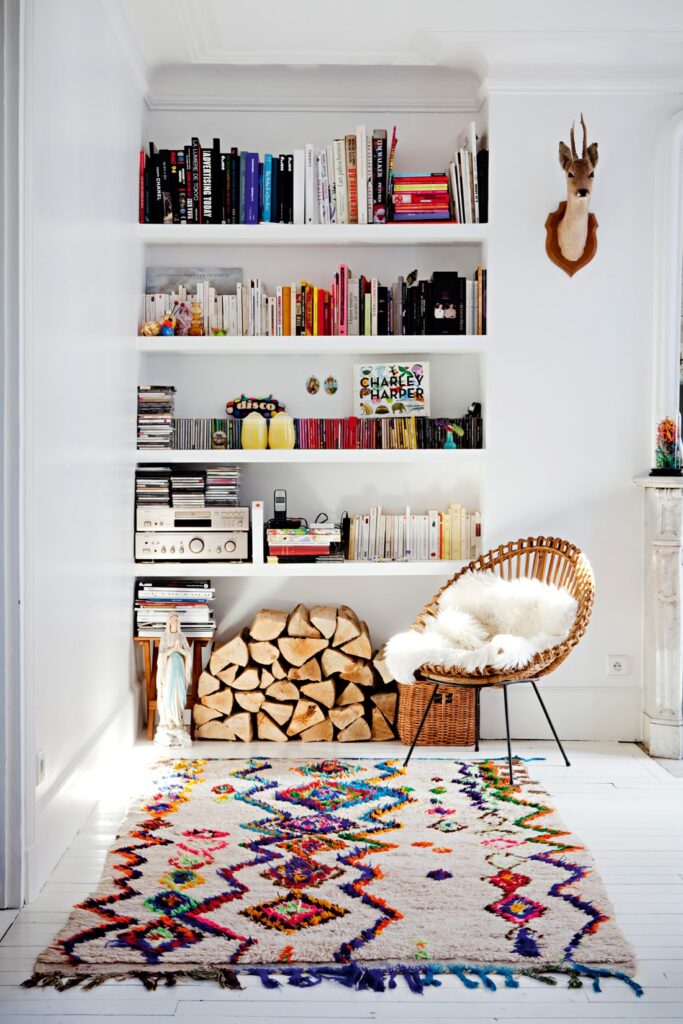
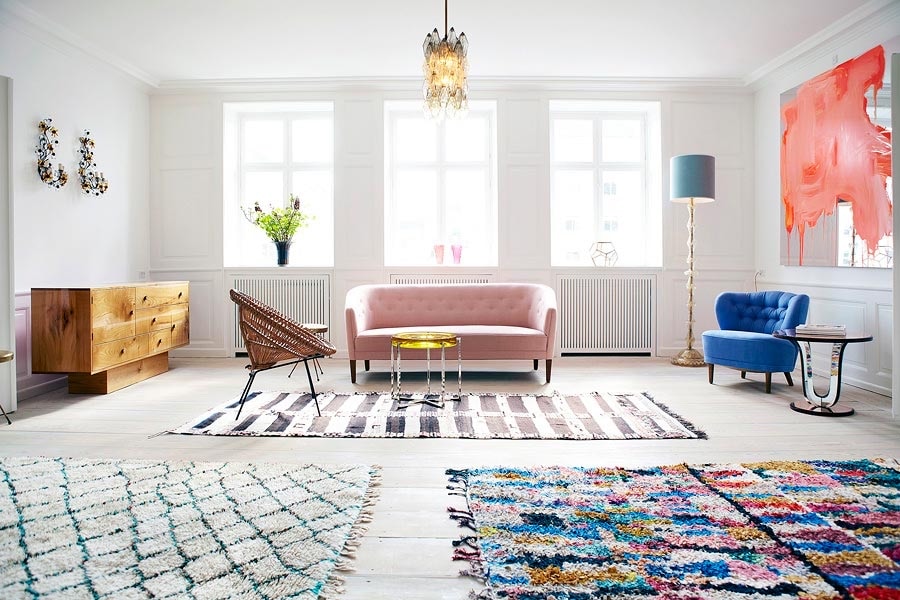
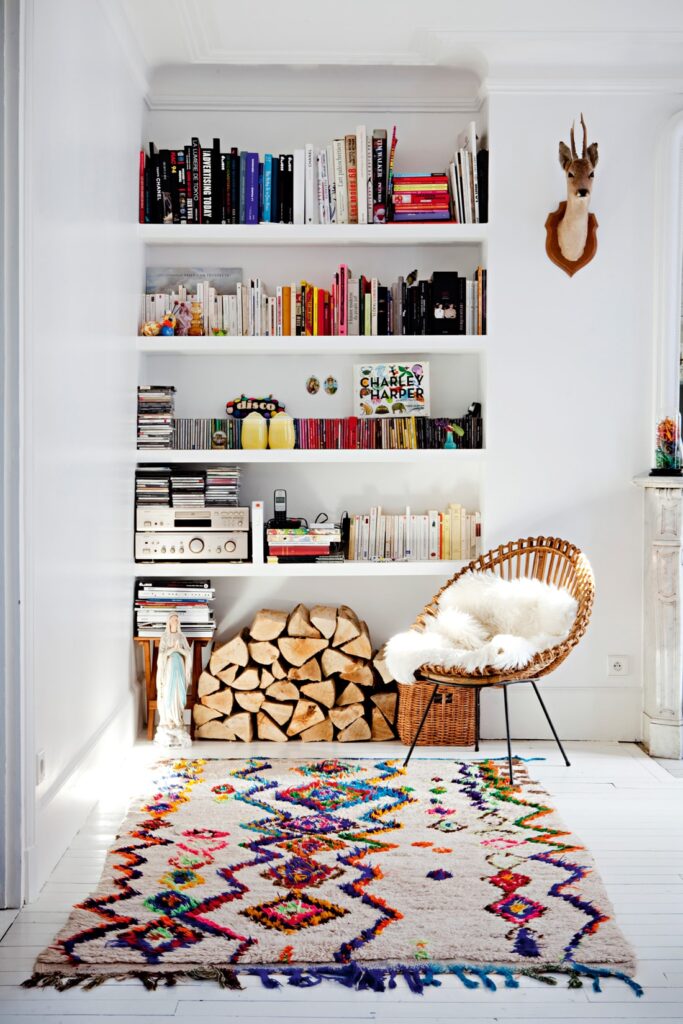
Styling a Boucherouite rug is about balance, not coordination. Because these rugs are visually expressive, they work best when allowed to lead rather than compete.
Neutral interiors provide the perfect backdrop. Clean lines, simple furniture, and natural materials help ground the rug’s intensity. Contrast, rather than repetition, makes the rug feel intentional.
Placement matters. Give the rug enough space to be read as a whole, and avoid pairing it with other strong patterns nearby. Let it stand on its own.
7. Who Boucherouite Rugs Are (and Are Not) For
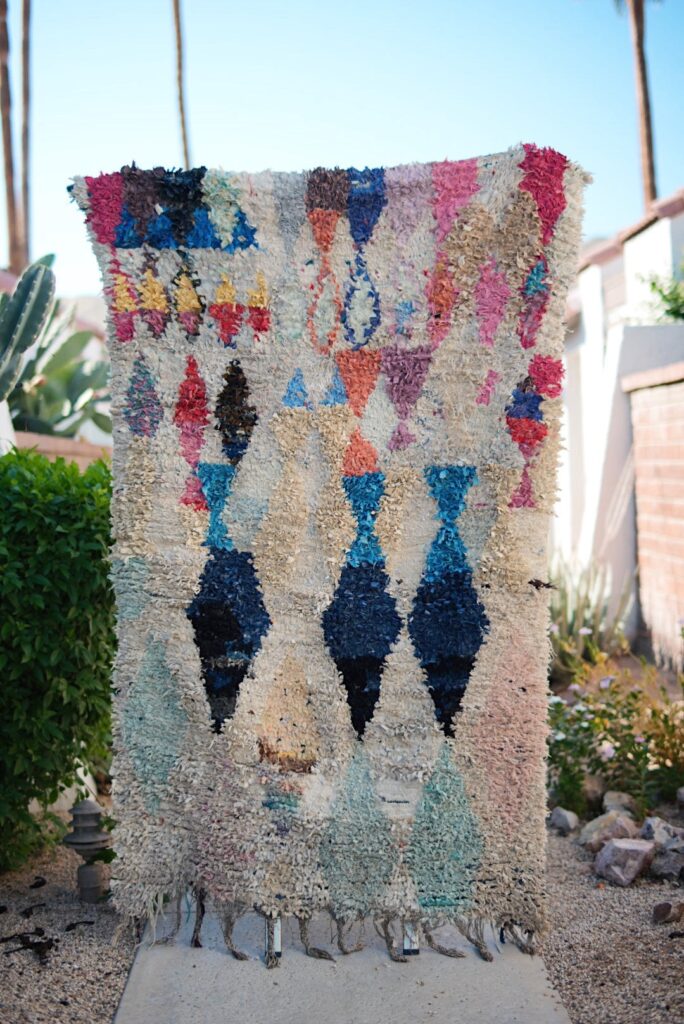
Boucherouite rugs appeal to people who are comfortable with boldness and irregularity. They suit those who see their home as a form of self-expression rather than a perfectly controlled environment.
They are not ideal for those who prefer symmetry, subtlety, or constant visual calm. These rugs don’t fade into the background—they change the energy of a room.
Choosing one is less about décor and more about mindset. Living with a Boucherouite rug means embracing imperfection and expressive freedom.
8. Buying a Boucherouite Rug: What to Look For
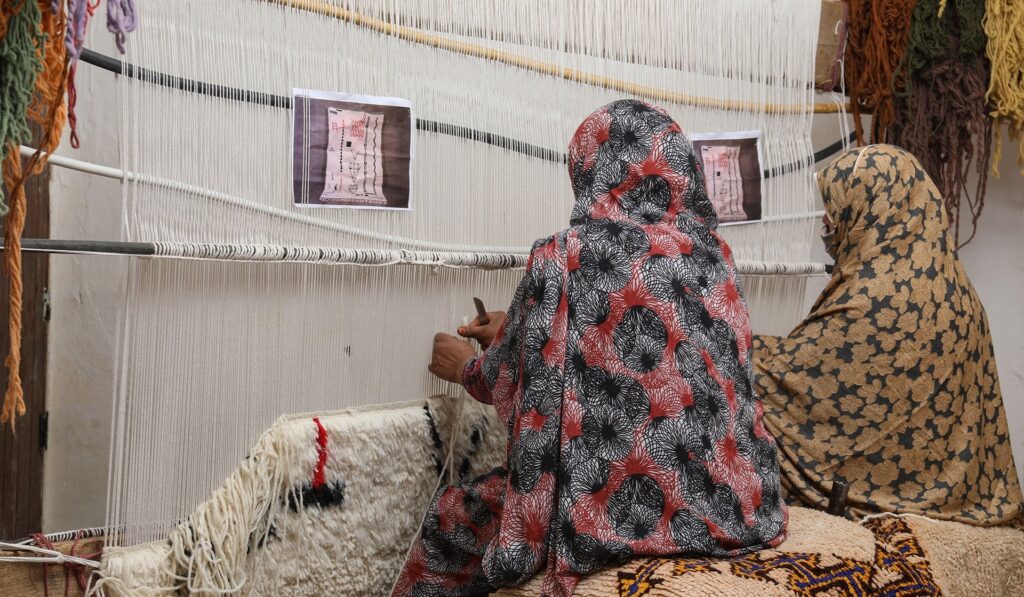
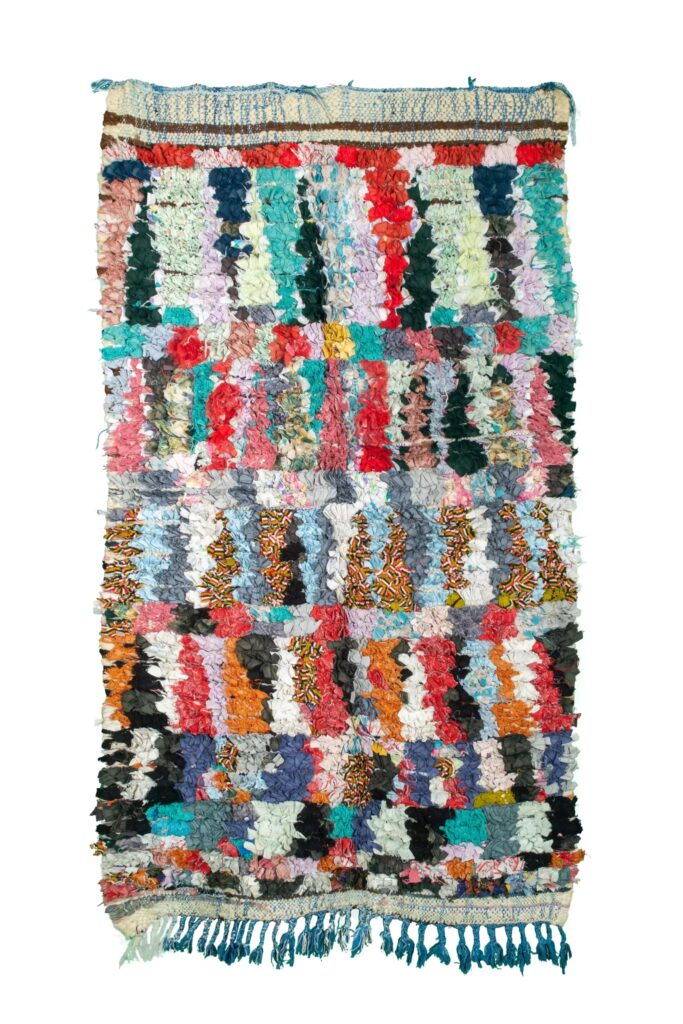
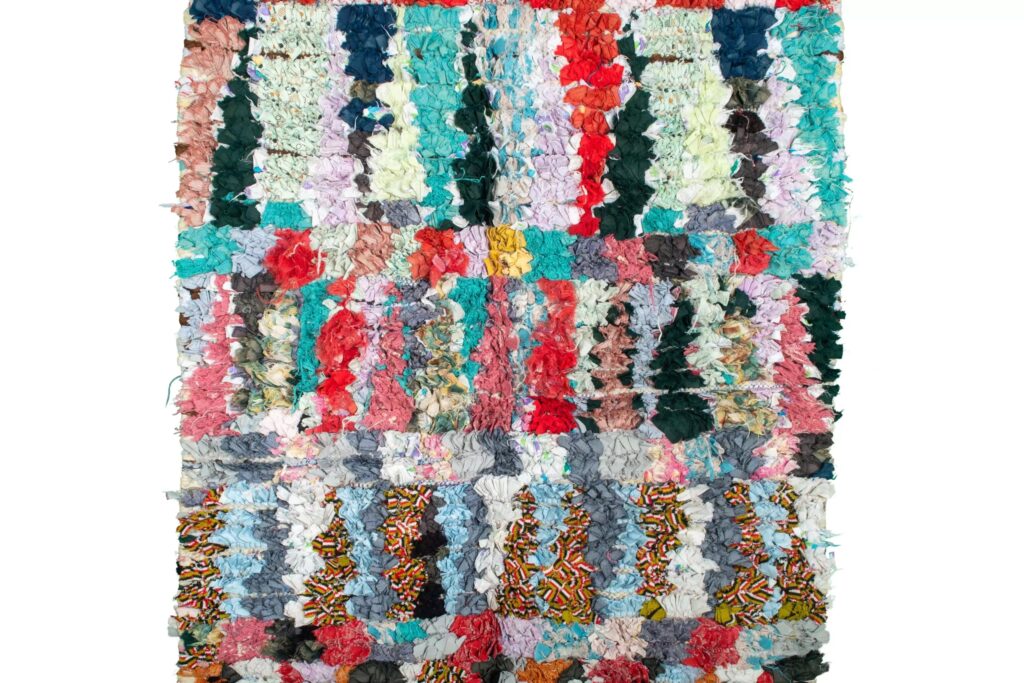
When buying a Boucherouite rug, perfection is not the goal. What matters is coherence—whether the rug feels grounded despite its visual freedom.
Look for diversity in materials and texture. Authentic pieces show variation and spontaneity. Construction should still feel solid, with securely woven strips and stable edges.
Above all, trust your response. If a rug consistently draws you in and feels emotionally compelling, that resonance matters more than any checklist.
9. Boucherouite Rugs Over Time: Aging, Patina, and Living With Them
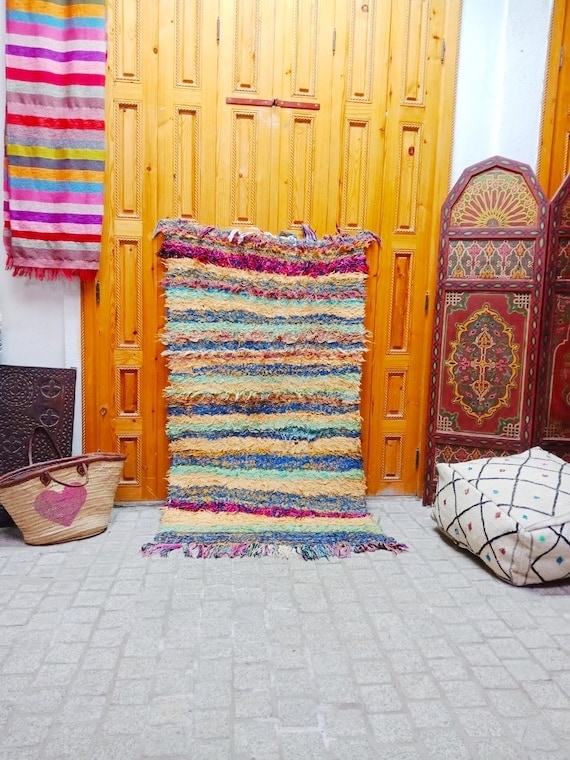
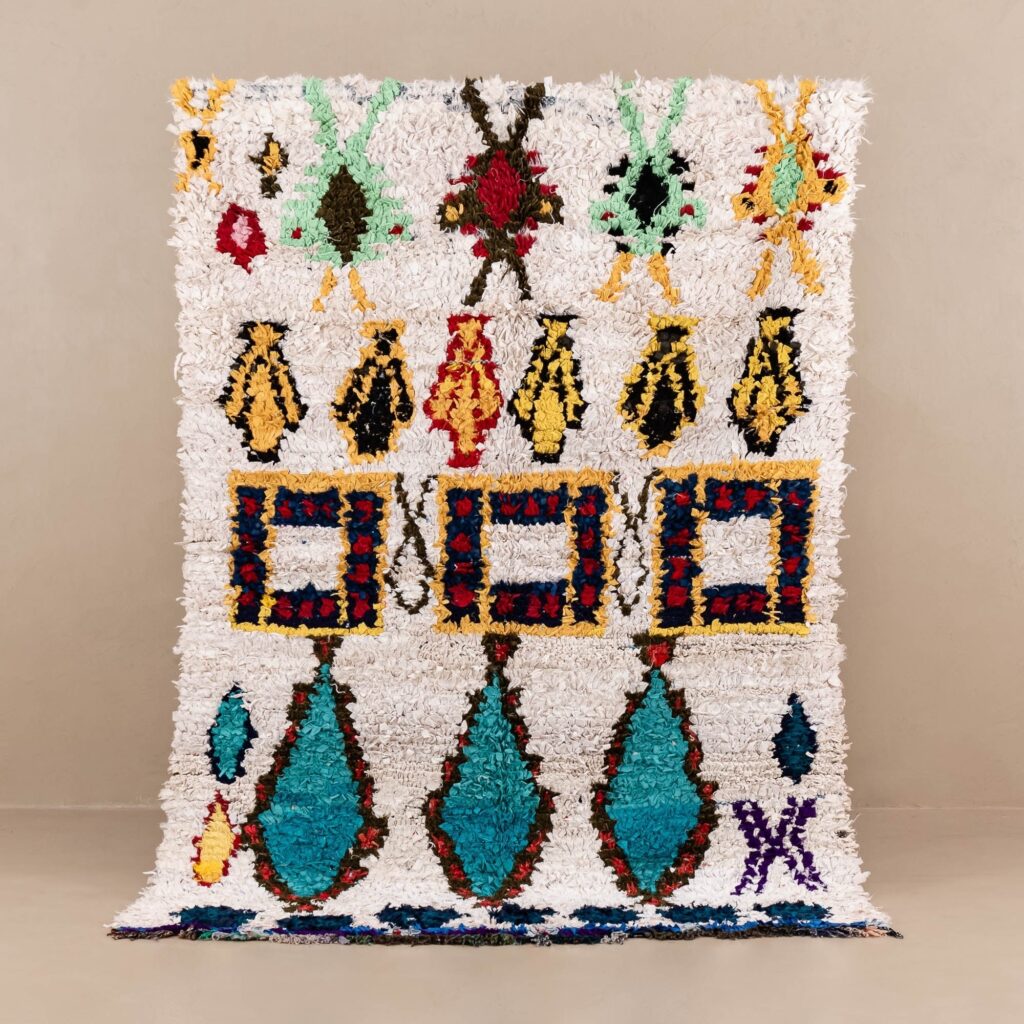
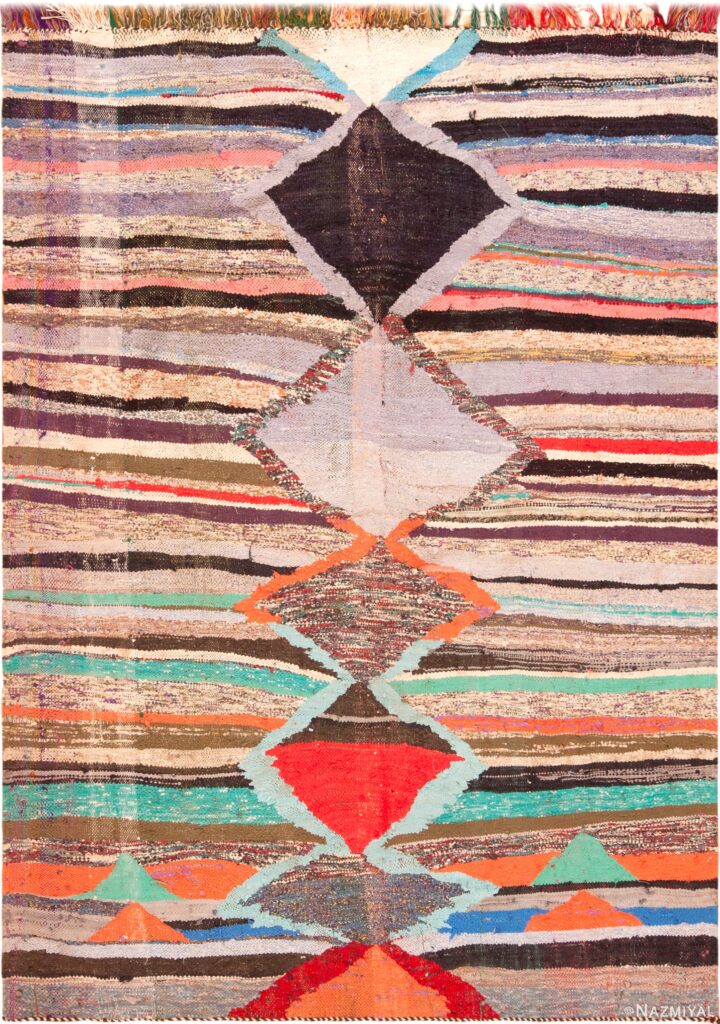
Boucherouite rugs evolve with time and use. Colors soften, fibers compress, and certain areas show wear sooner than others. This uneven aging is part of their identity.
Rather than diminishing the rug, time adds depth. The surface begins to tell a longer story—one shaped by both the weaver and the home it inhabits.
These rugs are meant to be lived with, not preserved. Their beauty grows through use, not protection.
10. Final Thoughts: Choosing a Rug That Reflects Who You Are
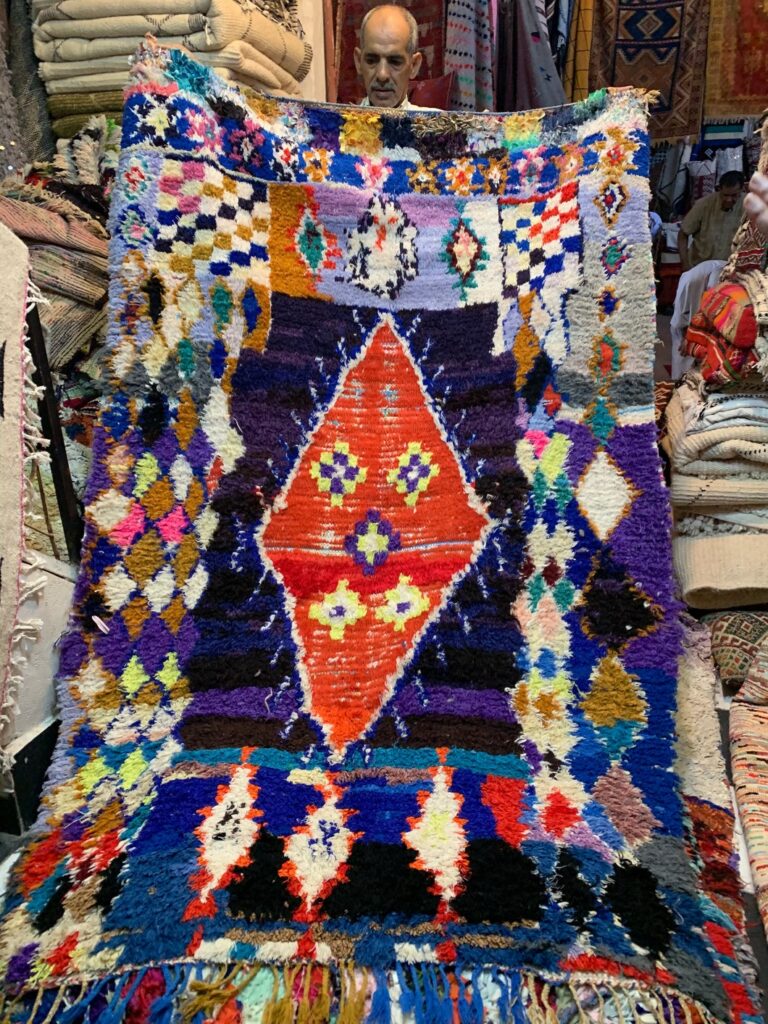
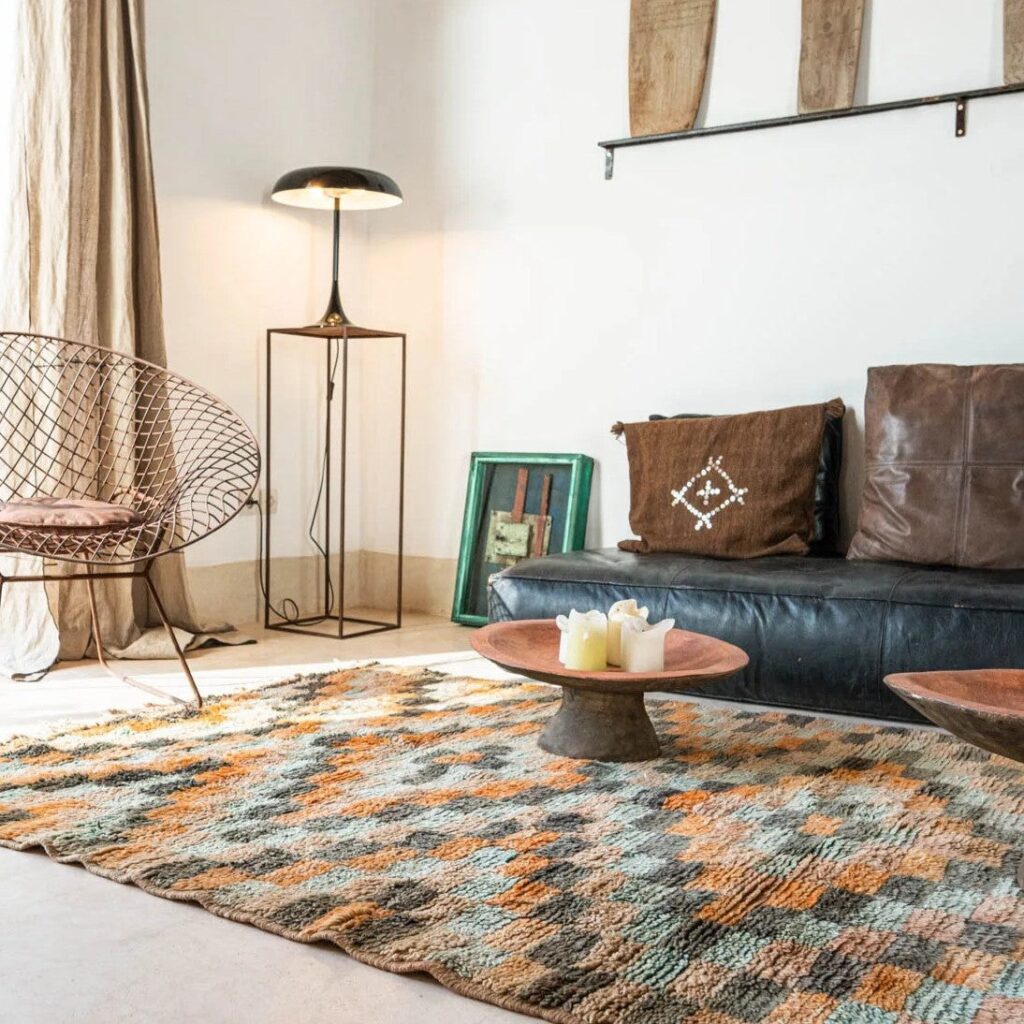
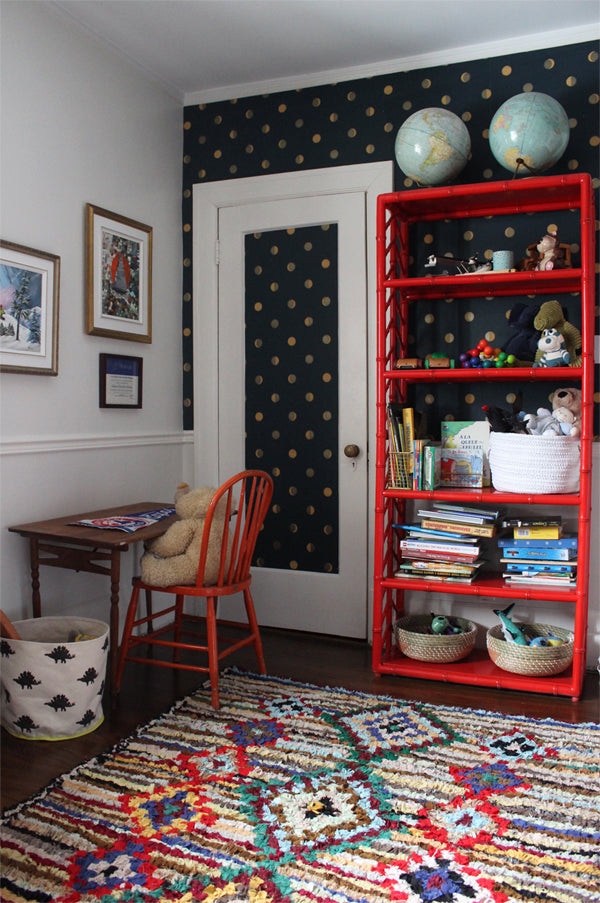
Choosing a Boucherouite rug is an emotional decision. These rugs connect through character and individuality rather than balance or refinement.
There is no need to justify liking something expressive or unconventional. A Boucherouite rug isn’t meant to blend in—it reflects a perspective.
Over time, it becomes more than a visual element. It becomes part of how your space feels and how you choose to live within it.