Authentic Moroccan Leather Poufs: How to Tell Real Leather from Faux Before You Buy
Why “Real Leather” Is No Longer a Safe Assumption
“Genuine leather” used to be reassuring. Today, it isn’t.
As Moroccan-style decor has grown in popularity, the market has filled with look-alike poufs made from synthetic or low-grade materials—often marketed using the same language as authentic pieces. Faux leather now looks convincing online, making it harder for buyers to tell the difference at a glance.
If you care about real materials and long-term value, buying imitations creates uncertainty.
This guide isn’t here to sell you anything. It’s here to help you recognize what’s real—so you can buy with clarity and confidence, not doubt.
2. What “Authentic Moroccan Leather” Actually Means (And What It Doesn’t)
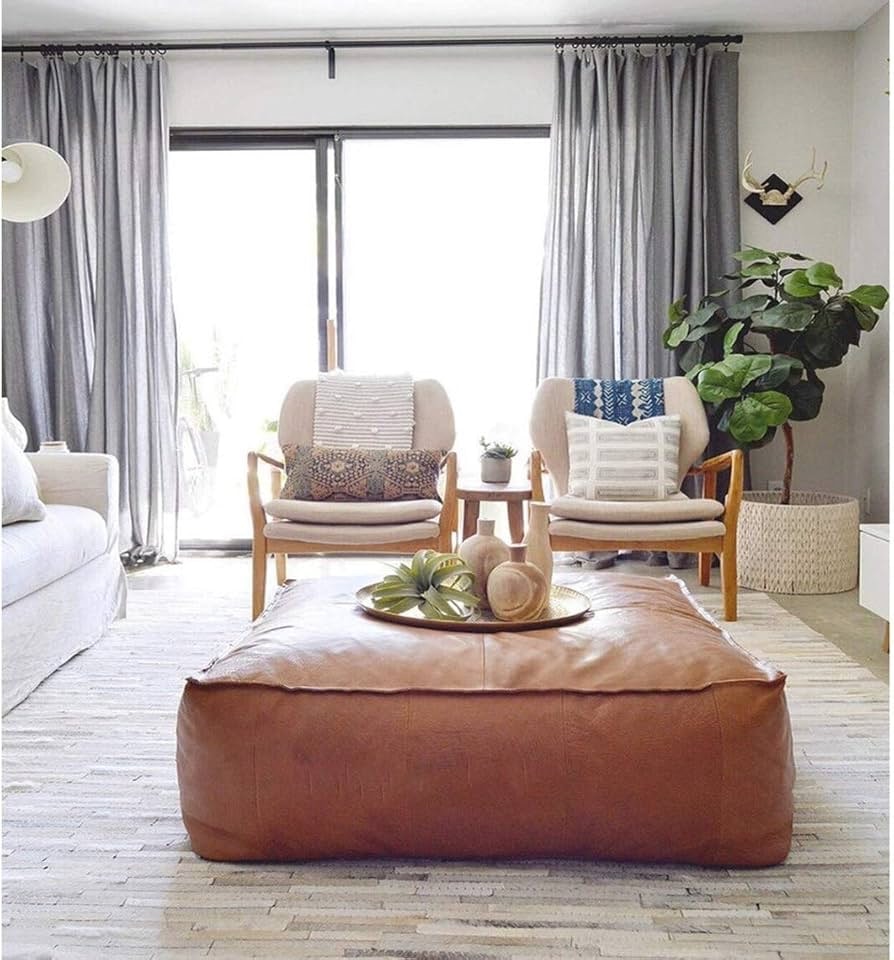
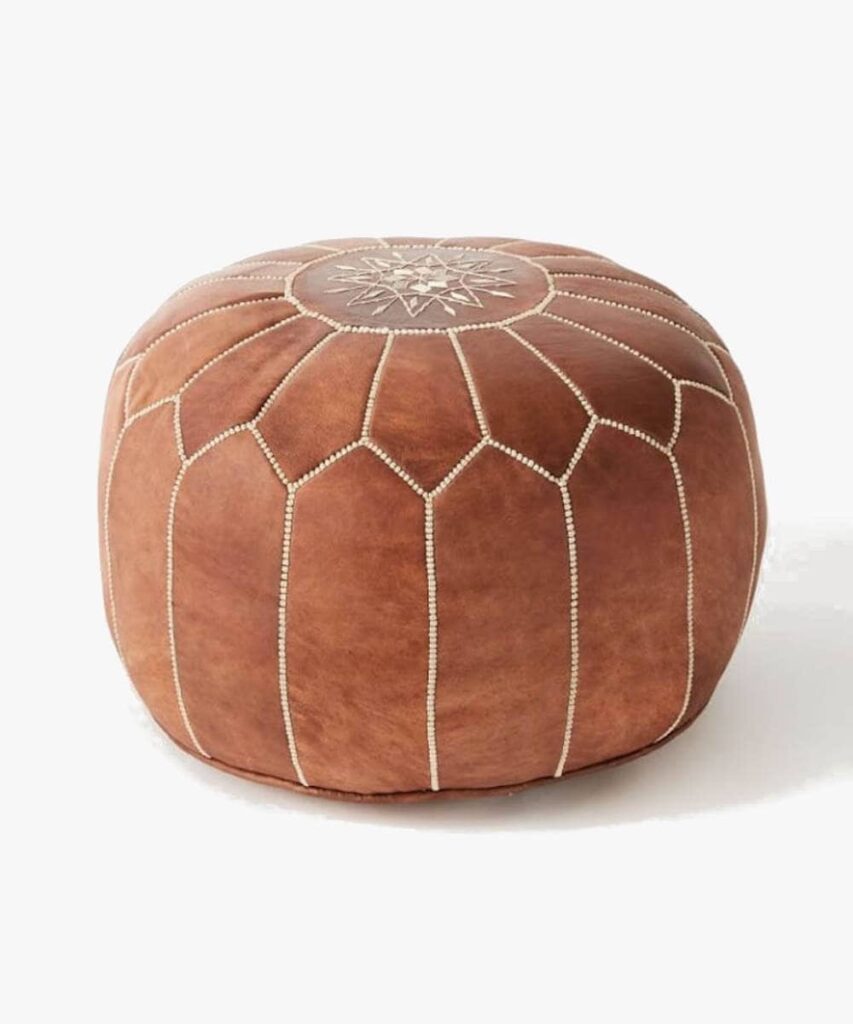
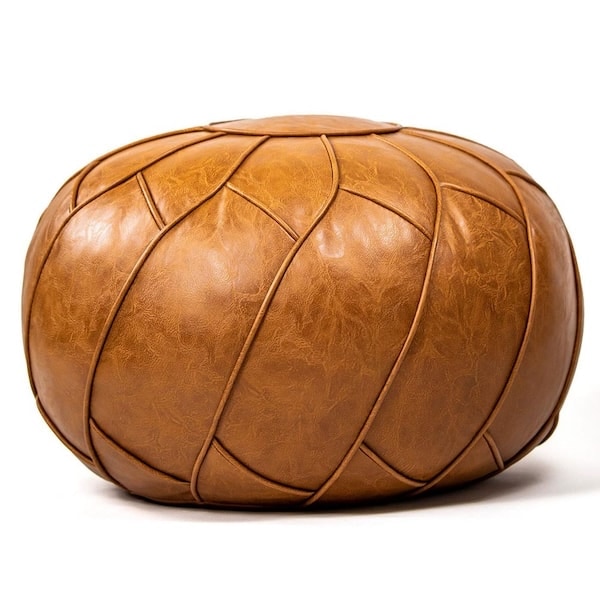
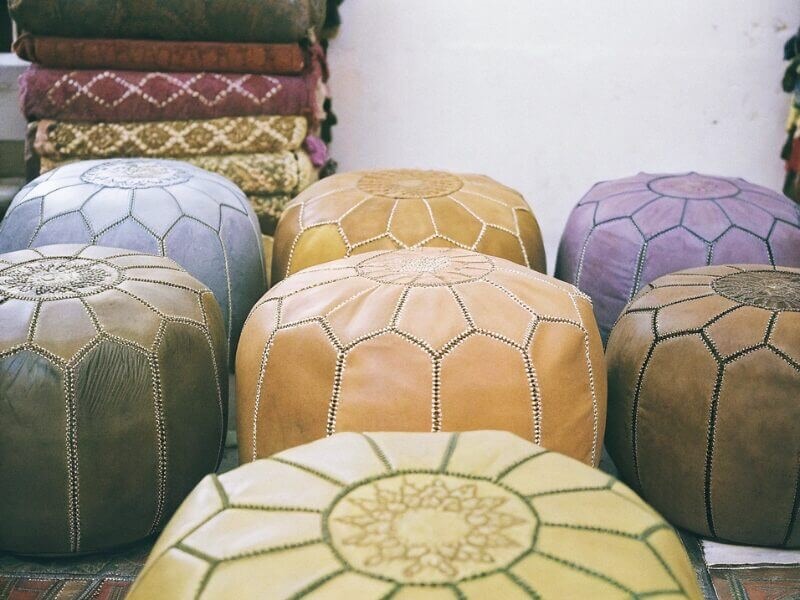
Authentic Moroccan leather means real animal hide—not plastic, not bonded scraps, and not “Moroccan-style” imitations. It comes from goat, sheep, or cow leather and keeps its natural grain, softness, and slight imperfections.
What it doesn’t mean:
- Faux or PU leather
- Perfectly uniform, factory-finished surfaces
- Vague labels like “Moroccan-inspired”
One important trap: “genuine leather” sounds reassuring, but it doesn’t guarantee quality. It only means some leather is present.
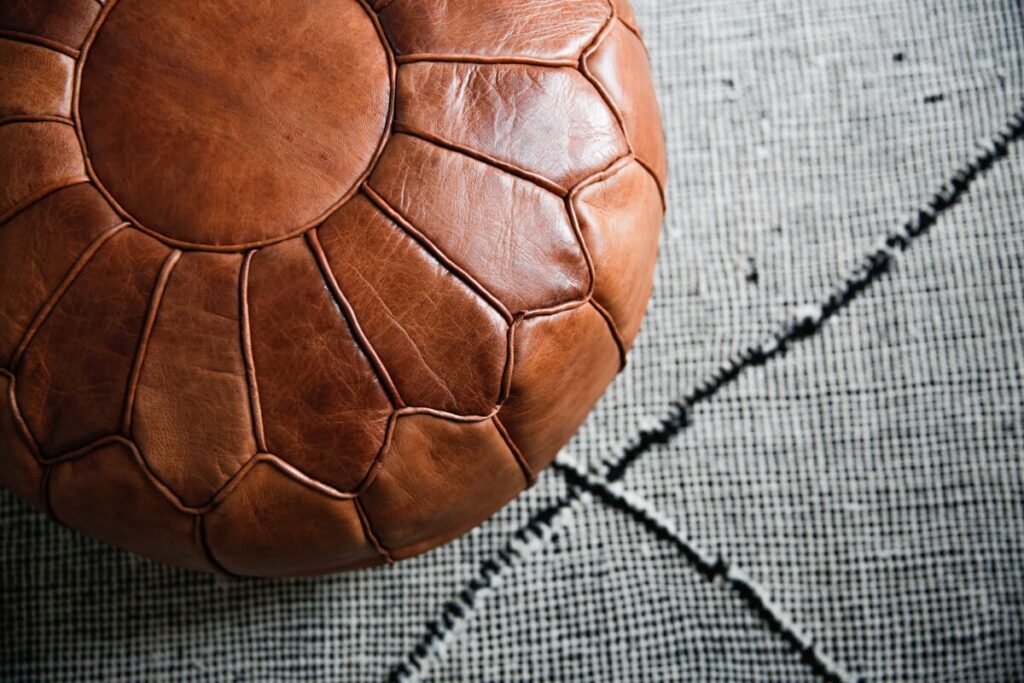
Real Moroccan leather looks and feels natural. Small irregularities aren’t flaws—they’re proof the material hasn’t been manufactured to look perfect.
3. How Traditional Moroccan Leather Poufs Are Made (Why the Process Matters)
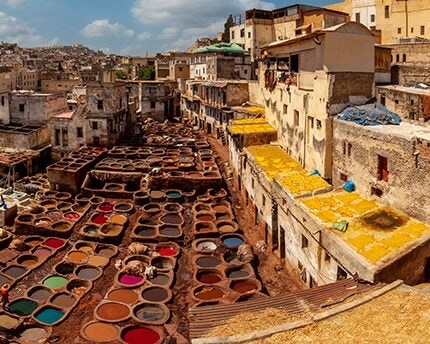
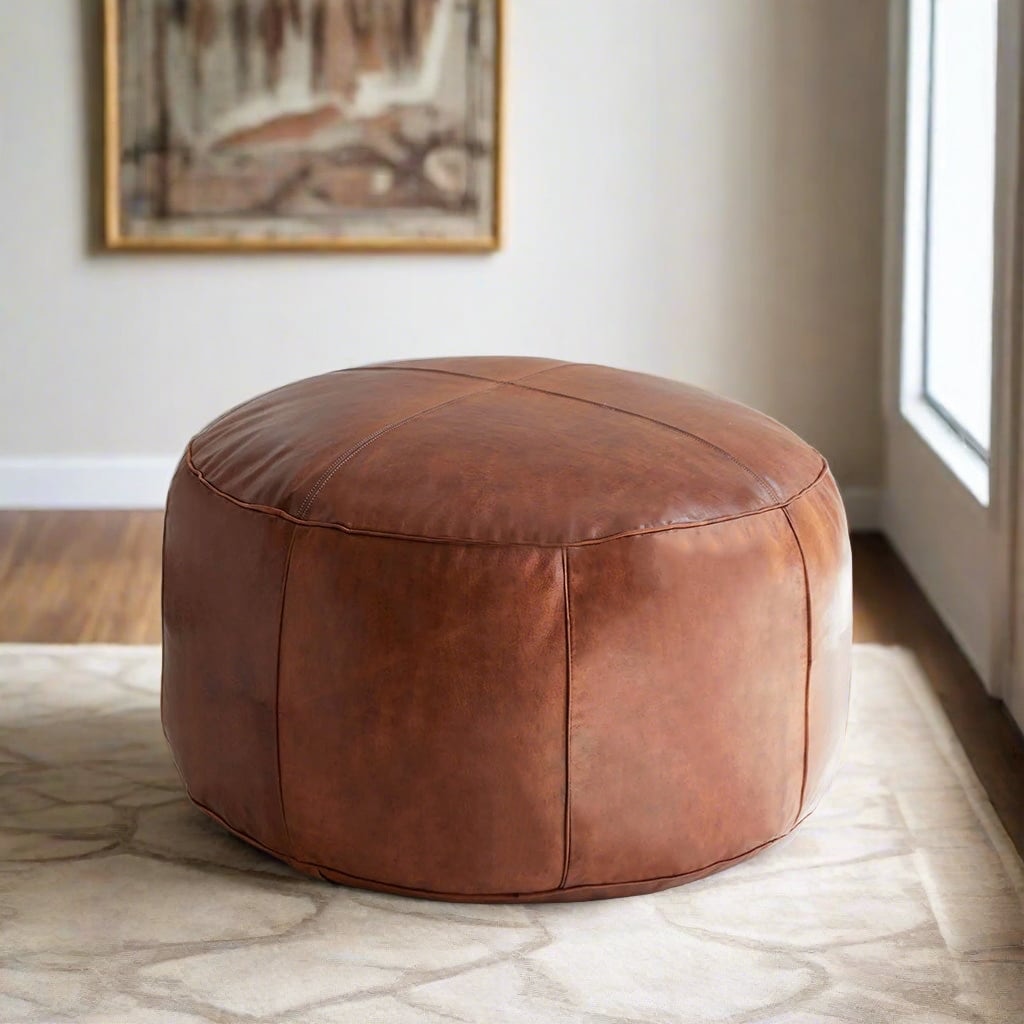
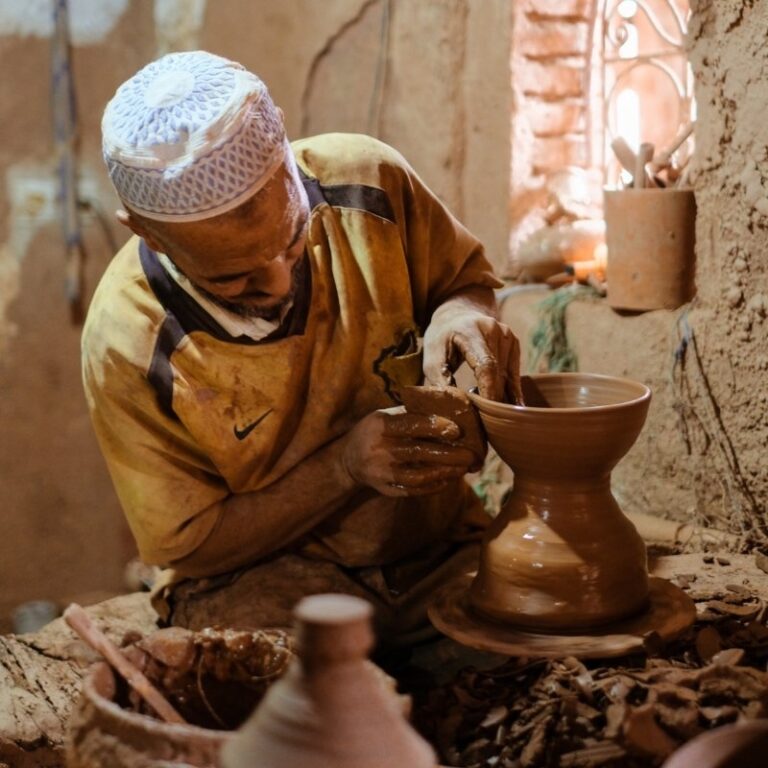
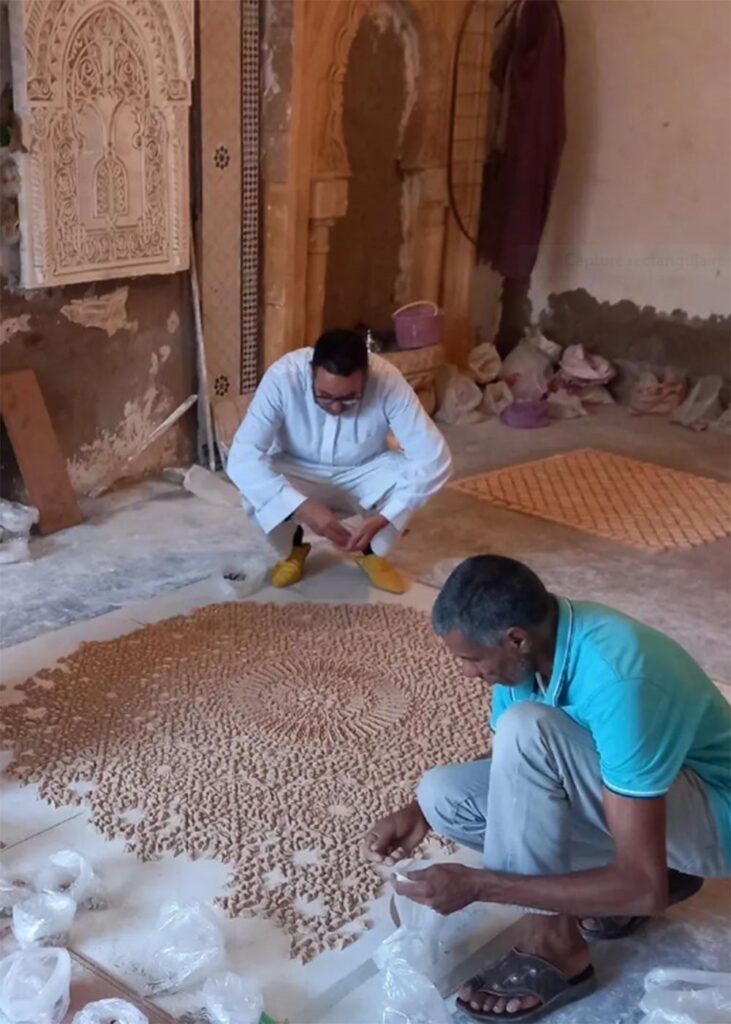
Authentic Moroccan leather poufs are not assembled on production lines. They’re made through a slow, manual process that prioritizes durability over speed.
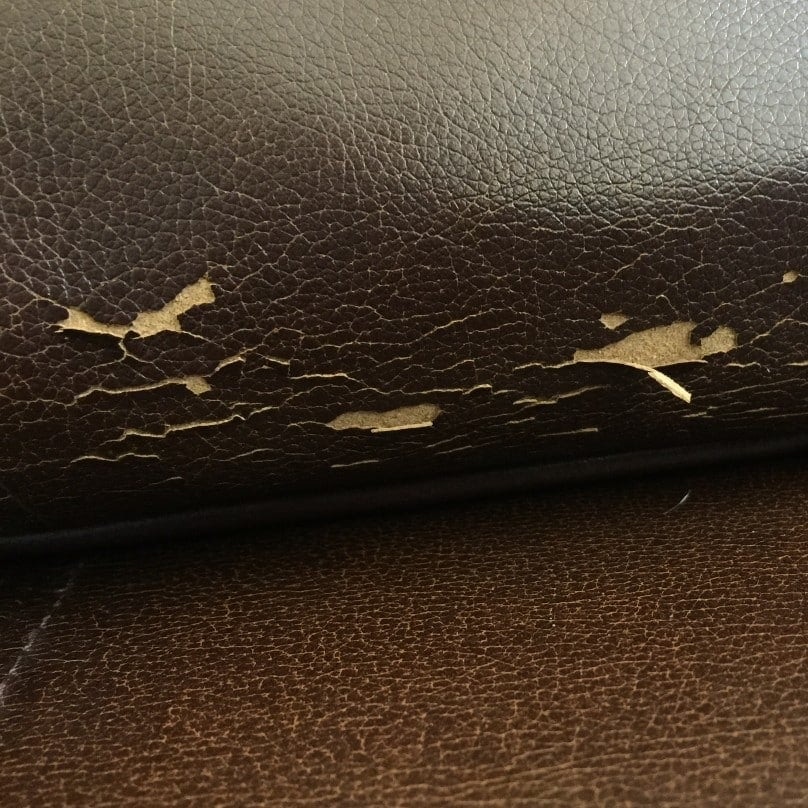
The leather is traditionally tanned, then cut and stitched by hand. This keeps the hide breathable and flexible, allowing it to soften and age naturally over time instead of cracking or peeling.
Hand stitching matters too. It creates stronger seams and allows the leather to move without tearing—something synthetic or machine-assembled poufs struggle to do.
You don’t need to know every step to be a successful buyer. But understanding that real poufs are shaped by time, skill, and human hands explains why they look—and last—different.
4. 7 Practical Ways to Tell Real Leather from Faux (Even Before You Buy)
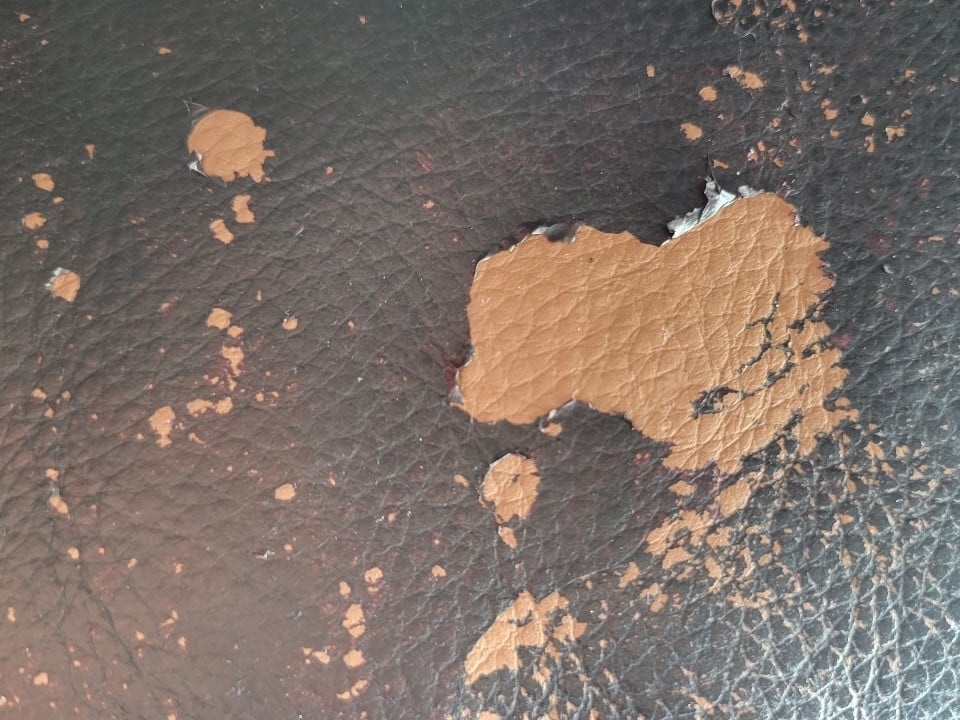
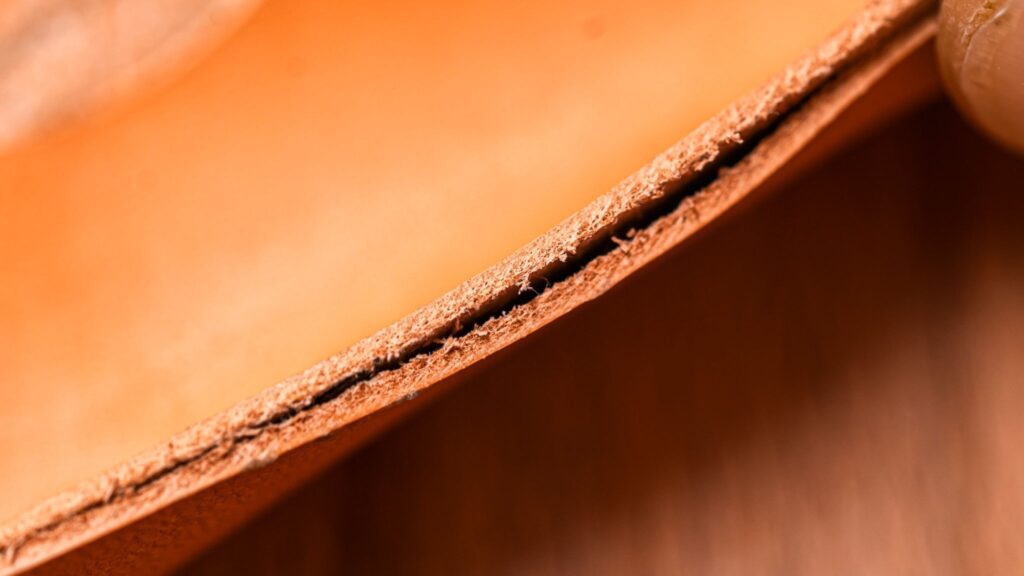
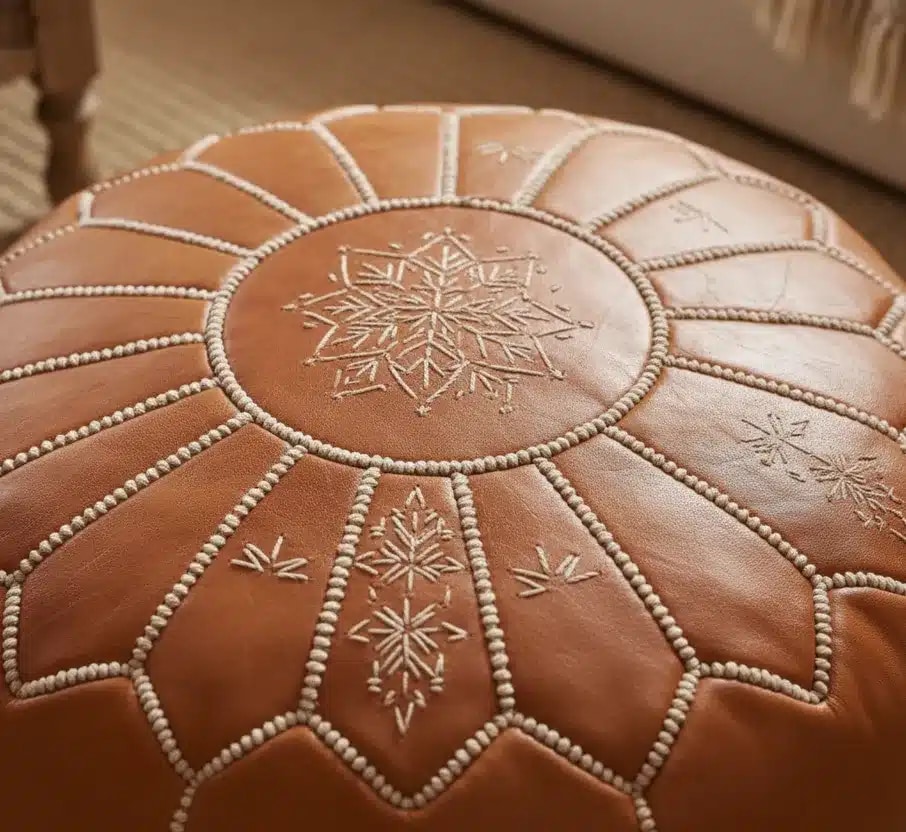
You don’t need to be a leather expert to spot the difference. These simple checks can tell you a lot—online or in person.
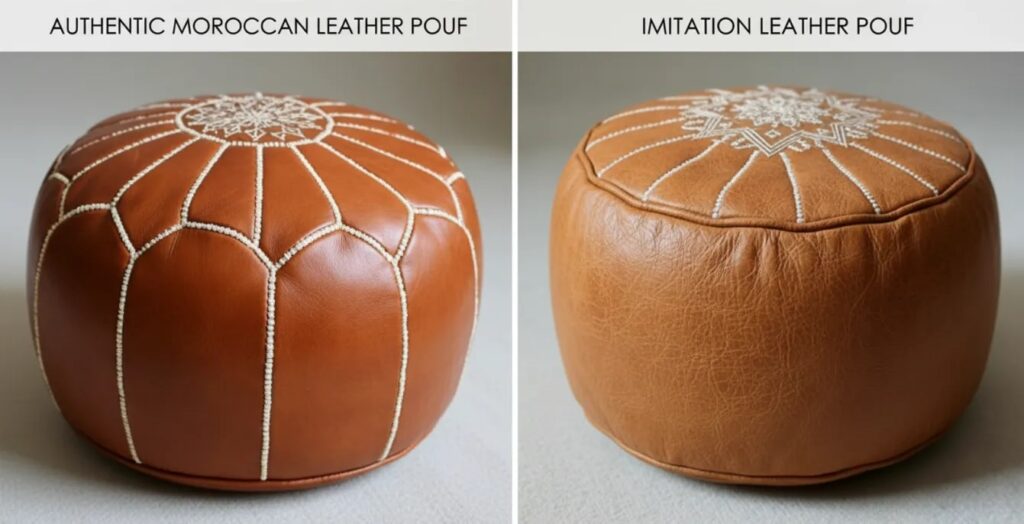
- The grain isn’t perfect; Real leather has natural variations. If the surface looks overly uniform, be cautious.
- It feels warm, not plastic. Genuine leather has a soft and warm feel to the touch. Faux leather often feels cold or rubbery.
- The smell test still matters; Real leather smells earthy and organic. Synthetic leather smells chemical—or like nothing at all.
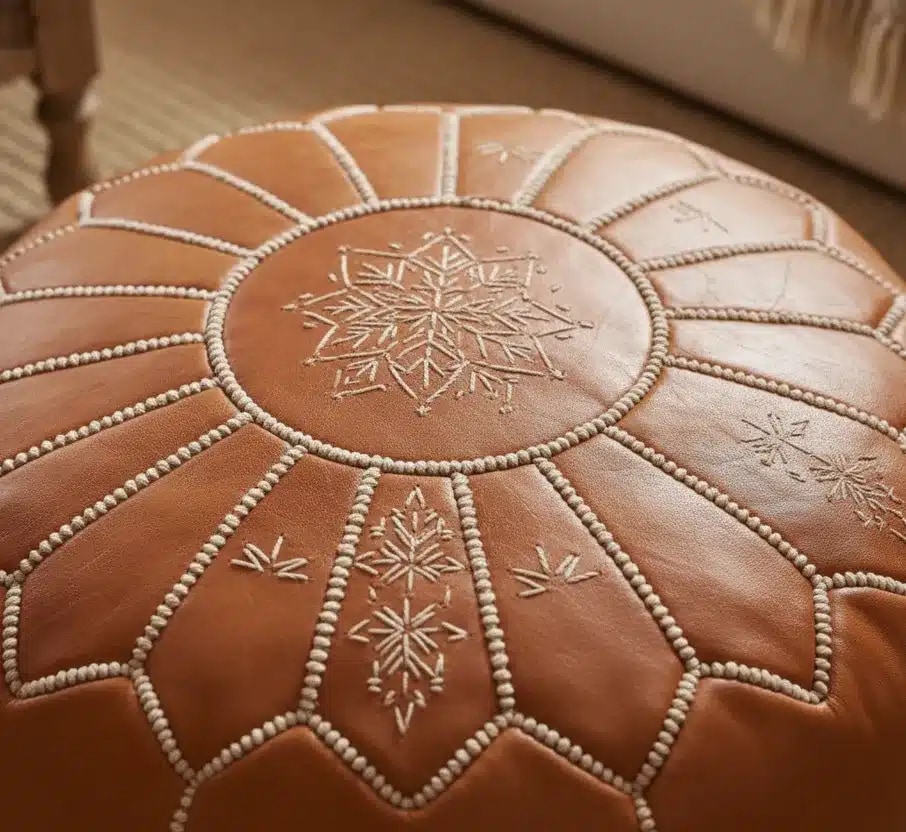
- Look at the stitching: Hand-stitched seams are slightly irregular but strong. Perfectly straight stitches often signal factory work.
- Check the thickness. Real leather has a body. Thin, floppy material is often synthetic or bonded leather.
- Expect natural aging; Real leather develops patina over time. Faux leather cracks or peels instead.
- Price realism: Authentic leather poufs can’t be extremely cheap. If the price feels too good, it usually is.
Taken together, these signs create a clear picture. One clue alone isn’t enough—but several combined rarely lie.
5. The Most Common Traps Buyers Fall Into (And How to Avoid Them)
Most buying mistakes happen because people take shortcuts that aren’t true.
One of the biggest mistakes is to only trust labels. Words like “genuine leather” or “handcrafted” sound excellent, but they are often used in a vague way without proof.
Too-perfect product photos are another common problem. When poufs exhibit uniformity, flawless surfaces, and lack close-ups of seams or texture, there’s a hidden element at play.
Prices can also be misleading. A “good deal” almost never means that prices are very low. More often than not, they are made of synthetic materials or are made quickly.
The best way to stay safe is to look for details, not flowery language. Honesty usually comes through in clear pictures, open materials, and fair prices.
6. Buying a Moroccan Leather Pouf Online: What to Ask Before You Buy
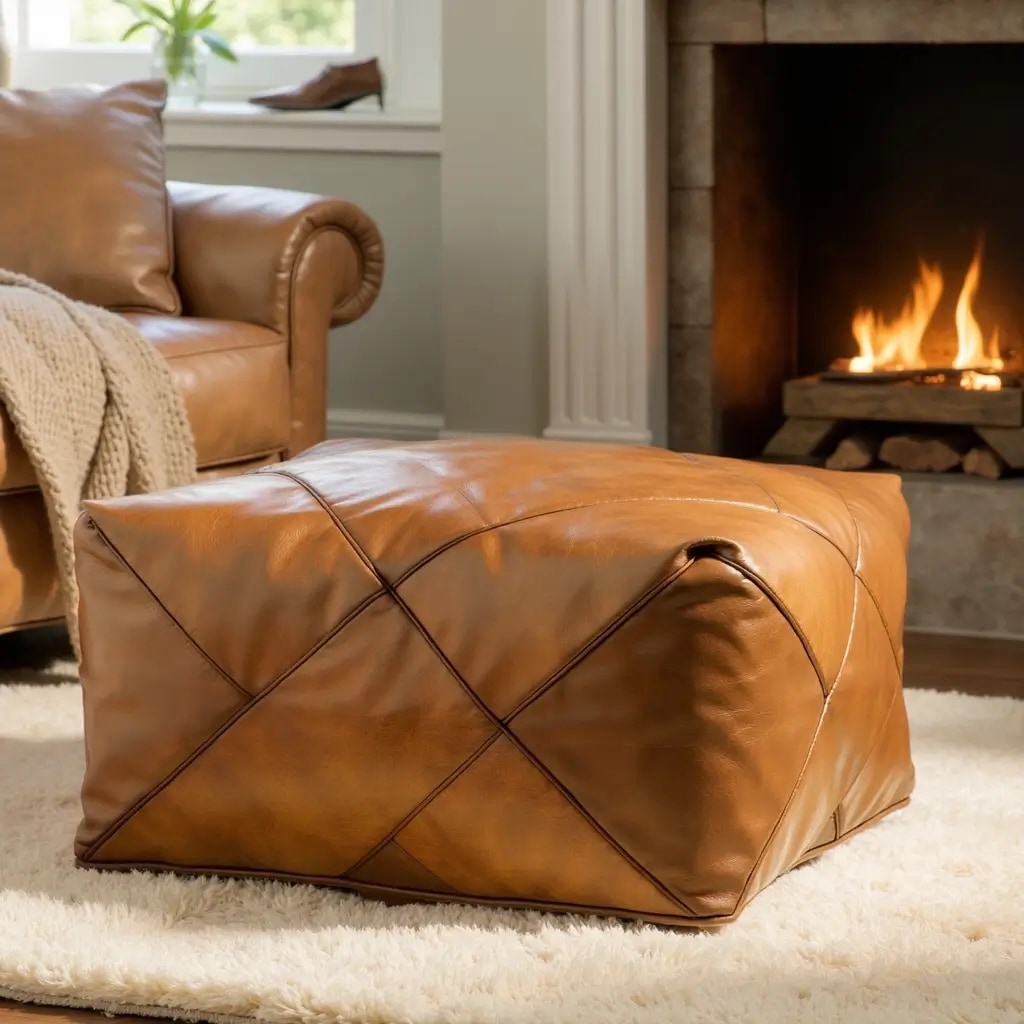
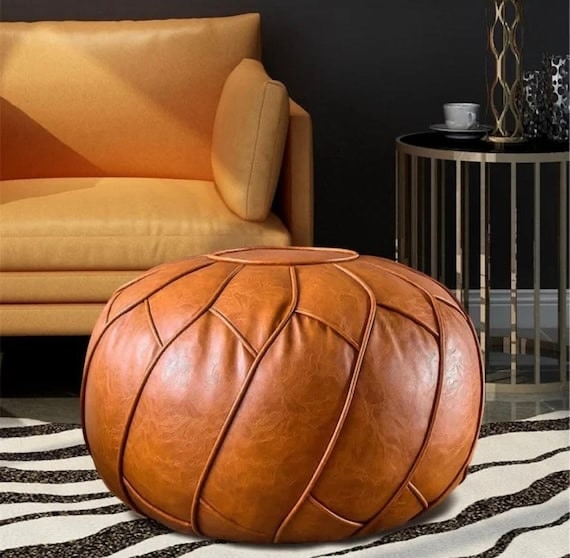
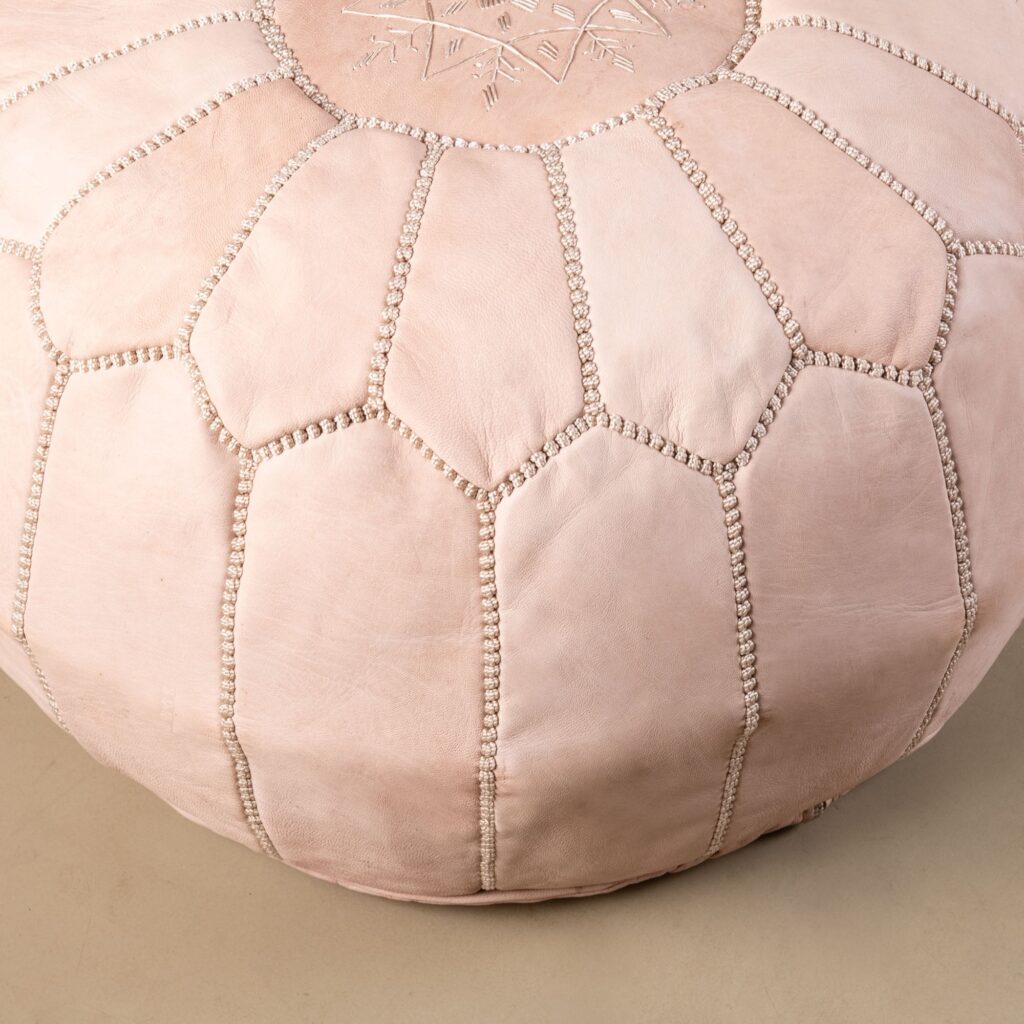
When you can’t touch the leather, questions become your best tool.
Before buying, ask what type of leather is used and whether it’s real, full hide—not bonded or synthetic. A trustworthy seller will answer clearly, without vague wording.
Request close-up photos of the grain, seams, and underside. Real leather shows texture and slight irregularities; sellers who avoid details often have a reason.
It’s also fair to ask how the pouf is made and where. You’re not testing the seller—you’re confirming transparency.
If the answers feel evasive or overly poetic, pause. Clear, simple explanations usually signal confidence in the product.
7. Why Real Moroccan Leather Poufs Cost More (And Why That’s Reasonable)
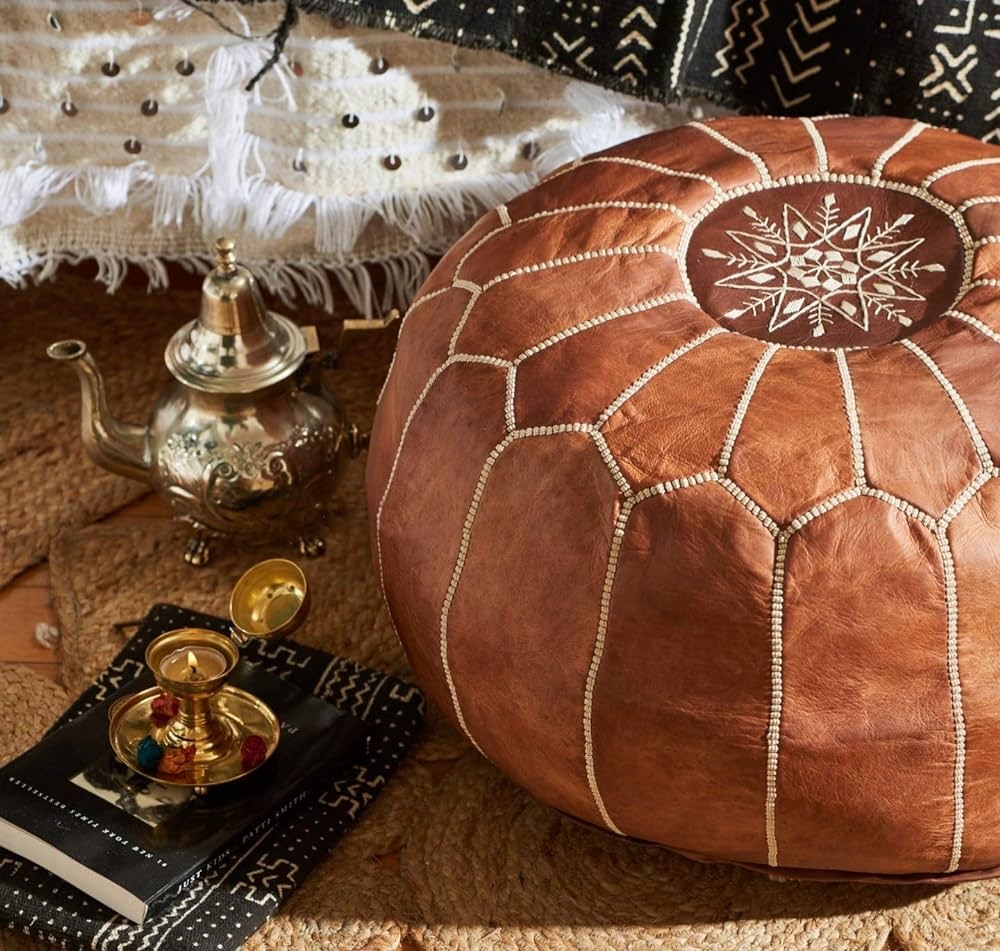
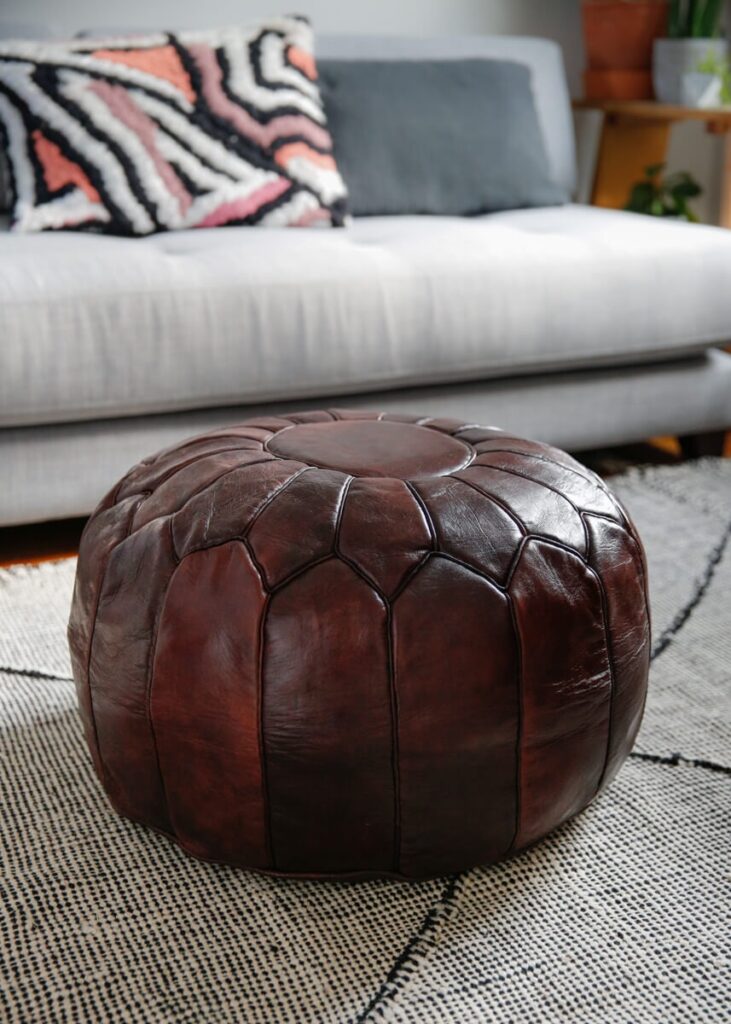
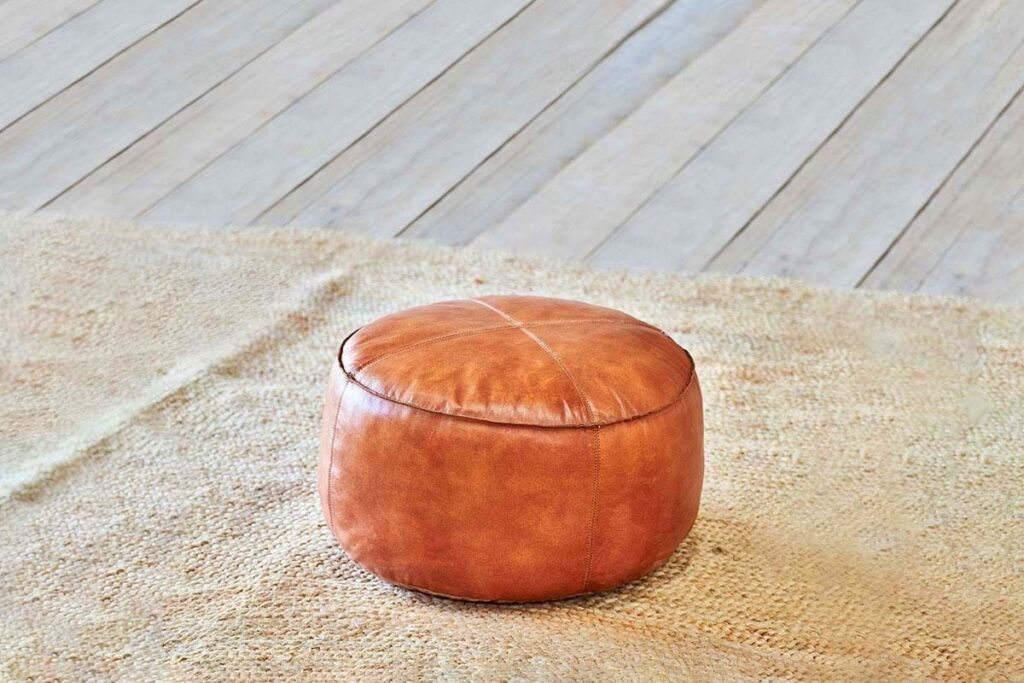
Authentic leather poufs cost more because nothing about them is rushed.
Real leather is a natural material, sourced, tanned, cut, and stitched by hand. Each step takes time and skill—and that shows in how the pouf ages. Instead of peeling or cracking, genuine leather softens and develops a patina.
What you’re paying for isn’t just the object, but its lifespan. A well-made leather pouf can last decades, while synthetic versions often need replacing after a few years.
Seen over time, the cost isn’t higher—it’s simply more honest.
8. How a Genuine Leather Pouf Ages Over Time (What to Expect)
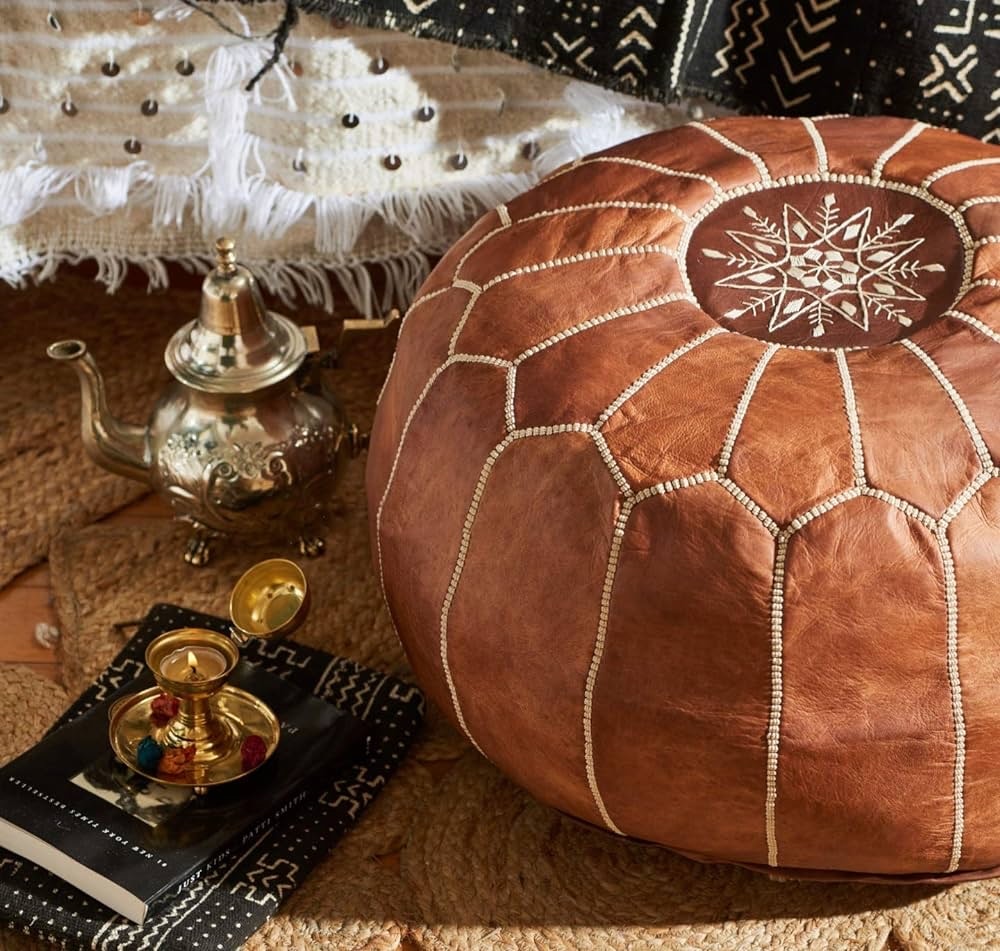
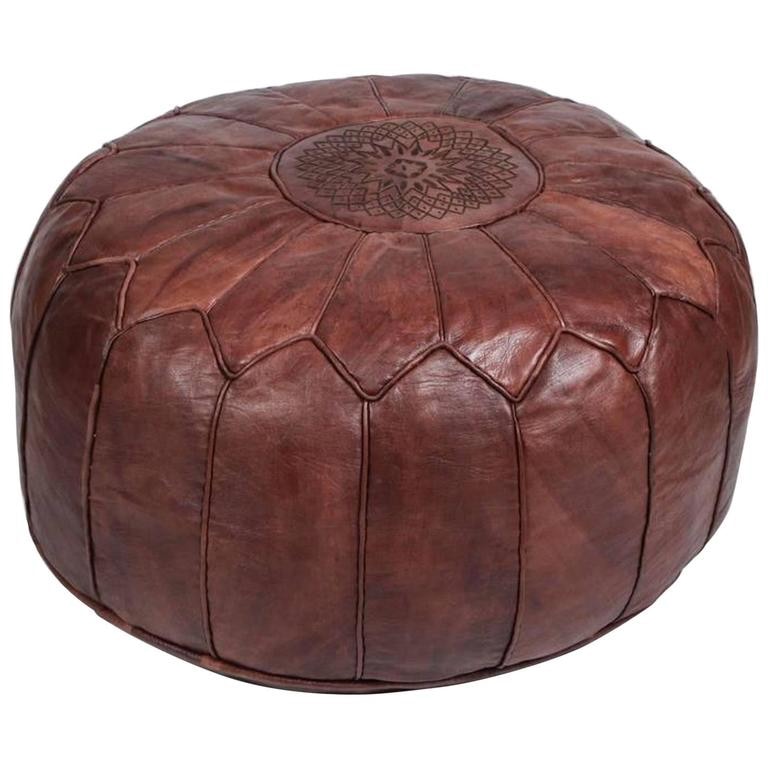
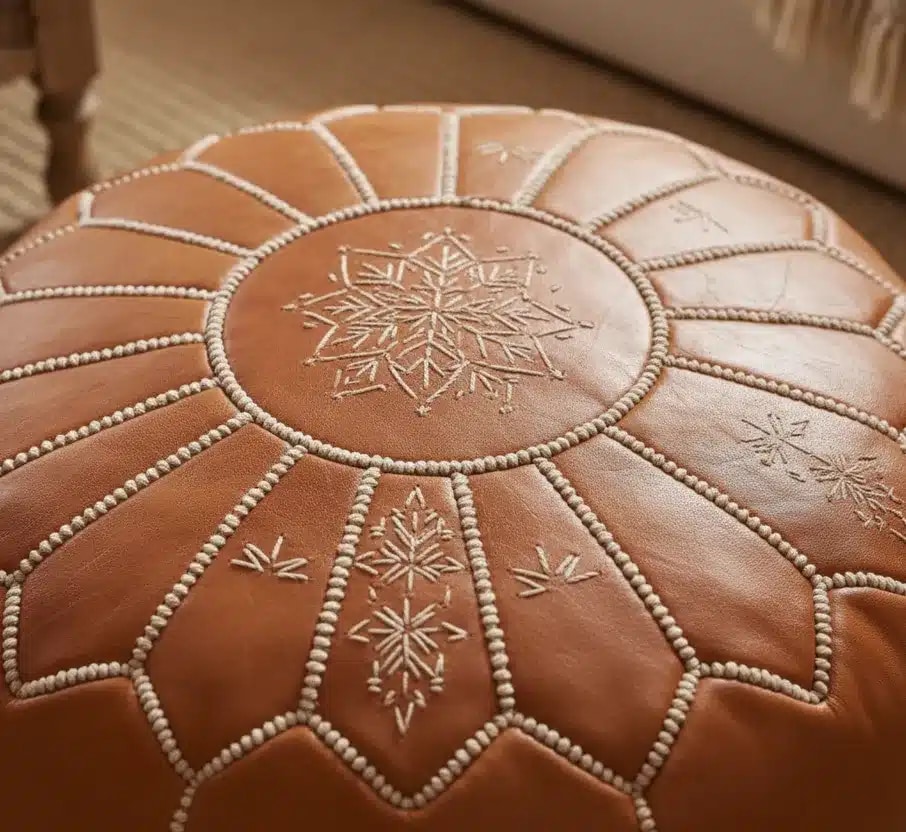
It’s a good thing that real leather doesn’t stay frozen in time.
A real Moroccan leather pouf gets softer, richer, and more comfortable over time. The surface develops a patina, which means it becomes slightly darker, has gentle creases, and has a lived-in look that synthetic materials can’t match.
There may be small marks or changes, but they don’t make the pouf weaker. These imperfections provide a unique character to the pouf. The leather doesn’t get worse; it settles into its place in your home.
One of the best signs that you made the right choice is this aging process.
9. Why Buying Authentic Moroccan Leather Still Matters Today
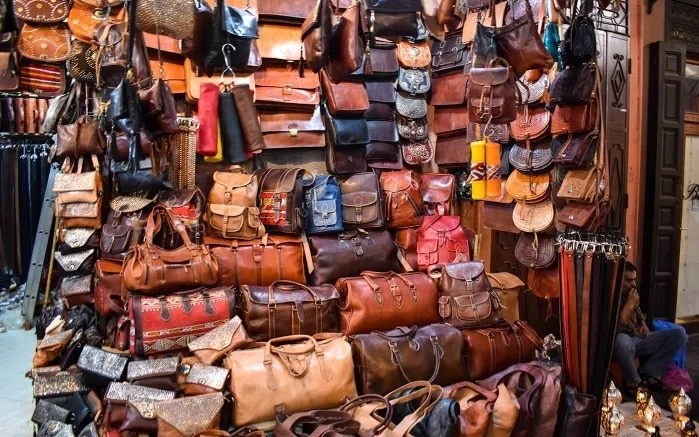
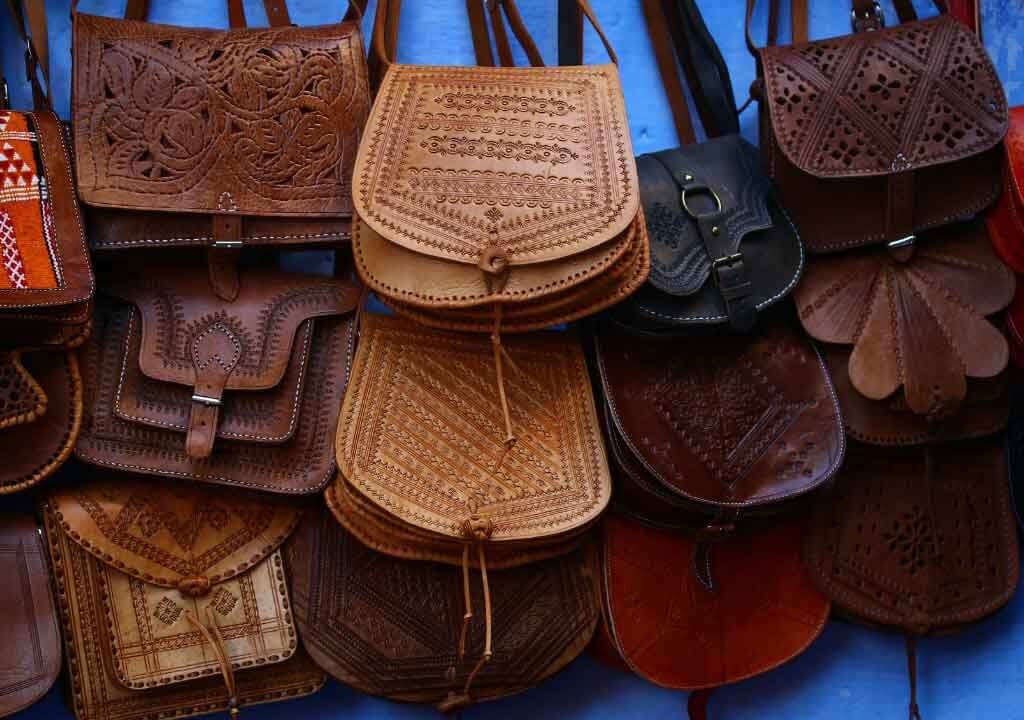
There is more to choosing real Moroccan leather than just the materials.
It backs a craft that is based on skill, time, and human hands instead of shortcuts and mass production. Each real pouf shows off skills that have been passed down from generation to generation and can’t be copied by machines.
It also means getting rid of decorations that can be thrown away. Synthetic materials are disposable, but real leather is meant to age with you.
When you choose to be real, you don’t try to be perfect. You’re picking things that are honest, last a long time, and have meaning beyond their surface.
10. Final Thought—Buy Once, Buy Well, Buy With Confidence
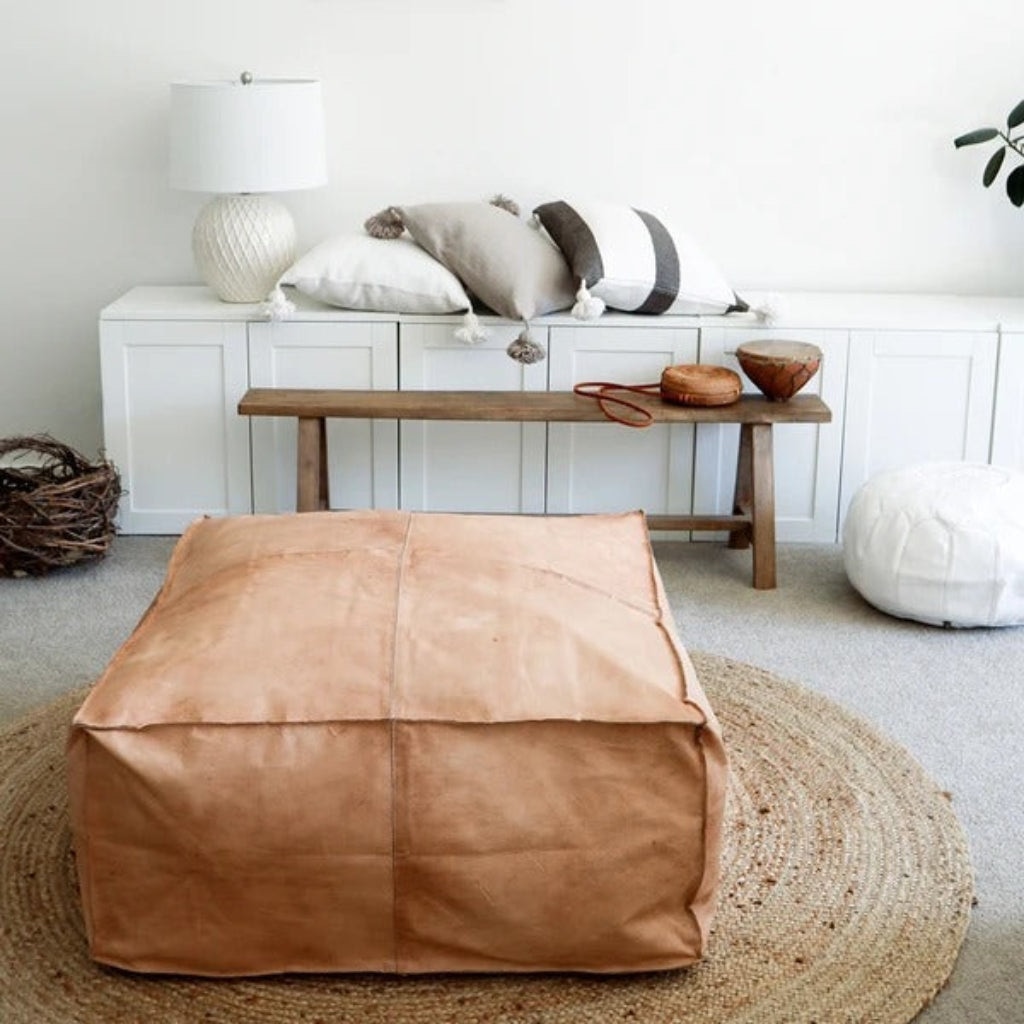
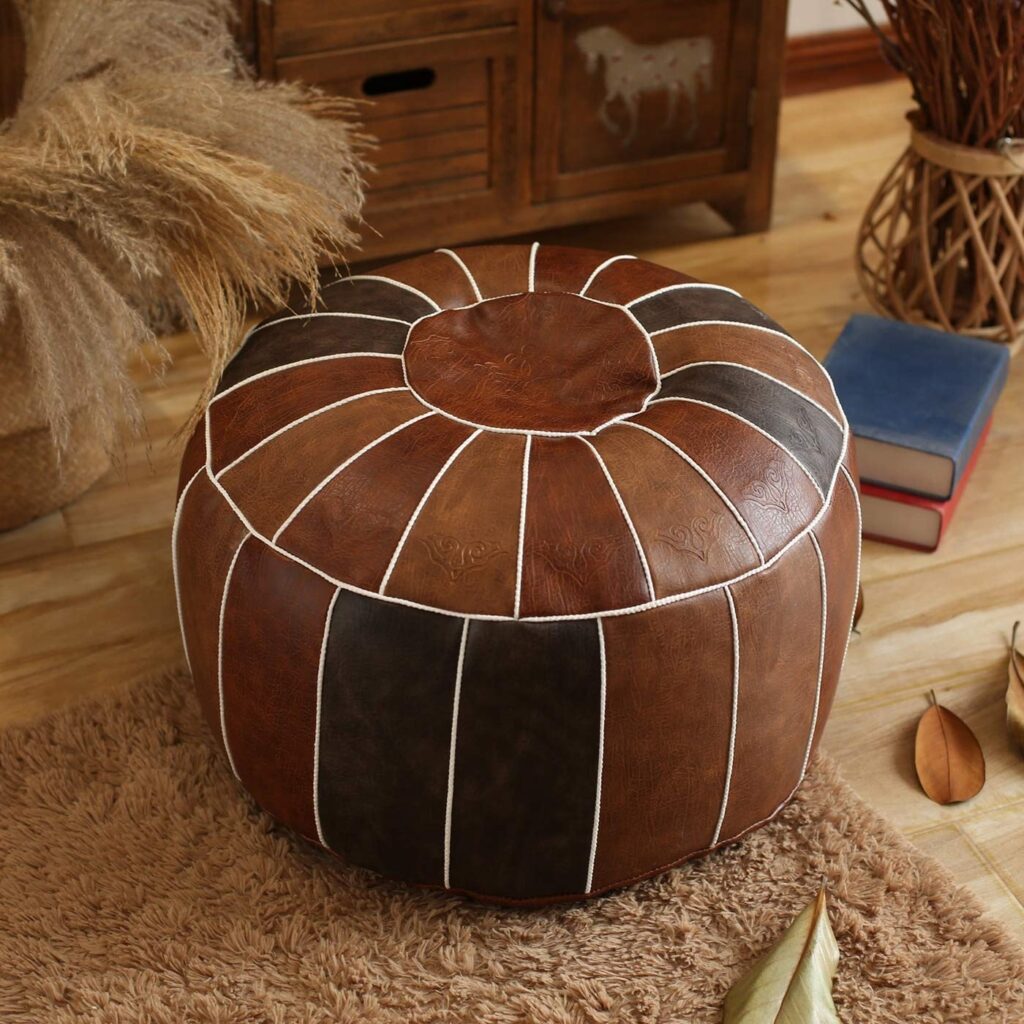
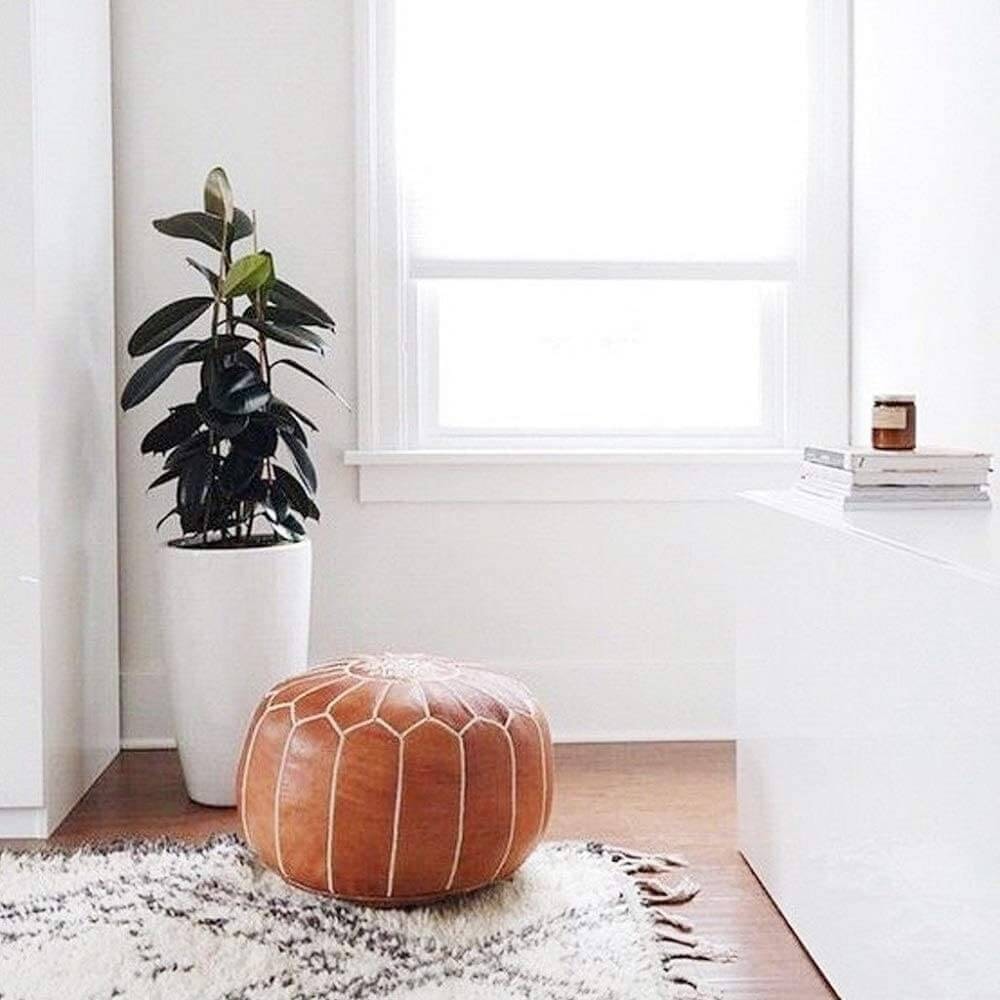
Buying an authentic Moroccan leather pouf doesn’t require expertise—just awareness.
When you understand what real leather looks, feels, and ages like, the noise falls away. Labels matter less. Prices make more sense. Doubt is replaced by clarity.
The goal isn’t to buy more. It’s to buy once and live with something that improves rather than disappoints.
Trust your eye, your hands, and the questions you now know to ask. That’s how thoughtful purchases are made—and why they last.